
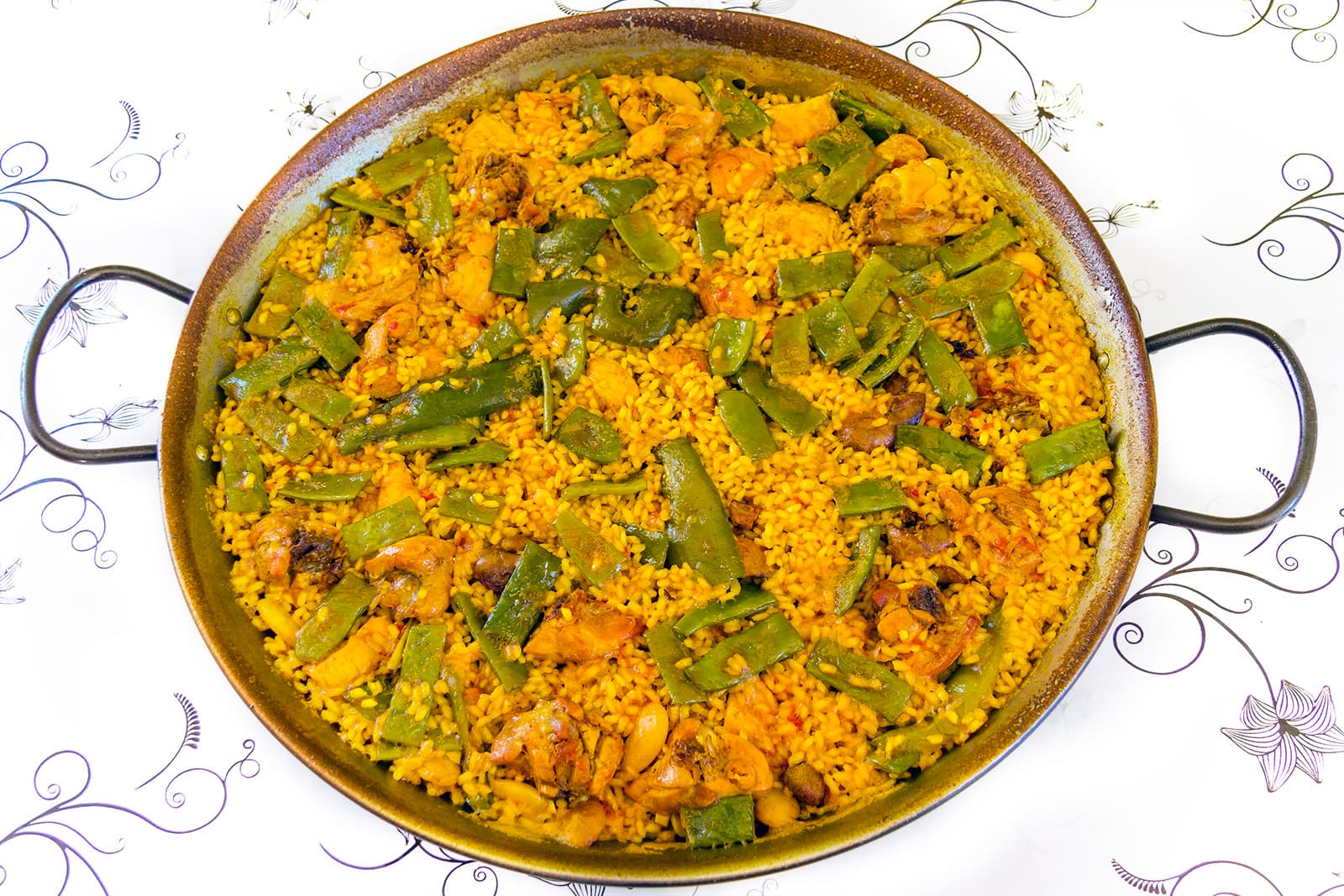
Paella was invented by farmers in Valencia. They would cook lunch in a big pan over an open fire in the middle of the day, using whatever they had to hand - rice from the local fields, chicken or rabbit from the farm, green beans from the garden, snails from the wall. There was no fixed recipe. The point was to feed everyone with one pan and one fire.
The most traditional kind is called paella valenciana. It uses chicken, rabbit, two kinds of green bean (called bajoqueta and garrofó), tomato, olive oil, water, salt, paprika, saffron and rice. No prawns, no chorizo, no mussels - those came later, with the seafood paella that became popular at the coast.
What makes paella special isn't really the ingredients - it is the bottom of the pan. As the rice cooks, the very bottom turns into a golden crispy layer called the socarrat. Spanish kids fight over it the way kids in other countries fight over the last roast potato. A good cook listens for the gentle crackle that means the socarrat is forming, and then stops.
Paella is almost always cooked outside, often on a Sunday with a big family group, and almost always shared from the pan. Lots of people would never eat paella alone - it is a meal made for a table full of people.