
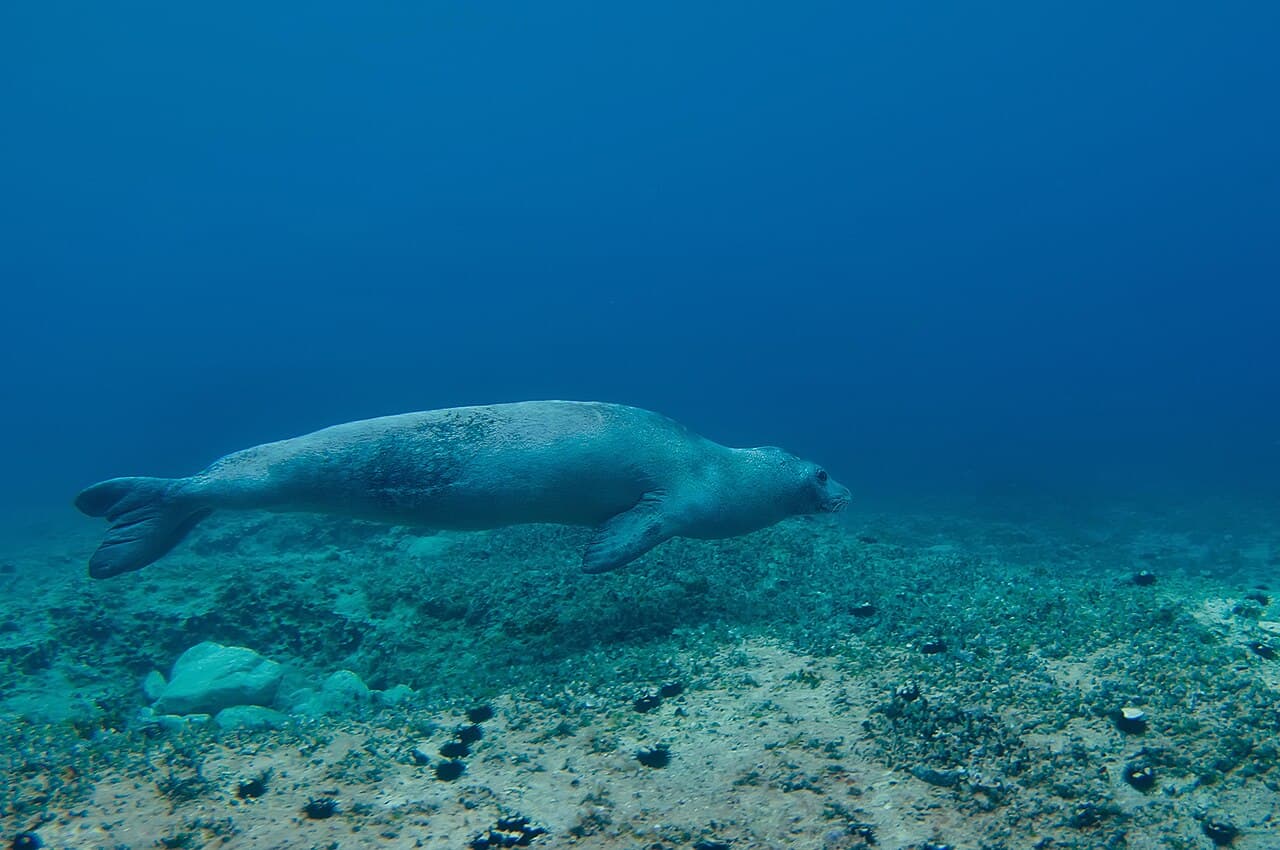
Mediterranean monk seals are grey-brown, with smooth skin and big dark eyes. Adults grow to about 2.5 metres long - roughly the size of a small sofa - and weigh as much as 300 kilograms. They got their name because their grey-brown colour reminded people of the brown robes worn by old-fashioned monks.
Monk seals don't like being seen. Most other seals rest on open beaches in big noisy groups. Monk seals do the opposite - they hide. They give birth, sleep, and rest inside hidden sea caves whose entrances are underwater, so the only way in is to swim. A mother seal can keep her pup safe inside a cave for weeks before anyone outside even knows it has been born.
Like the Iberian lynx, monk seals nearly disappeared in the last century. There used to be thousands all around the Mediterranean. Today there are only around 700, mostly in Greece and Turkey, with smaller groups around Spain and Mauritania. They are slowly coming back, thanks to careful protection of their caves and the fish they eat.
Each monk seal is recognisable by the unique pattern of pale and dark patches on its belly. Scientists who study them photograph each seal's stomach when it rolls in the water, and use those photos to identify exactly who is who - a bit like an underwater school photo.