
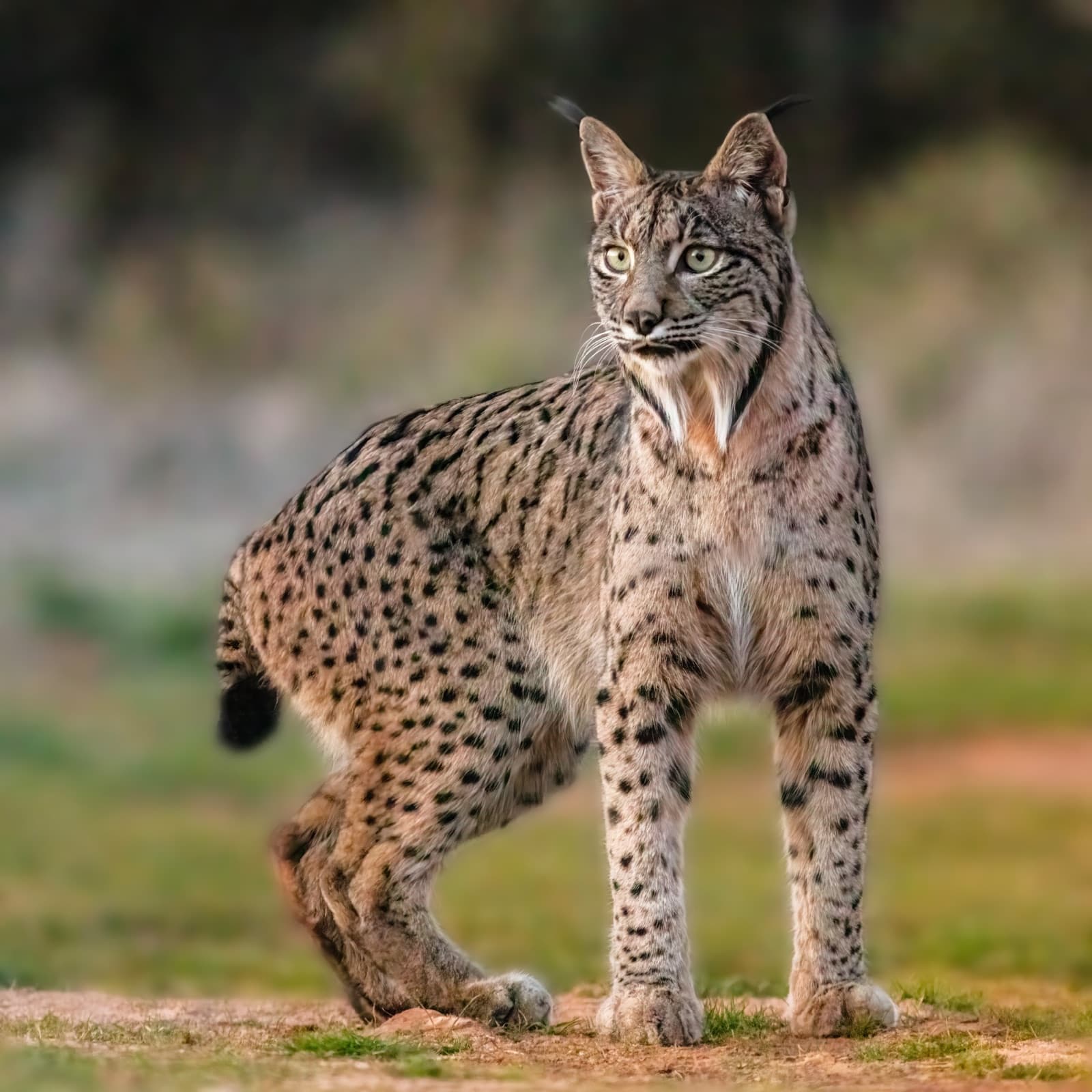
An Iberian lynx looks a bit like a big spotted house cat with long legs, tufted black ear tips, and a short tail. Adults weigh about 12 to 15 kilograms - roughly the same as a small dog. They have a 'beard' of long pale fur around their cheeks that makes them look very serious.
Lynxes hunt almost only one thing: rabbits. In a forest with lots of rabbits, a lynx will eat about one a day. That is part of why they almost vanished. A rabbit disease in the 1990s killed millions of rabbits, and without enough food, lynx numbers dropped to around 100. They were the most endangered cat in the world.
Then people stepped in to help. Scientists, farmers, and the Spanish and Portuguese governments started a huge rescue project. They protected the forests where lynxes lived. They bred lynxes carefully in special centres and then released them into the wild. They worked with farmers so the rabbits could come back too.
It worked. By 2024, there were more than 2,000 wild Iberian lynxes again. The species was moved off the 'critically endangered' list. It is still rare, but the lynx is one of the best examples in the world of what happens when people decide to help an animal in trouble - and stick with it.