
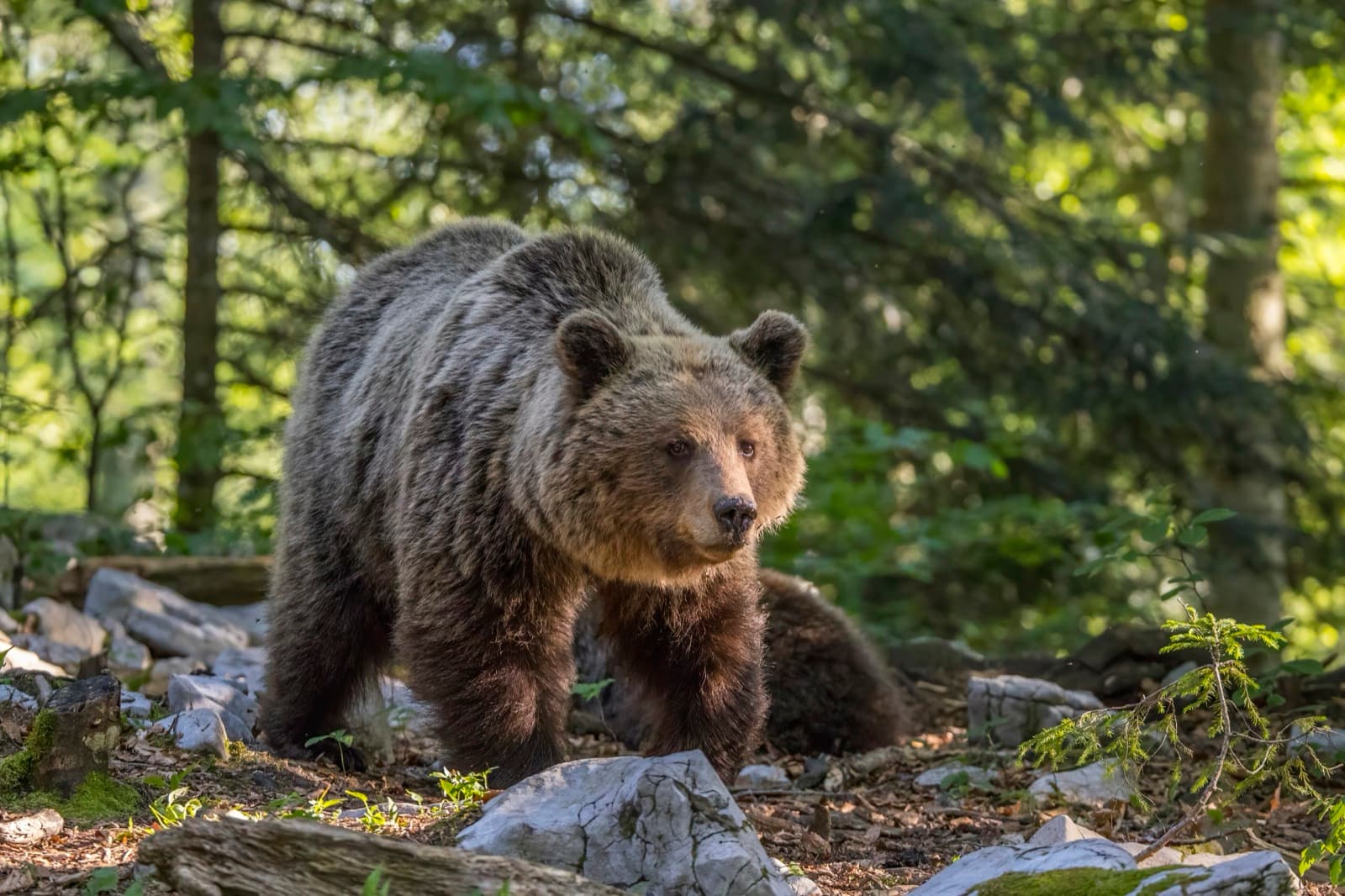
Brown bears are big. A male can weigh 200 kilograms or more - heavier than three average adults. They stand on all fours most of the time, but can stand up on their back legs when they want a better look at something. From standing, an adult brown bear can be taller than your teacher.
Spanish brown bears mostly eat plants. About three-quarters of their diet is berries, nuts, roots, mushrooms and grass. The rest is the occasional insect, fish, or scrap they find. They are not really the meat-eating monsters of bedtime stories - they are big curious creatures who would rather pick blueberries than chase anyone.
In autumn, brown bears go on a giant eating mission. They have to put on enough fat to last through winter, when food is scarce. Then they curl up in a den - a cave, a hollow tree, or under a log - and sleep for several months. Inside the den, mother bears often have one or two cubs. The cubs come out in spring, when the flowers are blooming and there is food again.
Brown bears almost disappeared from Spain in the 20th century, with only around 50 left in the 1990s. Like the lynx, they have made a comeback because people worked hard to protect their forests. Today there are about 400 in the Cantabrian mountains and a smaller group in the Pyrenees.