
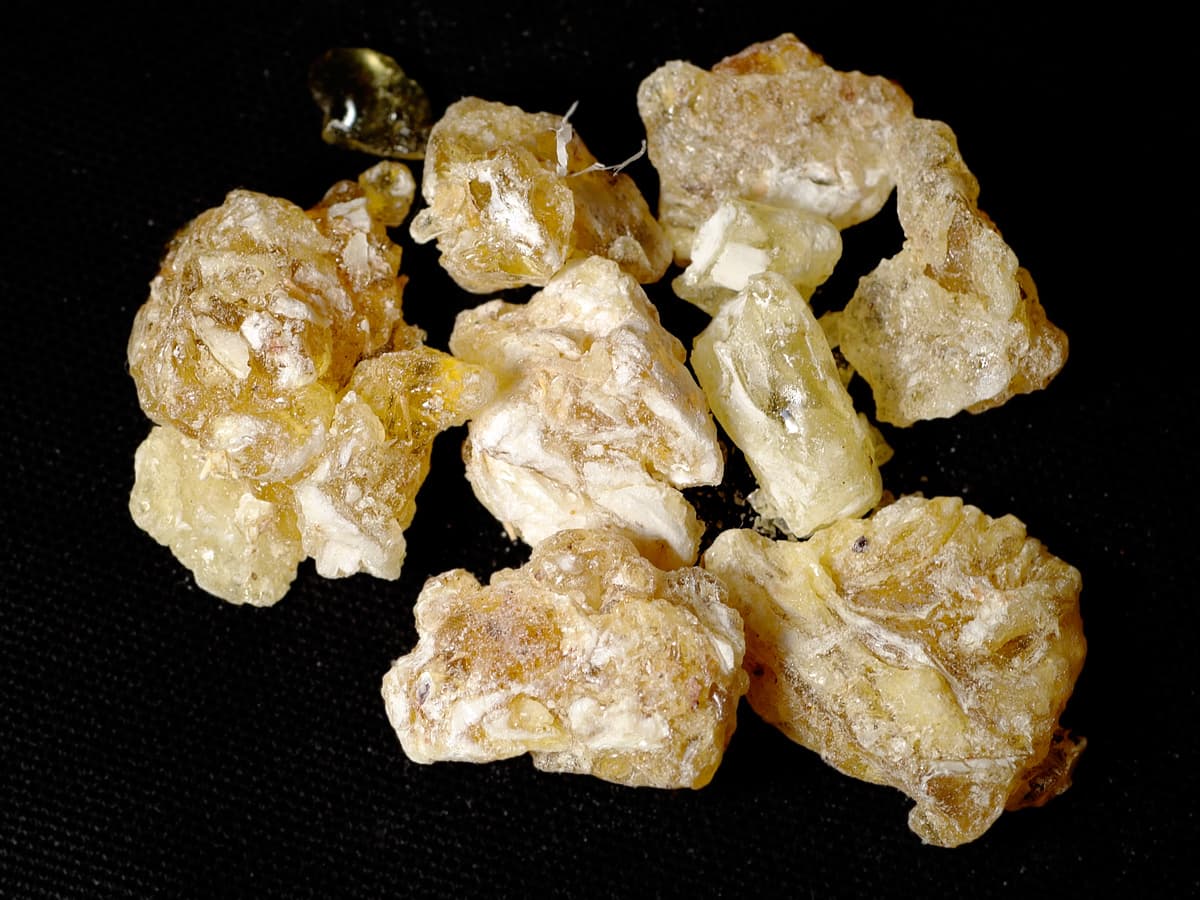
To harvest frankincense, a farmer makes small cuts in the bark of the Boswellia tree. The tree oozes out a milky sap - which is actually the tree healing itself, the same way your skin makes a scab when you graze your knee. After a few weeks the sap hardens into small golden or amber-coloured lumps. These are collected by hand and then sorted by quality and colour.
For thousands of years, Somali frankincense was carried by camel caravan north to Egypt, Greece, Rome and Arabia. It was burned as incense in ceremonies, used as medicine, and mixed into perfumes. The ancient trade routes it travelled were so important that historians gave them a name: the 'Incense Road'. Ancient Egyptians even used myrrh to help preserve mummies!
Today Somalia still supplies a huge share of the world's frankincense and myrrh. You can find them in perfumes, skincare products and candles sold all over the world - and many of them came from a tree on a Somali hillside, tapped gently by a farmer's knife, just as it was five thousand years ago.