
Classroom lesson · Wildlife · 🇷🇴 Romania

The grey wolf

Family animals that howl together in the Carpathians

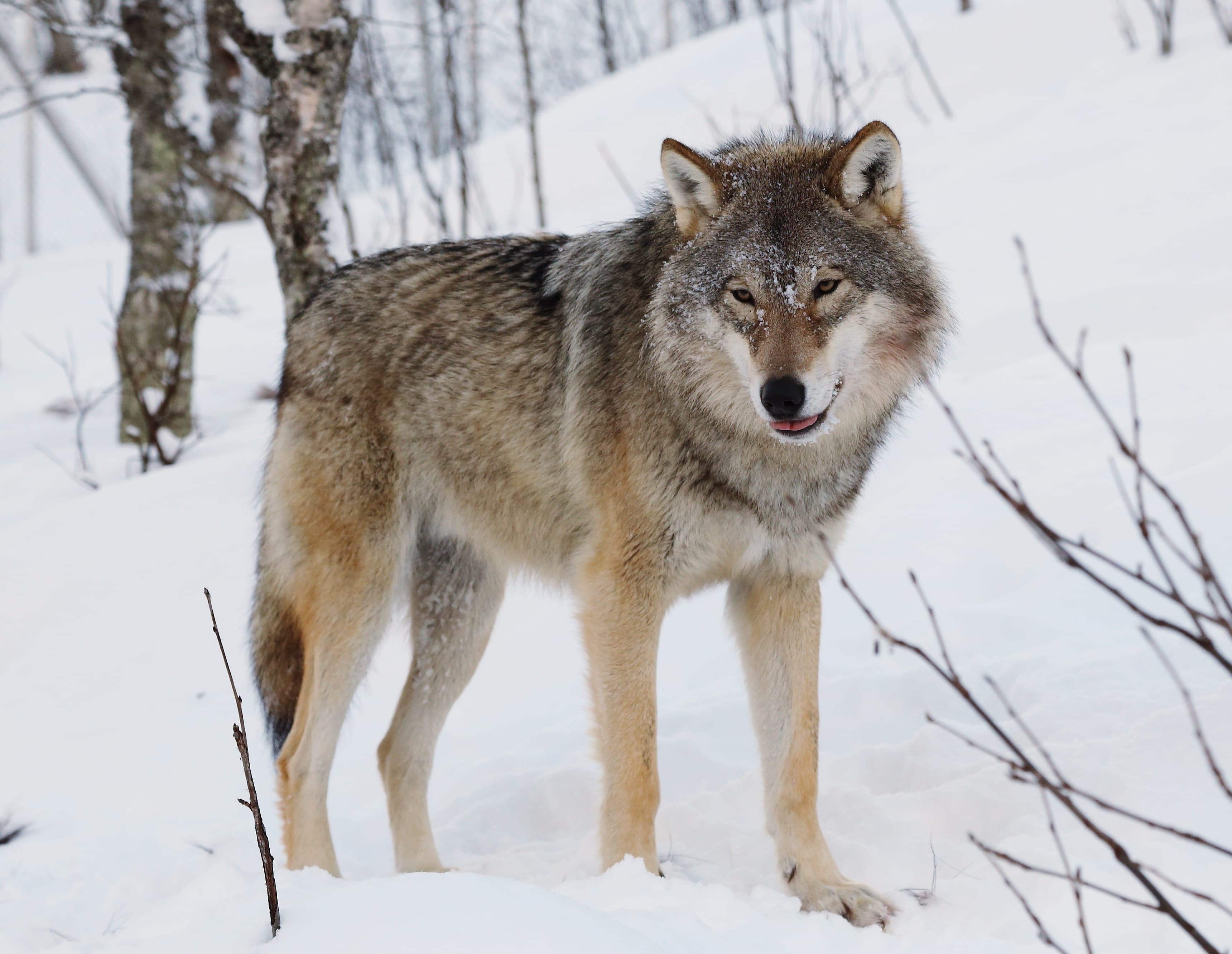
A grey wolf walking through a snowy Carpathian forest

Photo · Wikimedia Commons

What is it?

Grey wolves live wild in the Carpathian mountains. They are big, intelligent, dog-like animals that live in family groups called packs. Romania has around 2,500 wolves - one of the largest populations in Europe. They are shy and almost never seen, but on a cold night you might hear them howl.

Tell me more

A wolf pack is usually a family - a mother and father wolf, their pups from this year, and sometimes older brothers and sisters from last year. A pack might be 4 to 8 wolves. The parents lead - they choose where to hunt, where to rest, when to move on.

Wolves howl to talk to each other. Each wolf has a slightly different voice, so when several wolves howl together it sounds like a strange wild choir. They use howls to find each other when the pack has split up, to tell other packs 'this part of the forest is ours', and sometimes, scientists think, just because it feels good.

Wolves are the wild ancestor of every dog in the world - from huskies and Alsatians right down to chihuahuas. Around 30,000 years ago, some wolves started living near humans, and slowly over time their descendants became the family pets we know today. If you look carefully, even a tiny dog has wolf ears and wolf paws.

Wolves are very important for the forest. They hunt deer, which keeps the deer from eating all the young trees. Where wolves come back to a forest, the trees often grow back stronger. Scientists call this a 'wild forest in balance'.

In the classroom

Walk your class through this in 15 minutes.

Talk together

Discussion prompts

  1. 01Wolves live in family groups, just like humans. What jobs do you do in your family - and what jobs do the older or younger ones do?
  2. 02Every dog you've ever met is a wolf's great-great-great-(many times)-grandchild. What surprises you about that?
  3. 03Why might the trees in a forest be healthier when wolves live there?
Try this

Classroom activity

Make a class wolf-howl chorus. Each pupil makes up their own one-second howl - high, low, wobbly, gentle. Practise yours alone. Then on the count of three, the whole class howls together. Talk about how different the chorus sounds from any single howl.