
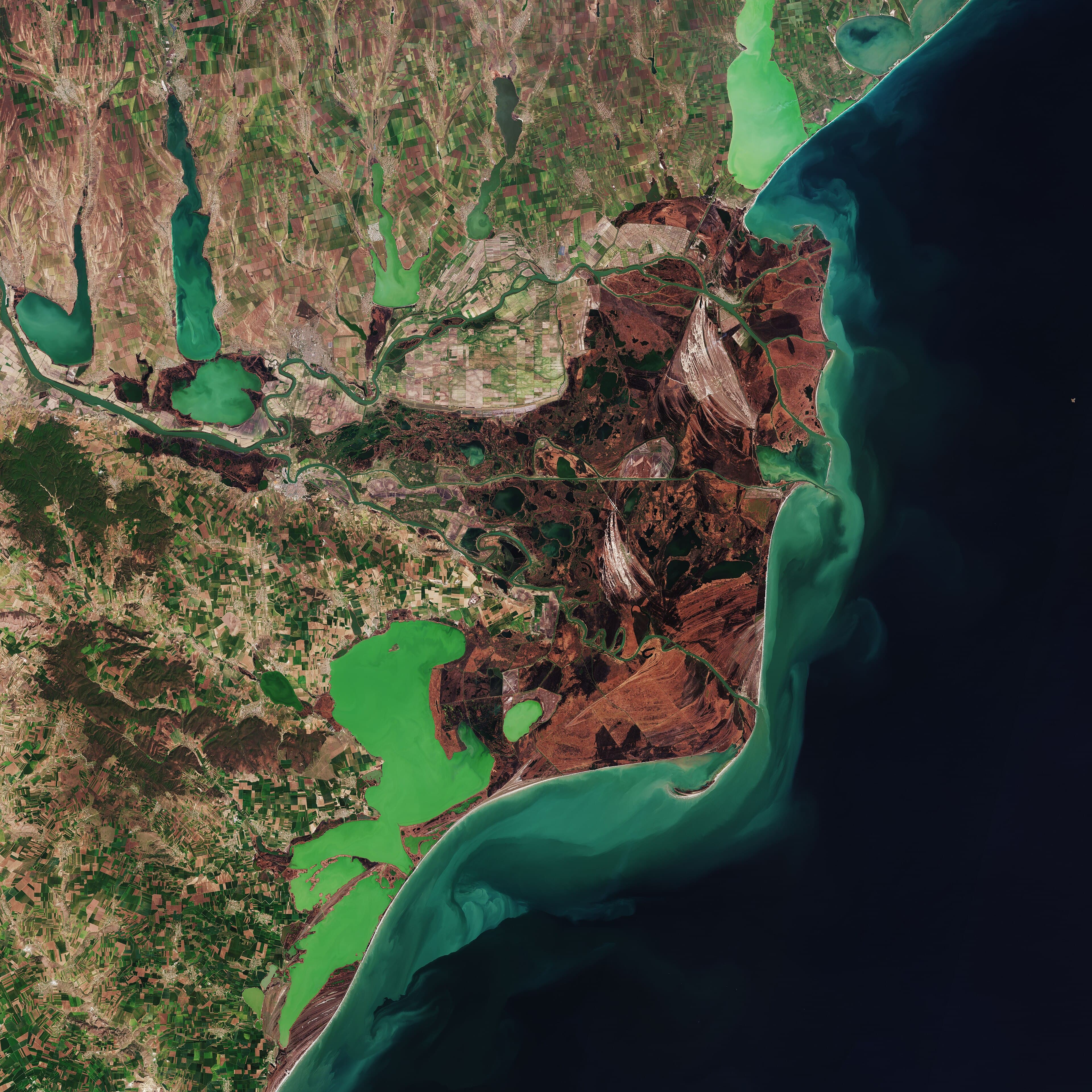
A delta is the fan-shaped area where a river splits into lots of smaller streams just before reaching the sea. The Danube has been making its delta for thousands of years, dropping mud and sand wherever it slows down. The delta is still growing today, by about 40 metres a year.
Around 300 different kinds of bird live in the Danube Delta or stop here on their long journeys between Europe and Africa. Great white pelicans, with wingspans wider than a tall adult, glide across the lakes. Glossy ibises, herons, egrets, kingfishers, swans and cormorants all share the water.
There are no roads in most of the delta. People who live there travel by boat through narrow channels lined with tall reeds. Fishing families have lived in small villages on the islands for hundreds of years. Many of them speak both Romanian and a language called Ukrainian, because the delta is right on the border.
The delta is so important that the United Nations has called it a World Heritage Site - somewhere that matters to the whole planet, not just to one country. Visitors can quietly paddle through the reeds in flat-bottomed boats and feel like they're somewhere out of a fairy tale.