
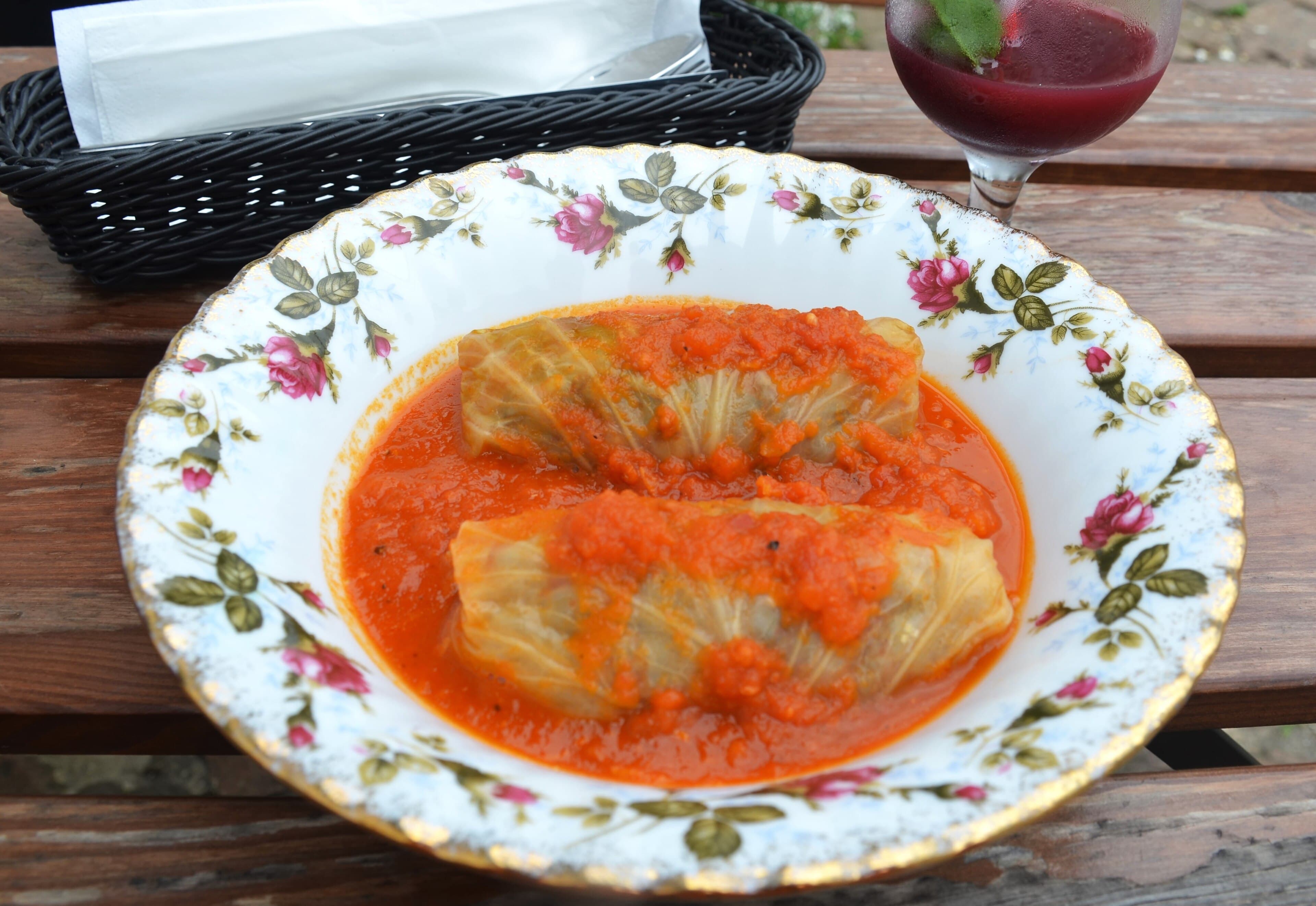
To make sarmale, a cook takes a leaf of pickled or fresh cabbage and lays a spoonful of seasoned meat-and-rice mixture in the middle. The leaf is folded carefully into a neat little parcel, like a tiny present. Dozens of parcels are packed into a big pot and cooked slowly for hours.
They are usually served with mămăligă (mer-mer-LEE-guh) - a thick yellow porridge made from cornflour, a bit like Italian polenta. A spoonful of cool sour cream goes on top of the mămăligă. The hot stew, the soft porridge and the cold cream all hit your mouth at once - cosy, comforting and surprising.
Sarmale are special-occasion food. A Romanian wedding might serve hundreds of them - grandmothers and aunties get together the day before to wrap them by the hundred, sitting around a table chatting. On Christmas Eve, almost every Romanian house has a pot of sarmale on the stove.
Different families wrap them differently. Some make tiny ones the size of a thumb; others make big fat ones. Some use vine leaves instead of cabbage in summer. Almost every Romanian will tell you their grandma's sarmale are the best in the world - and they all might be right.