
Classroom lesson · Food · 🇷🇴 Romania

Mămăligă - Romanian polenta

The bright yellow cornmeal porridge eaten with almost everything

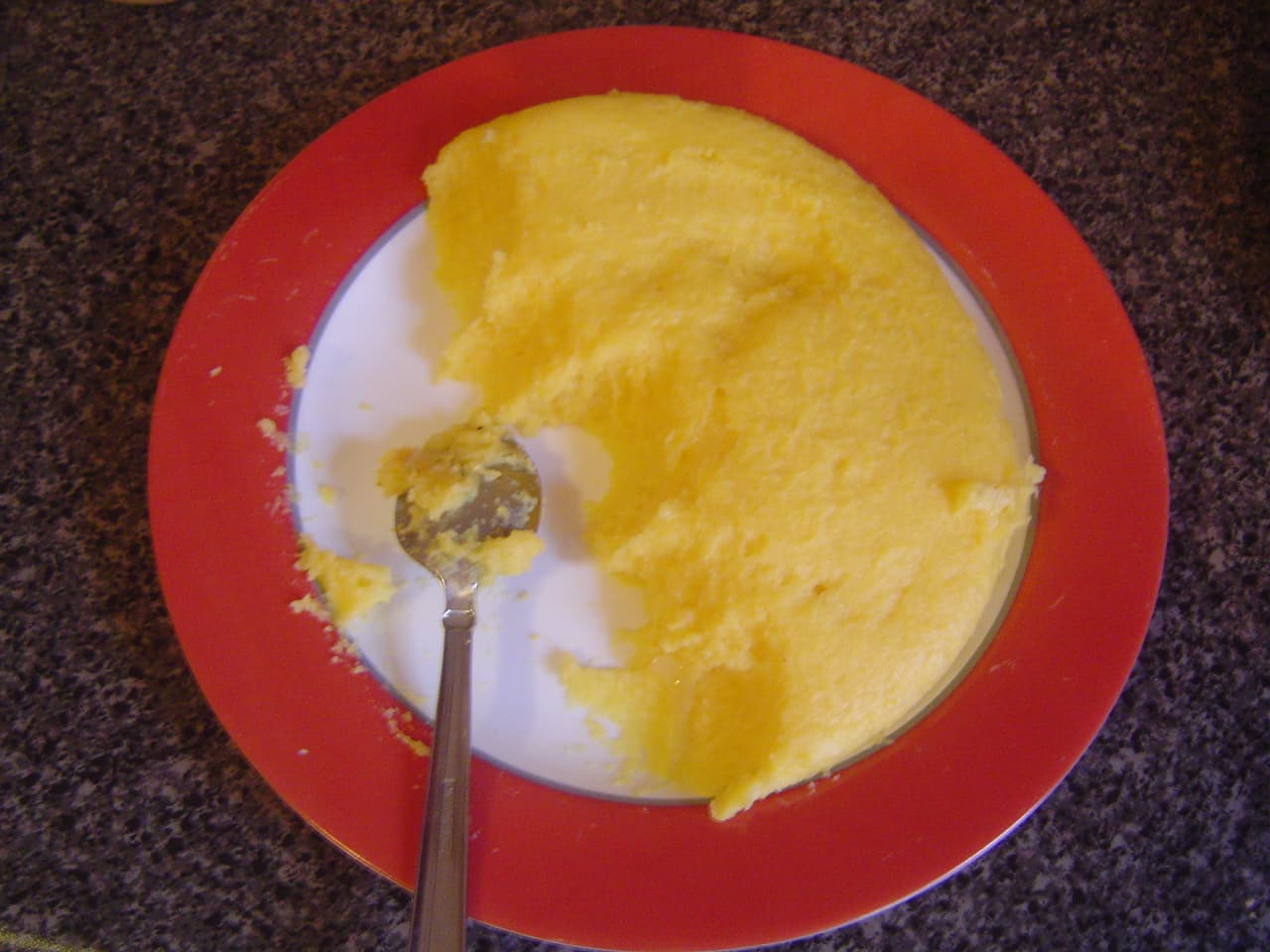
A bowl of mămăligă - thick yellow Romanian cornmeal porridge

Photo · Wikimedia Commons

What is it?

Mămăligă (say it: mer-mer-LEE-guh) is a thick, soft, bright yellow porridge made from cornmeal - very similar to Italian polenta. It is one of Romania's most everyday foods. It can be soft and creamy like mashed potato, or stiff enough to slice with a piece of string.

Tell me more

To make mămăligă, a cook boils water in a deep copper or iron pot, then slowly pours in fine yellow cornflour while stirring hard with a wooden stick. As it cooks, the mixture thickens and turns the colour of sunshine. After about half an hour of stirring, it is ready.

If you let it cool a little, it sets like a soft loaf and you can cut it with a piece of string or a knife. If you serve it soft, you scoop it onto a plate next to whatever else you are eating. It is the perfect partner for sarmale, stews, fried eggs, cheese, sour cream, and almost anything you'd serve with bread or rice.

Mămăligă has been the everyday food of Romanian villages for hundreds of years. In the past, families would eat it almost every day. Today many city families have it once a week or for a special meal - the way some families have a Sunday roast.

Like ugali in Kenya or polenta in Italy, mămăligă is a 'staple' food - something simple that gives you energy and fills you up, and that the side dishes can change around. A bowl of mămăligă with a fried egg on top and a spoon of cottage cheese alongside is many Romanian children's favourite breakfast.

In the classroom

Walk your class through this in 15 minutes.

Talk together

Discussion prompts

  1. 01Many countries have their own version of a thick cooked grain: porridge, polenta, ugali, grits, congee. Why might so many places have invented something similar?
  2. 02What is the side dish at your house that goes with lots of different meals?
  3. 03Why might it help to have a food that is easy to slice and easy to scoop?
Try this

Classroom activity

List 'staple foods' from around the world on the board: rice, pasta, bread, tortillas, mămăligă, ugali, potatoes. Each pupil picks one and draws a meal that uses it. Compare the meals. How many different meals can be built on top of just one ingredient?