
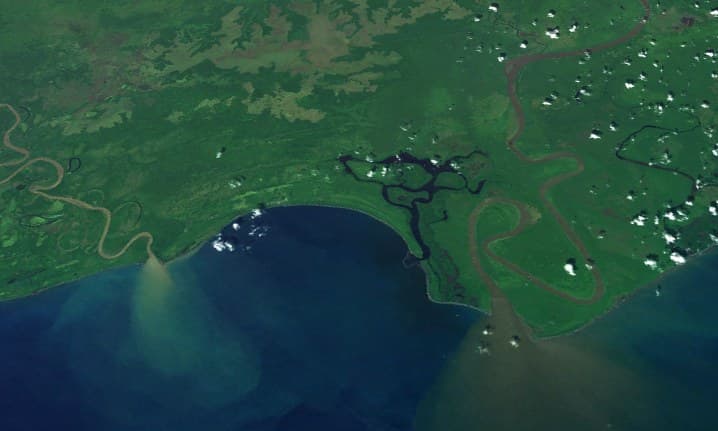
The Sepik is wide, brown and slow-moving. Hundreds of villages sit along its banks, and the river is the main road. Children paddle to school in long wooden canoes called 'dugouts', carved from a single tree trunk. Markets float on the water - people meet halfway in canoes to swap fish, bananas and sweet potatoes.
Sepik villages are famous all over the world for their carvings. People carve tall posts, masks and figures out of soft wood, painted with bright black, red and white patterns. Many carvings show animals that live in the river - especially crocodiles. The crocodile is so important here that some communities call themselves 'the crocodile people'.
Every August there is a Crocodile Festival in a town called Ambunti, on the upper Sepik. People come from villages up and down the river to dance, sing, race canoes and show their carvings. Some young people from crocodile clans have special skin markings - rows of small raised dots - that look like crocodile scales.
The Sepik changes a lot with the seasons. In the wet season, the river spreads out and floods huge areas of forest. Houses are built up on tall stilts so the water can come and go underneath. Children just paddle from house to house. In the dry season, the water shrinks back and reveals long sandy beaches where dragonflies skim the surface.