
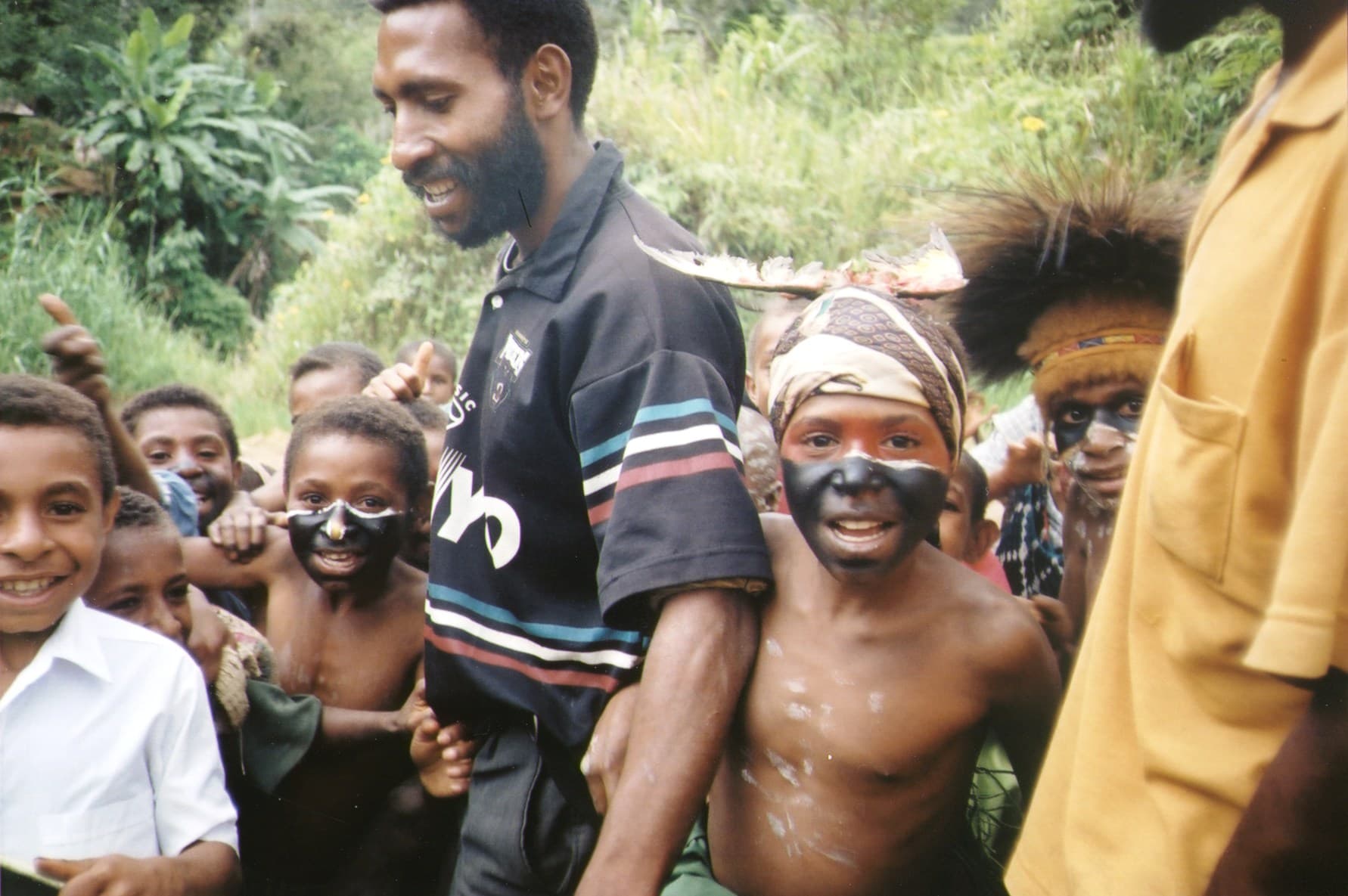
The most famous sing-sings happen in the Highland towns of Goroka and Mount Hagen each August or September. Dozens of groups travel in from villages all over the country. They paint their faces, wear bright feathered headdresses, and dance in long lines to the rhythm of hand-held drums called 'kundus'.
The costumes are amazing. Some headdresses are bigger than the dancer wearing them, decorated with the feathers of birds of paradise, cuscus fur, leaves and shells. Some groups paint their bodies with bright clay - red, white, yellow and black. Each pattern means something specific in the dancer's village - it is a bit like wearing your village's flag on your skin.
A sing-sing is not a competition between groups, even though sometimes a prize is given. The real point is to share - to show one another what your village looks like at its very proudest. Children often dance too, in mini-versions of the adult costumes, learning the steps from their parents and grandparents.
The kundu drum is the heartbeat of any sing-sing. It is shaped like an hourglass, made of hollowed wood, with a snake or lizard skin stretched over one end. The drummer holds it in one hand and taps the skin with the other. When hundreds of kundus play together, you can feel the rhythm in your chest.