
Classroom lesson · Wildlife · 🇴🇲 Oman

Green Turtle Nesting at Ras al Jinz

Thousands of sea turtles return to the same beach every year to nest

A large green sea turtle crawling up a moonlit beach at Ras al Jinz in Oman

Photo · Wikimedia Commons

What is it?

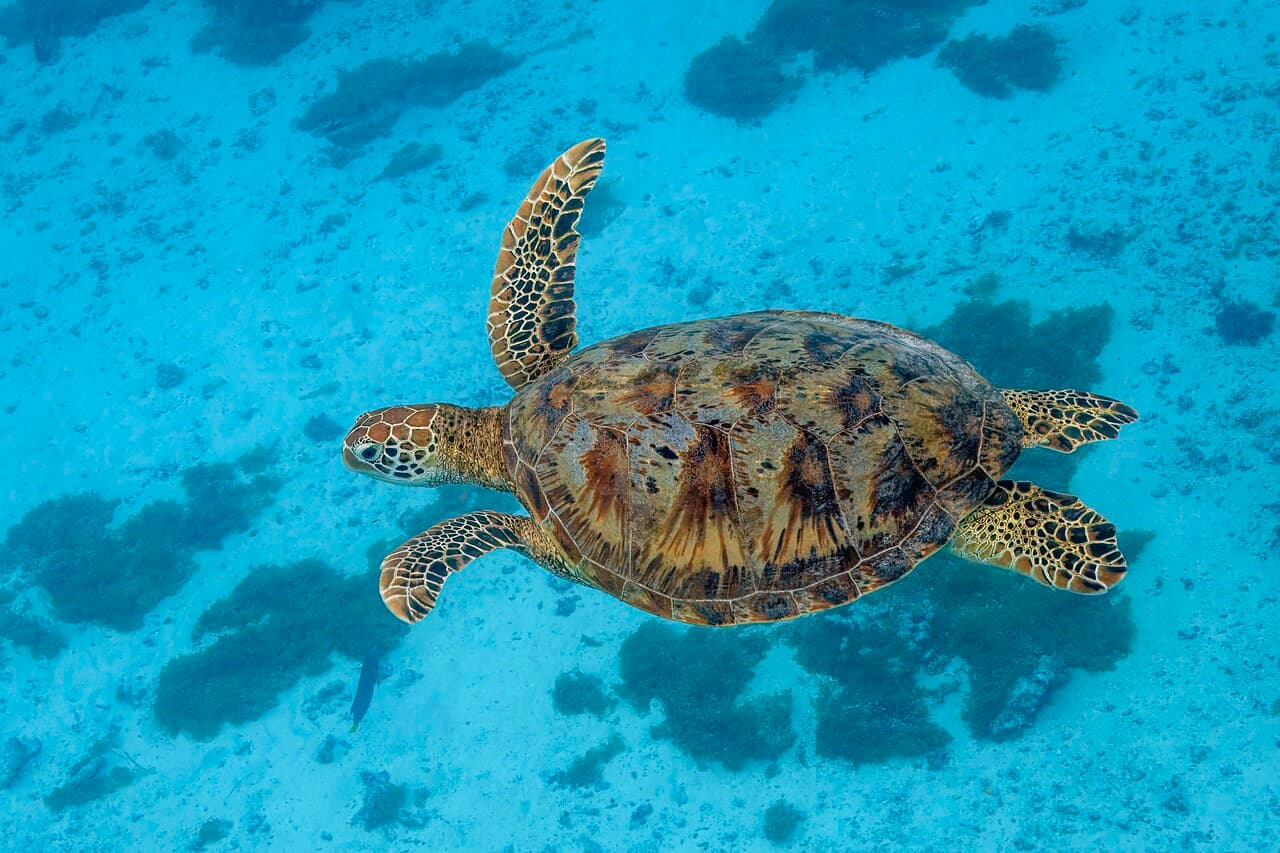
Every year, thousands of green sea turtles swim to Ras al Jinz - the most easterly point of the Arabian Peninsula - to lay their eggs on the same beach where they were born. It is one of the largest green turtle nesting sites in the Indian Ocean, and it has been happening for millions of years.

Tell me more

Green sea turtles are huge - adults can weigh as much as 200 kilograms, about the same as two baby grand pianos! They spend almost their whole lives at sea, swimming enormous distances. But when the time comes to lay eggs, females return to the exact beach where they hatched, navigating thousands of kilometres using the Earth's magnetic field like a built-in compass.

At night, a turtle drags herself up the beach and digs a deep hole in the sand with her back flippers. She lays around 100 round, soft-shelled eggs - about the size of ping-pong balls - then covers them up carefully with sand before returning to the sea. After about 60 days, the eggs hatch and tiny hatchlings the size of your hand scramble towards the sea.

Oman has protected Ras al Jinz as a nature reserve with strict rules about how visitors can behave. Visitors can only go with a trained guide at night, using red-tinted torches so the turtles are not disturbed by bright white light. Wardens watch over the nesting beach every night of the nesting season.

Conservationists count the nests and protect the eggs from animals that might dig them up. They also work with fishing communities to make sure turtles are not accidentally caught in nets. Because of these efforts, the Ras al Jinz turtle population is stable and well-protected.

In the classroom

Walk your class through this in 15 minutes.

Talk together

Discussion prompts

  1. 01How amazing is it that a turtle can find its exact birth beach after swimming thousands of kilometres? How do you think you would navigate without any maps?
  2. 02Why do you think visitors are only allowed on the beach at night and must use red lights? Why does it matter not to disturb the turtles?
  3. 03What jobs do you think the rangers and scientists do at Ras al Jinz? Would you like that job?
Try this

Classroom activity

Make a 'life cycle of a green turtle' wheel. Draw a circle divided into four sections: (1) eggs hatching, (2) hatchling racing to sea, (3) adult turtle swimming the ocean for years, (4) female returning to lay eggs. Label each stage with one key fact.