
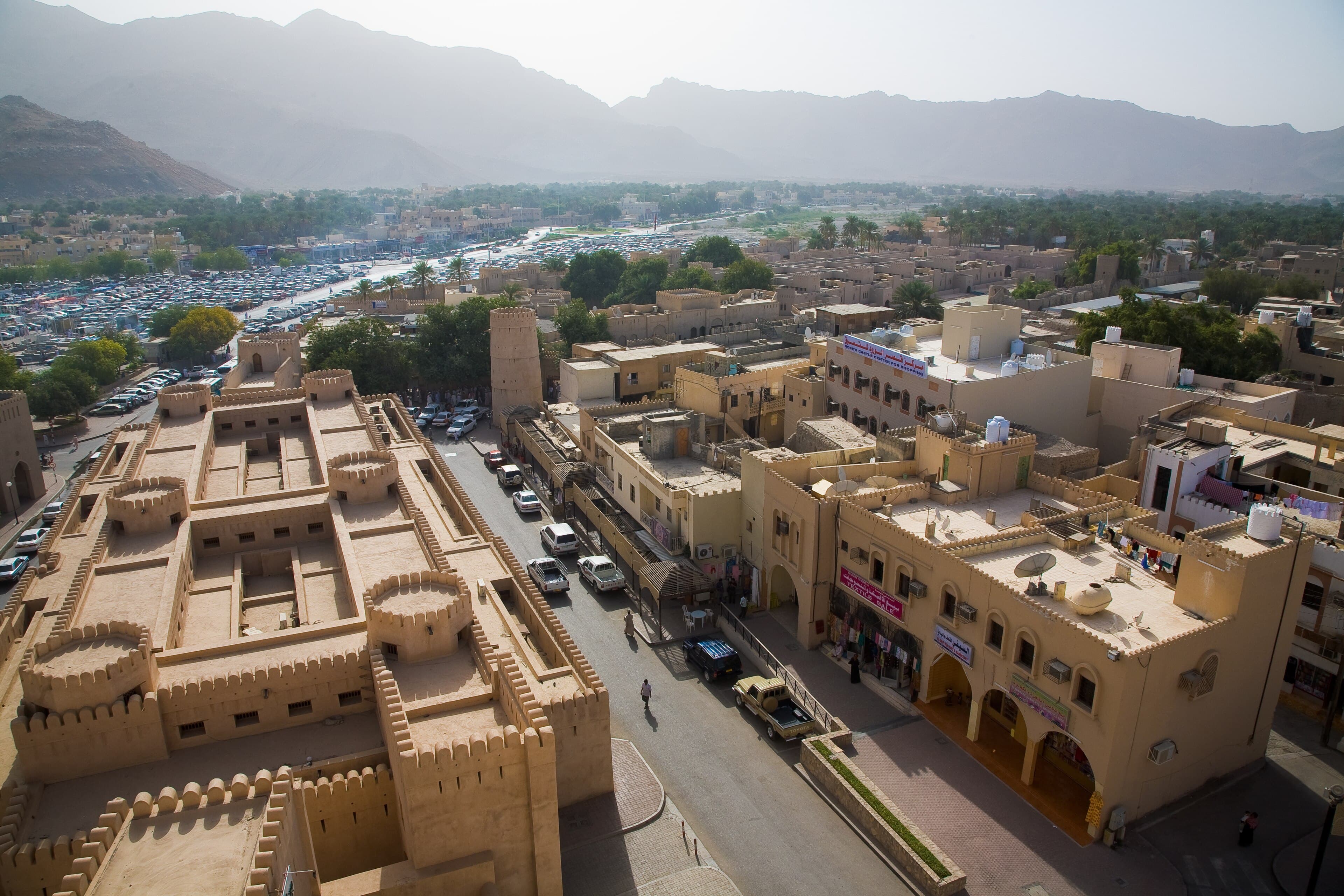
The fort's round tower is enormous - about 36 metres across at the base and made from blocks of stone. The builders were clever: the tower has a maze of hidden rooms, narrow staircases, and trapdoors so that defenders could confuse anyone who got inside. There are even holes in the floor above the gate where people could drop boiling date syrup on unwelcome visitors!
Today, visitors climb to the top of the tower for a brilliant view across the Nizwa oasis - a green patchwork of date palms and gardens - and the mountains beyond. The fort also has a small museum inside, showing traditional weapons, jewellery, and everyday objects from old Omani life.
Just outside the fort, Nizwa Souk comes alive every morning. Vendors sell silver jewellery, decorated khanjars (the traditional curved Omani dagger worn as a symbol of pride, not as a weapon), pottery, spices, and baskets woven from palm leaves. On Friday mornings, a livestock market fills one courtyard - goats, sheep and cattle are led in from surrounding villages.
Nizwa was once the capital city of Oman, and it remains a place where traditional Omani crafts and culture are very much alive. Silversmiths hammer tiny patterns into rings and bracelets right in their small souk stalls, just as craftspeople have done in Nizwa for generations.