
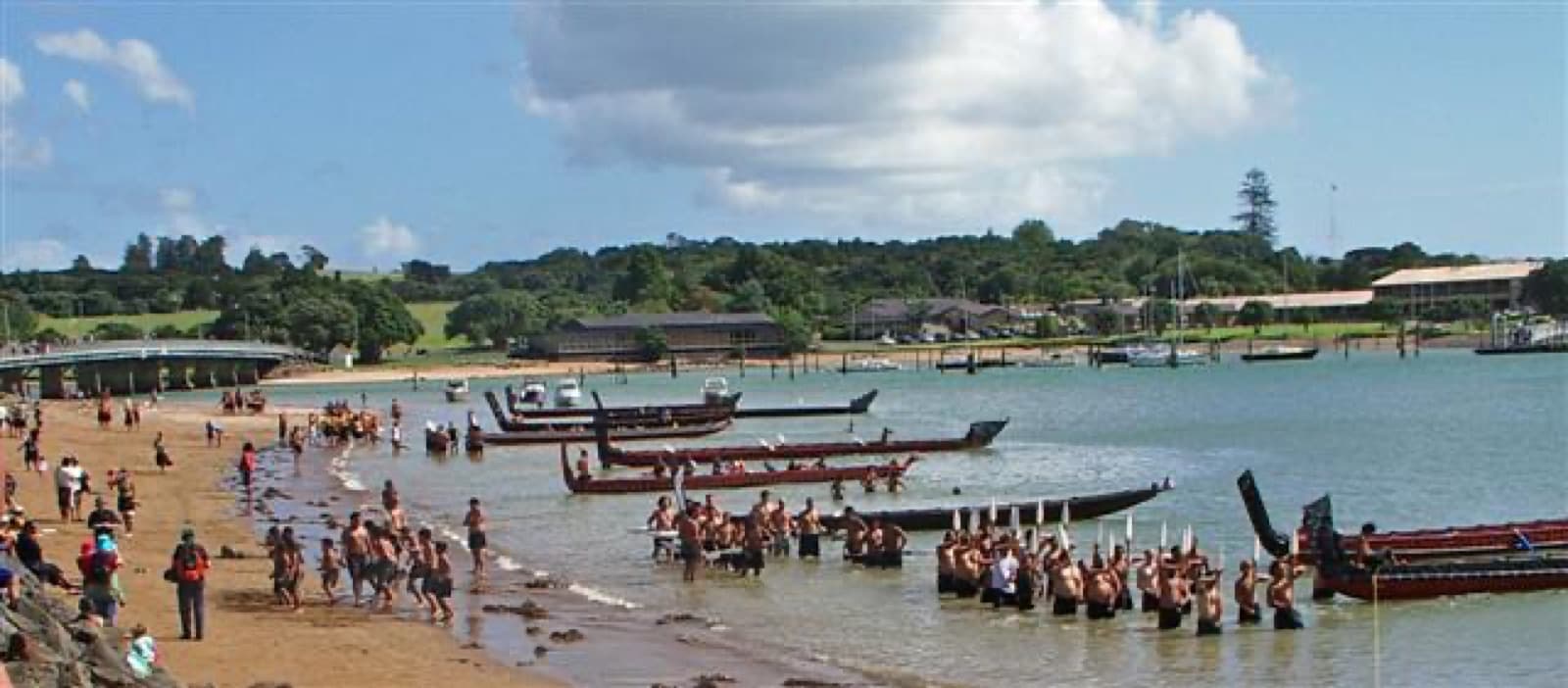
At Waitangi itself, the day is huge. Traditional Māori canoes called waka are launched into the bay - long, carved wooden boats paddled by teams of people moving as one. Some waka are big enough to carry 80 paddlers. They glide together across the water at sunrise.
There are kapa haka performances - groups of dancers and singers in matching clothes, performing traditional songs and dances. There is a national breakfast where leaders, families and visitors all eat together. Flags fly everywhere - the New Zealand flag, the Māori flag (Tino Rangatiratanga, in red, black and white), and many others.
All across the country, towns hold their own Waitangi Day events: community concerts, picnics at the beach (because February is summer in New Zealand), sport, food and free festivals. A lot of New Zealand spends the day outside.
Waitangi Day is also a day of reflection. People talk about what it means to live in a country shared by Māori and many other peoples, and about how to keep the promises the Treaty made. Schools often spend the week before learning about the day, asking questions, and inviting visitors in.