
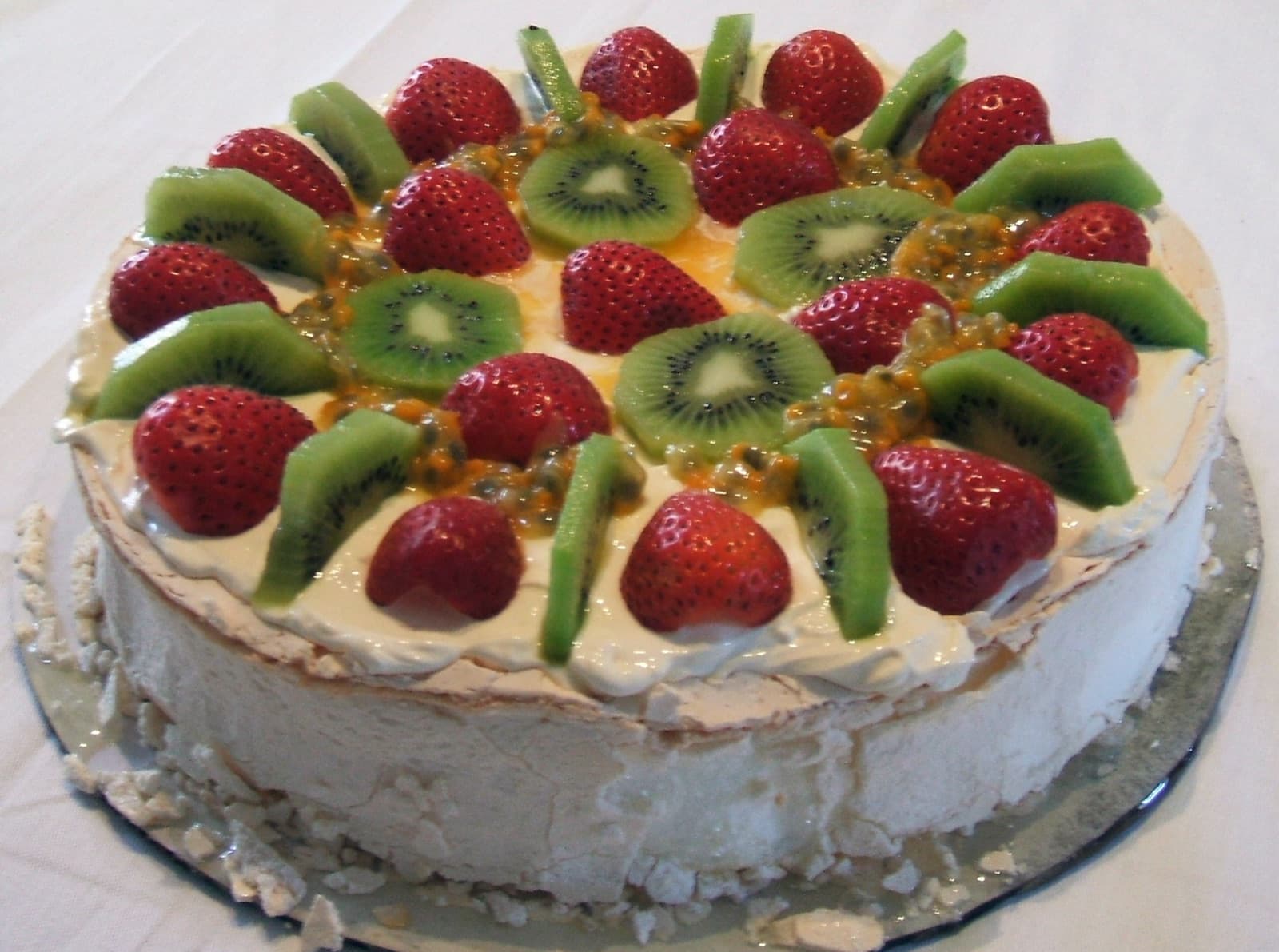
A pavlova starts with whisking egg whites with sugar until they are glossy and stand up in stiff peaks. Then it is shaped into a round disc and baked very slowly in a cool oven. The outside dries into a crackly shell. The inside stays soft and chewy, like a giant marshmallow.
On top goes a thick layer of whipped cream and then fresh fruit. The most New Zealand version uses kiwifruit, strawberries and passionfruit. The bright colours look beautiful against the snowy white meringue.
There is a long-running, friendly argument between New Zealand and Australia about who invented pavlova. Both countries claim it. Both have old recipes with the name. Food historians have spent years digging through old cookbooks. Whoever invented it, everyone agrees it is a brilliant dessert.
It is named after a famous Russian ballerina called Anna Pavlova, who toured both countries in the 1920s. People thought the dessert was as soft, white and light as her tutu. Calling a dessert after a dancer is a lovely idea - it makes you eat it carefully, in case it floats away.