
Classroom lesson · Food · 🇳🇿 New Zealand

Hāngī - cooking underground

A traditional Māori earth oven that uses hot stones and steam

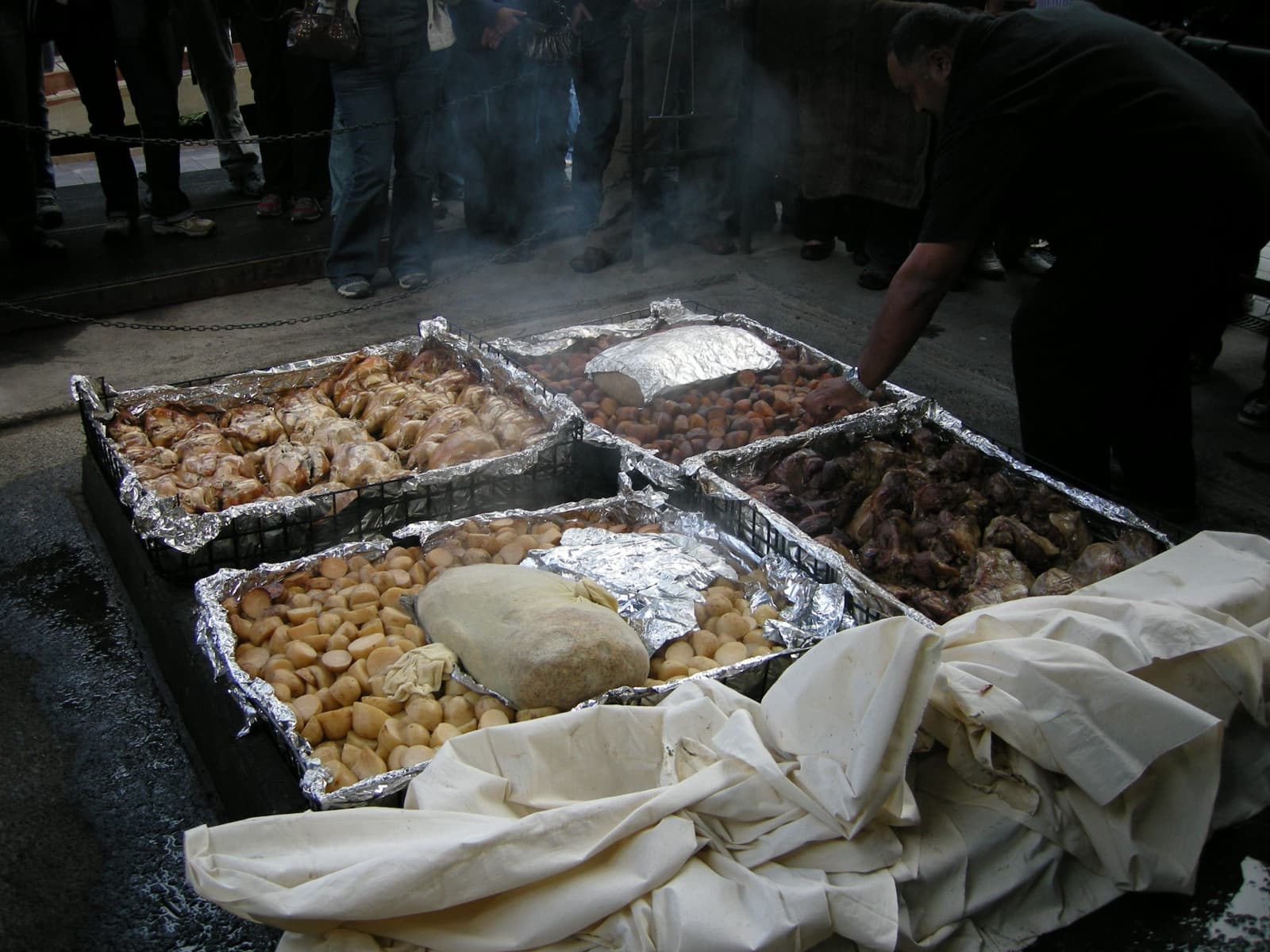
Trays of meat and vegetables being prepared after cooking in an earth oven (hāngī)

Photo · Wikimedia Commons

What is it?

A hāngī (say it 'HUNG-ee') is a Māori way of cooking food in a pit in the ground. Stones are heated in a fire until they are very hot, then placed in the pit. Meat, kūmara (sweet potato), pumpkin and other vegetables are wrapped, placed on the stones, and covered up with earth. Hours later the food comes out warm, smoky and unbelievably tender.

Tell me more

Hāngī cooking has been used by Māori for hundreds of years. Long before metal pots and kitchen stoves arrived, families would use the heat of the Earth to cook large meals for everyone. A single hāngī can feed dozens of people at once - it's perfect for big gatherings.

Making one takes patience. First, a fire is lit and stones (or special metal blocks) are heated until they glow. While that happens, food is prepared and wrapped in leaves, cloth or foil. The hot stones go into a pit, the food goes on top in wire baskets, wet sheets cover the food to make steam, and earth is shovelled over the whole thing.

Then the family waits. Three or four hours later, the earth is carefully scraped away, the sheets are lifted, and the food appears - still steaming, with a slight smoky taste from the stones and the leaves. The kūmara is soft. The meat falls apart. Everyone gathers round.

Hāngī is often served at a marae - the community gathering place at the heart of every Māori village - to welcome guests or mark a special day. It is more than just food. It is the work of many people, several hours, and the heat of the ground itself.

In the classroom

Walk your class through this in 15 minutes.

Talk together

Discussion prompts

  1. 01Why might a way of cooking that takes hours bring people together more than a quick one?
  2. 02Cooking with hot stones doesn't need any electricity or gas. What other ways do people cook in different parts of the world?
  3. 03Hāngī uses leaves and wet cloths to make steam. Can you think of other clever uses of steam in cooking?
Try this

Classroom activity

On A4 paper, design a 'hāngī meal' for your class. Pick six foods you'd want cooked slowly underground - they could be from your home, your favourites, or things you've never tried. As a class, sort them into 'roots, leaves, fruit, meat' and discuss which ones would go best together.