
Classroom lesson · Wildlife · 🇳🇷 Nauru

The Frigatebird

Nauru's beloved sky sailor - and a bird trained by hand

A magnificent frigatebird in flight with its distinctive forked tail and wide wingspan

Photo · Wikimedia Commons

What is it?

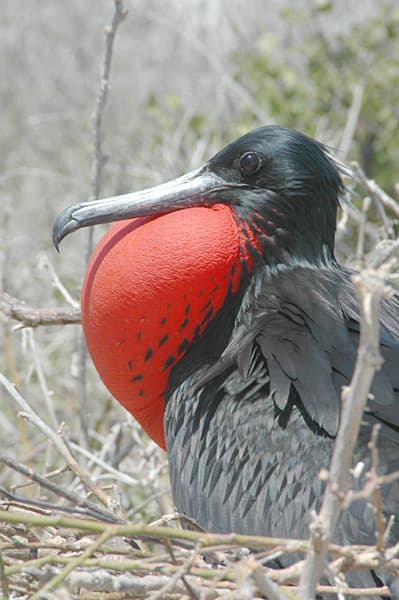
The frigatebird is one of the most spectacular seabirds in the Pacific Ocean, famous for its enormous wingspan and deeply forked tail. Male frigatebirds have a bright red pouch under their beak that they puff up like a balloon to impress females. On Nauru, the frigatebird is more than just a wild bird - for centuries, Nauruan men have caught young frigatebirds and trained them to come back to their hands, making them a living part of Nauruan culture.

Tell me more

Frigatebirds are extraordinary fliers. Their wingspan can reach more than 2 metres - wider than a tall adult with arms stretched out - yet they weigh barely more than a large bag of sugar. They can stay in the air for weeks at a time, riding warm currents high above the ocean, barely flapping their wings.

Nauruan fishermen have trained frigatebirds for generations, using them almost like homing pigeons. A young frigatebird is gently raised by hand until it bonds with its owner. Then when the fisherman paddles far out to sea, he can release the bird to fly back to the island and let people on shore know where he is. This beautiful tradition is unique to Nauru.

Flocks of frigatebirds still circle the skies above Nauru's coastline every day, their silhouettes like giant black kites hanging in the blue. Watching them is one of the great free shows on the island - no ticket needed, just look up.

In the classroom

Walk your class through this in 15 minutes.

Talk together

Discussion prompts

  1. 01Nauruan fishermen trained frigatebirds to carry messages - like a living radio. Can you think of other animals that humans have trained to help them communicate or find their way?
  2. 02The frigatebird barely needs to flap its wings. What do you think it feels like to glide that effortlessly through the sky?
  3. 03Why might it be important for a small island community to keep old traditions like frigatebird training alive?
Try this

Classroom activity

Make a large paper frigatebird: cut a long narrow wing shape from black card (about 60 cm tip to tip) and add a forked tail. Attach a piece of string and hang it from the ceiling so it can 'glide'. Measure 2 metres on the floor to show the real wingspan. How wide is that compared to your own arm-span?