School life
In a Montenegro classroom
Local school customs vary. The best way to learn about a class's day is to ask them directly.

Europe · Country briefing
A child-friendly mission briefing for Thursday 19 November - capital, climate, school day, languages, fun facts, native animals, and five questions to ask the class on the other side of the world.
Climate in November: Mild autumn; cooler in the north.
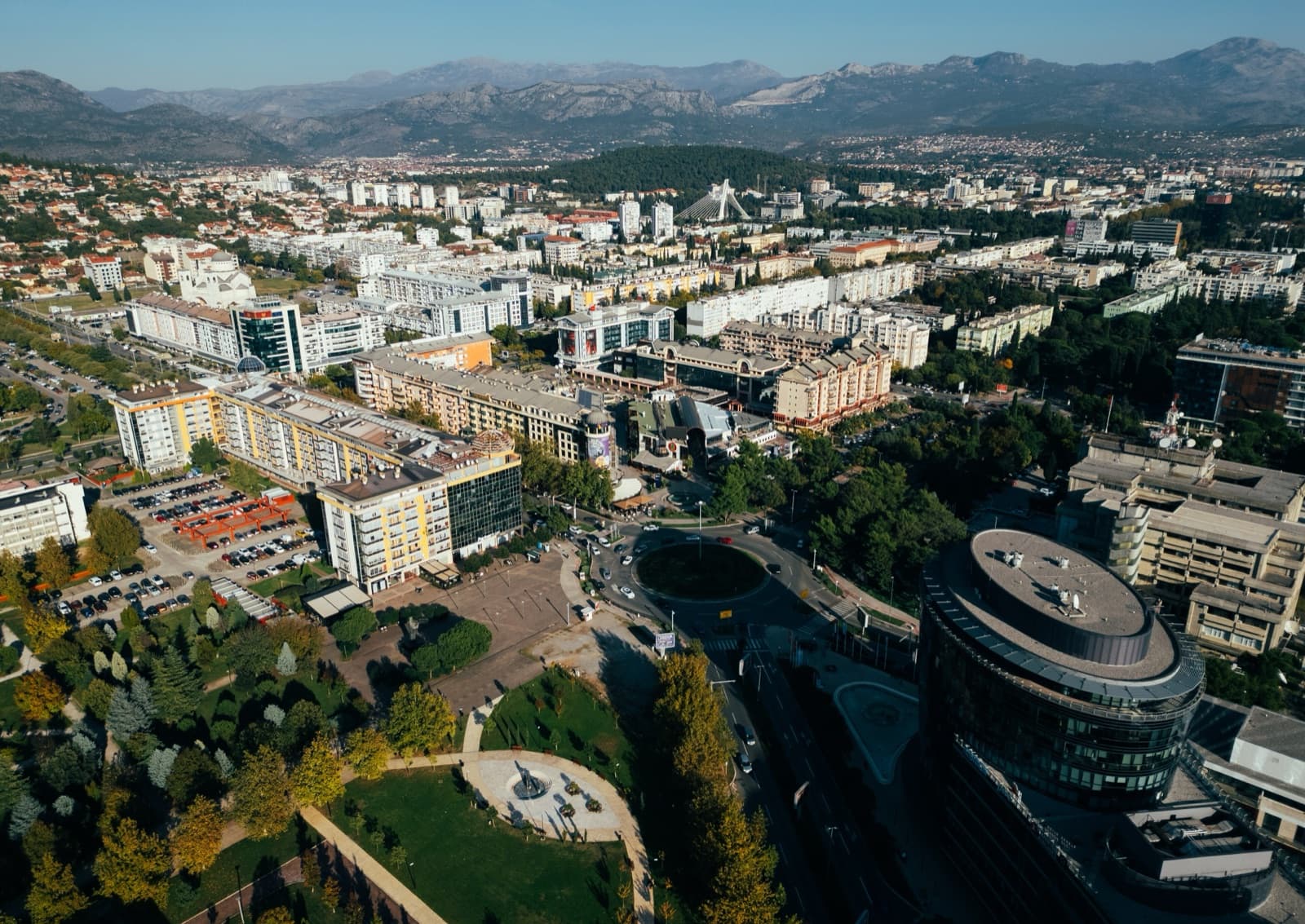
The capital
Podgorica
Photo · Wikimedia Commons
Fun facts
Durmitor National Park
A UNESCO mountain wilderness with glacial lakes and ancient forest
Open lesson
Bobotov Kuk
Montenegro's highest peak, sitting above the clouds in Durmitor
Open lesson
Sveti Stefan
A tiny island village connected to the mainland by a sandy path
Open lesson
Lovćen Mountain
Montenegro's heart mountain, with views stretching to the sea
Open lesson
Tap any card to open a class-ready mini-lesson - for the teacher to walk through, or an older child to read aloud.
Native animals
Lake Skadar
The biggest lake in the Balkans, full of water birds and lily pads
Open lesson
Balkan Lynx
One of Europe's rarest wild cats, living in Montenegro's mountains
Open lesson
Brown Bear
Europe's largest land predator roams Montenegro's wild forests
Open lesson
Chamois
Sure-footed mountain goats that dance across steep rocky cliffs
Open lesson
Golden Eagle
One of Europe's most powerful birds soars over Montenegro's peaks
Open lesson
Tap any animal to open a class-ready lesson about it.
School life
Local school customs vary. The best way to learn about a class's day is to ask them directly.
Greetings to learn
Five questions to ask
What not to assume
Culture
Food
Music
Sport
Festivals
Tap any chip to open a class-ready lesson - what it is, why it matters, fun facts.
Choose Montenegro when you register - we'll show you the time-zone feasibility.
We'd like to use Google Analytics cookies to see how this site is used and make it better. No advertising, and never any pupil data. How we use cookies.