
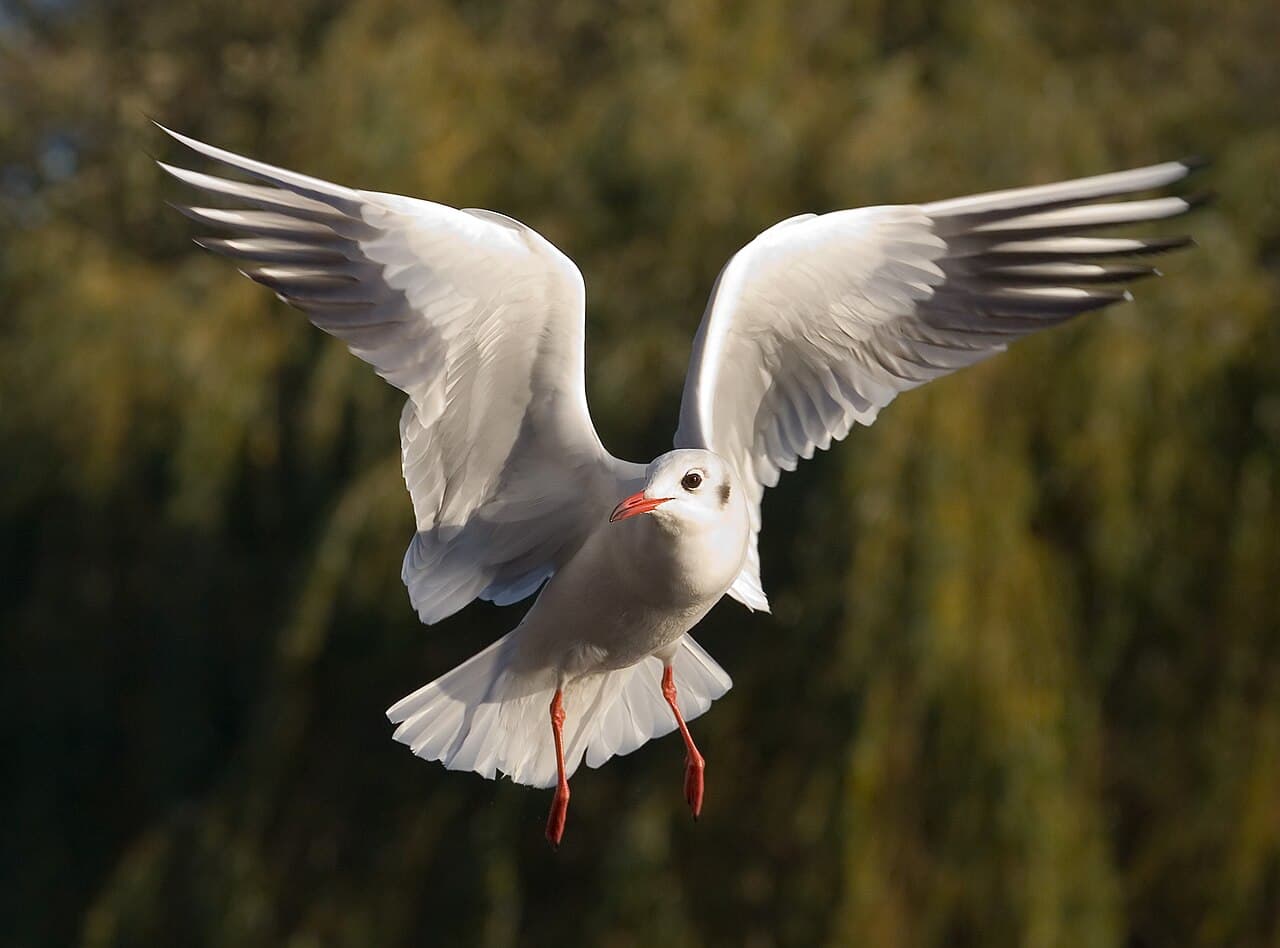
Herring gulls are the larger of the two - about the size of a small cat - with pink legs and a red spot on their yellow beak. Common gulls are a little smaller and have greener-yellow legs. Both species are highly intelligent birds. Scientists have shown that gulls can solve simple puzzles, remember human faces, and even pass on learned behaviour to their chicks - a sign of real bird brainpower.
Gulls are not just noisy beach birds - they are an important part of the coastal ecosystem. They eat fish, shellfish, crabs, worms and scraps of food, keeping the harbour area clean. In Monaco, you might see them perched on the masts of yachts in the harbour, gliding on the wind above Larvotto Beach, or wheeling around the rocks at the base of the palace cliff.
Gulls are very good parents. Both the mother and father take turns sitting on the eggs and then feeding the fluffy grey chicks. Young herring gulls have speckled brown feathers for their first few years of life, so they look very different from the clean white-and-grey adults. It takes about four years before they grow their full adult plumage.