
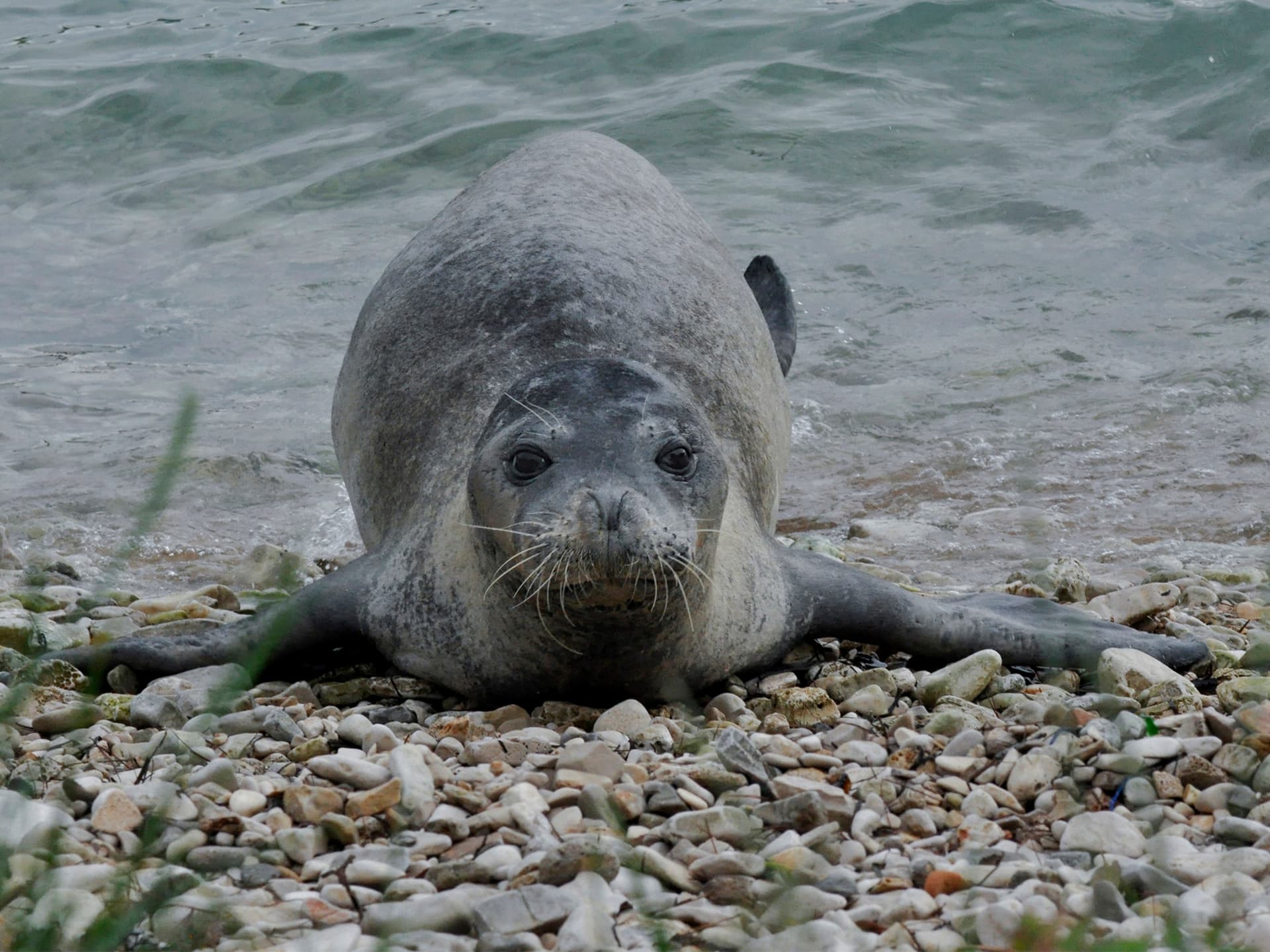
Monk seals get their name from the way their smooth, rounded shape reminded people of monks wearing long brown robes. They are excellent swimmers and can dive deep underwater to catch fish. Mediterranean monk seals are a bit larger than a big dog and have very expressive dark eyes. Unlike many seals, they prefer warm Mediterranean waters rather than cold Arctic ones.
Historically, monk seals used to haul themselves up onto open beaches to rest and raise their pups. But as more and more people settled along Mediterranean coasts, the seals were gradually pushed away from open beaches. Today, the remaining seals mostly shelter in sea caves with underwater entrances, which gives them privacy and safety. Monaco's Oceanographic Museum has long been involved in research and awareness about monk seals.
Scientists estimate there are fewer than 800 Mediterranean monk seals left in the wild - making them critically endangered. Most of the surviving population lives around Greece and the coasts of Türkiye and Madeira. Conservation programmes study where the seals travel, what they eat, and how to reduce the risks they face from fishing nets and disturbance. Every new pup born is a reason to celebrate.