
Classroom lesson · The pink pigeon - a conservation success story · 🇲🇺 Mauritius

The pink pigeon - a conservation success story

From fewer than 10 birds to over 500, thanks to people who cared

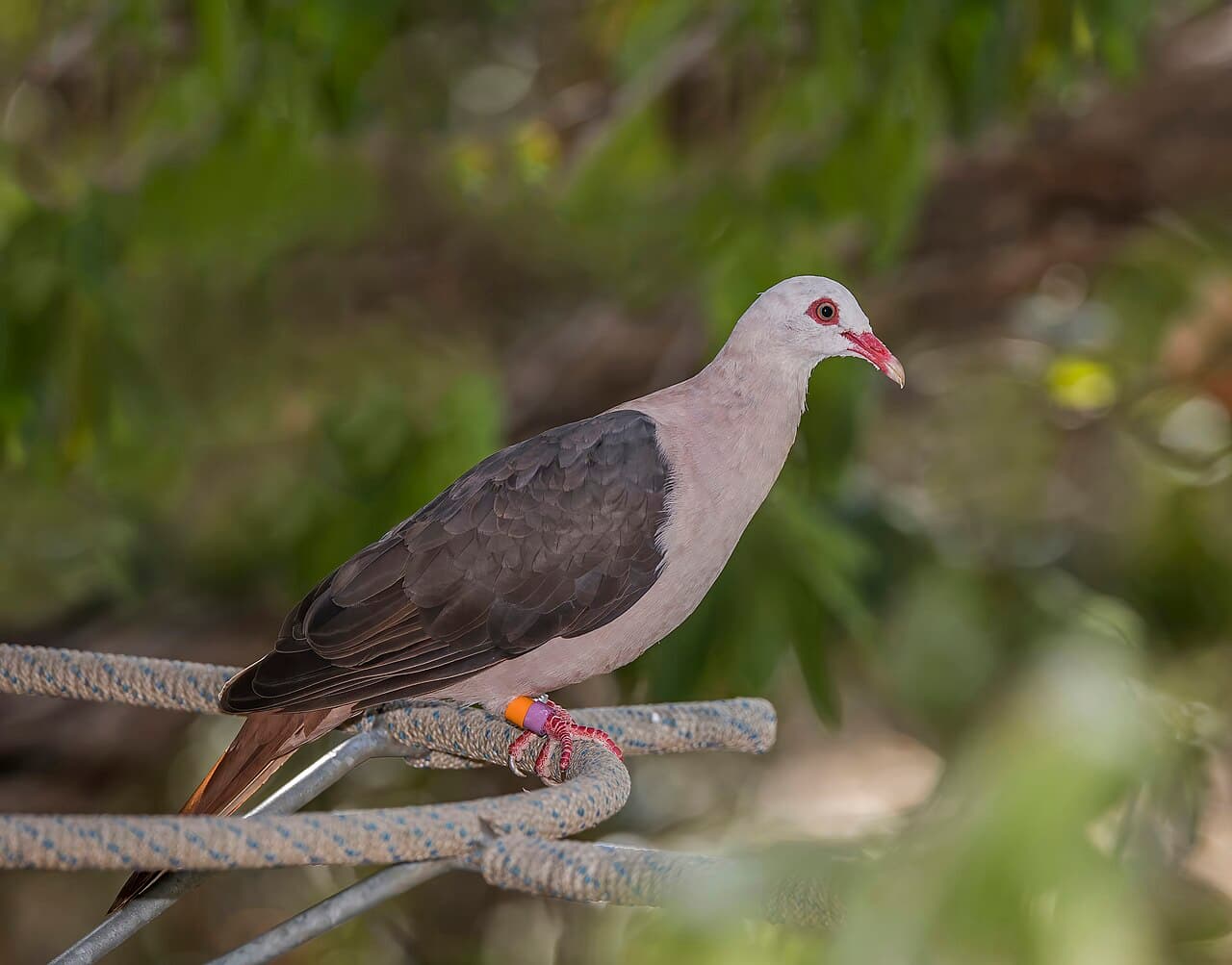
A pink pigeon with pale pink-brown feathers perched on a branch in Mauritius

Photo · Wikimedia Commons

What is it?

The pink pigeon is a beautiful pale-pink bird that lives in the forests of Mauritius. In the 1990s, there were fewer than 10 pink pigeons left in the wild - they were almost gone forever. Thanks to an incredible conservation effort, there are now more than 500. The pink pigeon is one of the world's great rescue stories.

Tell me more

Pink pigeons live mainly inside Black River Gorges National Park. They have soft, pale-pink feathers on their body and darker wings, with a red ring around each eye. They feed on fruit, seeds and leaves in the forest canopy.

The reason they almost disappeared was that their forest home shrank and new animals - rats and mongooses - ate their eggs and chicks. Scientists and wildlife rangers set up nest boxes, fed the birds extra food, and removed threats from around their nesting areas. Chicks raised safely were released back into the wild.

The pink pigeon rescue worked so well that it became a model for saving other rare birds around the world. Gerald Durrell, a famous wildlife writer who loved Mauritius, helped draw attention to the pink pigeon's plight. His work, and the work of Mauritian conservationists, showed that with effort and care, a species can come back from the very edge.

In the classroom

Walk your class through this in 15 minutes.

Talk together

Discussion prompts

  1. 01What does it tell us that just a handful of people working hard could save a whole species?
  2. 02How did the pink pigeon's situation get bad? What had to change to make it better?
  3. 03Can you think of something that seemed very hard but got better because people kept trying?
  4. 04Why is it important to save rare animals even if most people will never see them?
Try this

Classroom activity

Draw a 'recovery graph' for the pink pigeon - starting with fewer than 10 birds and rising to 500+ over about 30 years. Then research one other animal that has been brought back from the edge and add its recovery line to the same graph. Which recovered faster?