
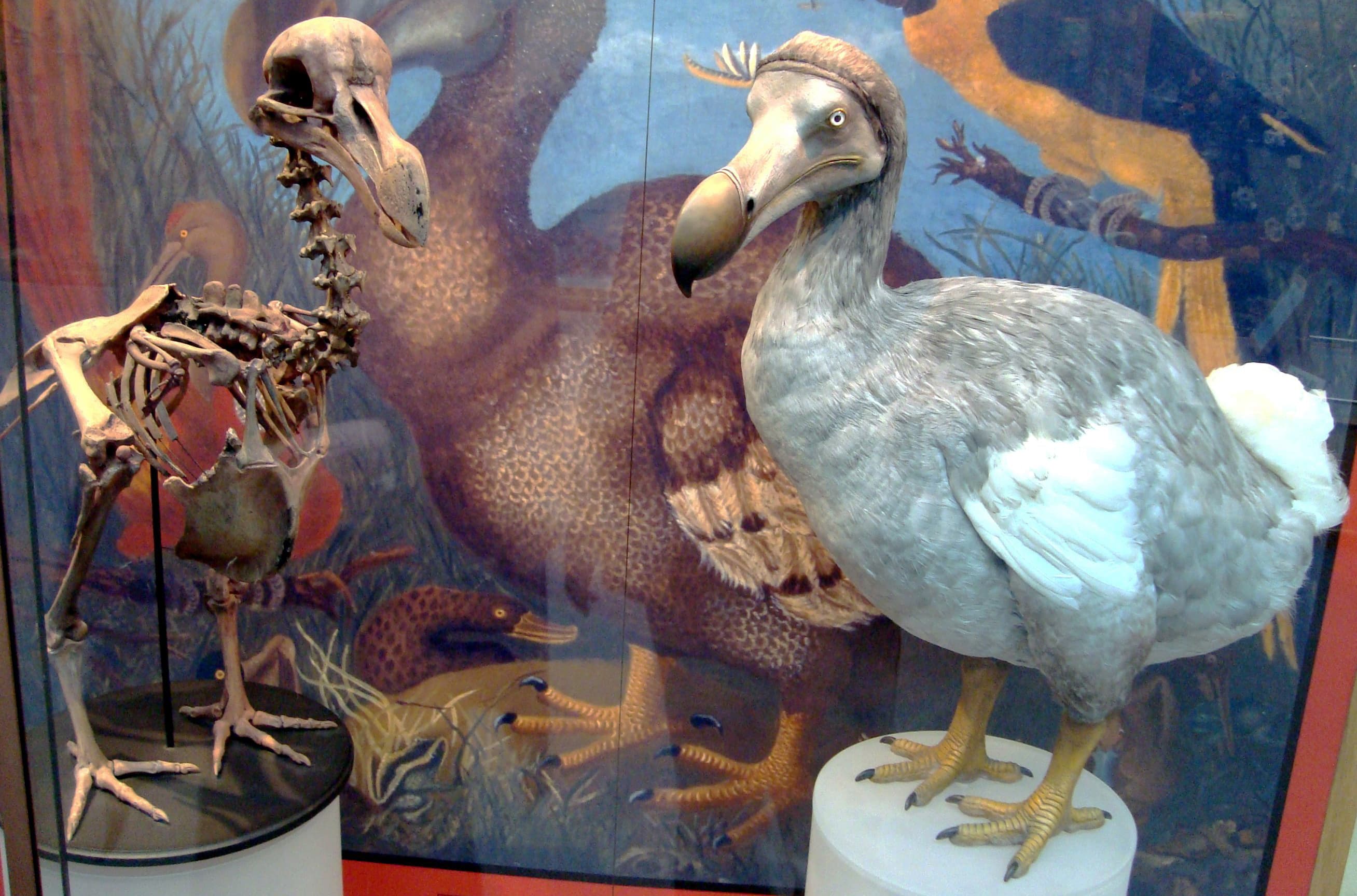
The dodo had no natural predators on Mauritius, so it had no fear of anything - it would walk right up to people, which made it seem friendly and curious. Because the island was so safe for so long, the dodo never needed to fly or run away, and over millions of years its wings became very small.
When humans arrived on the island and brought animals with them - cats, rats, pigs and others - the dodo's eggs and chicks were not safe any more. The dodo also lost the forest it lived in as the land was cleared. By around 1680, the dodo was gone. It is one of the most well-known cases that led scientists and people to think hard about conservation - protecting animals before it is too late.
Today, the dodo is the national symbol of Mauritius. It appears on the coat of arms, on coins, and in museums. Scientists are studying old dodo bones and feathers, and have even sequenced the dodo's DNA. The dodo story now inspires conservation projects around the world - including the successful efforts to save the pink pigeon and the Mauritius kestrel.