
Classroom lesson · Festival · 🇲🇺 Mauritius

Diwali in Mauritius

The festival of lights, celebrated island-wide with lamps, sweets and fireworks

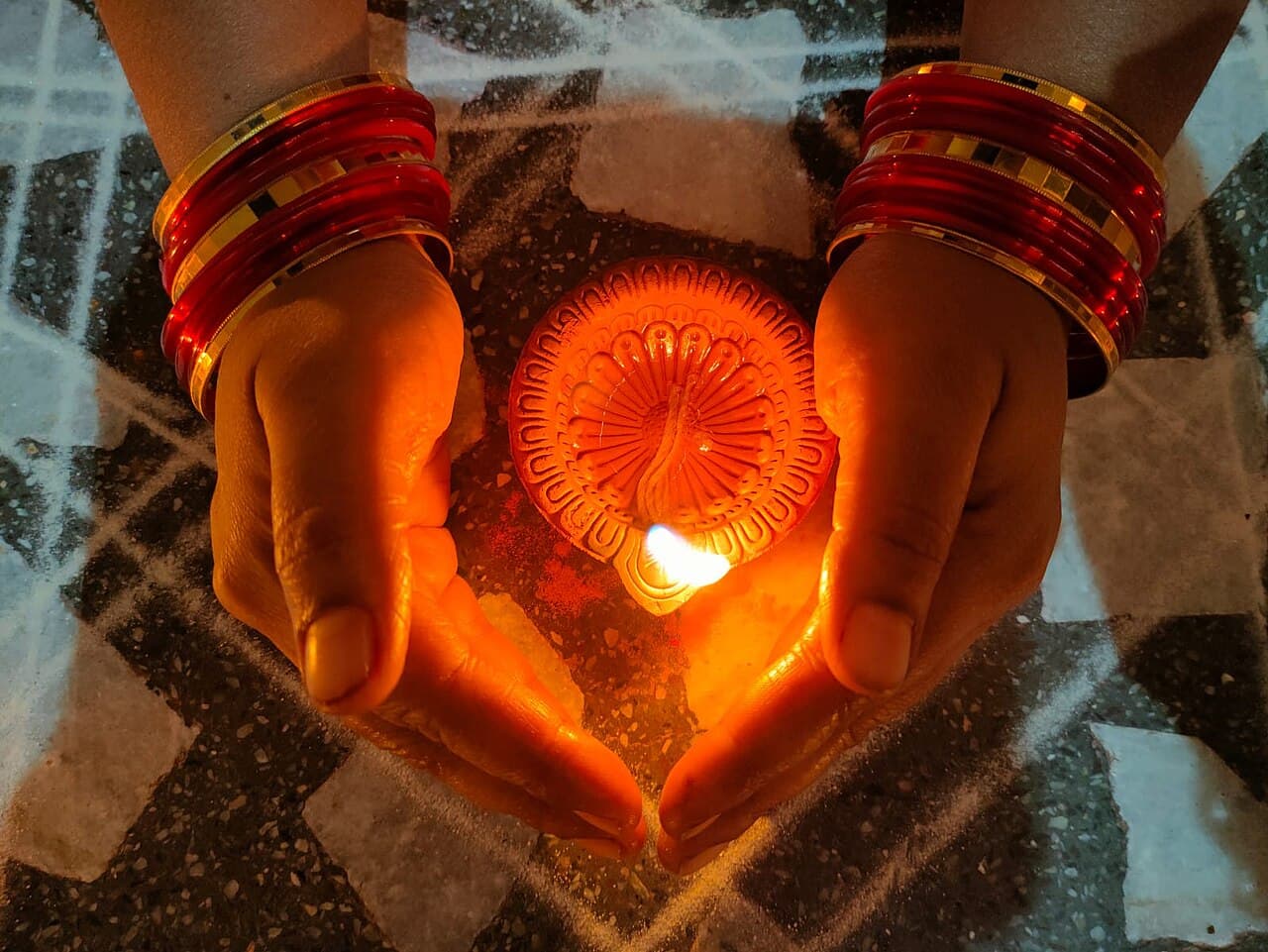
Rows of small clay oil lamps glowing at night during Diwali celebrations in Mauritius

Photo · Wikimedia Commons

What is it?

Diwali is the festival of lights, celebrated by the Hindu community in Mauritius and by millions of people across the world. Small clay lamps called diyas are lit in homes and along streets, sweets are shared with neighbours, and fireworks light up the night sky. In Mauritius, Diwali is a national public holiday enjoyed by everyone.

Tell me more

Diwali falls in October or November - the exact date changes each year because it follows the lunar calendar. The night before, families clean their homes and decorate the entrance with patterns made from coloured powder, called rangoli. Then, as darkness falls, the diyas are lit - row upon row of tiny flickering flames.

In Mauritius, Diwali is a time for sharing. Boxes of homemade sweets - like barfi, ladoo and gulab jamun - are given to friends and neighbours of all backgrounds. Children go from house to house collecting sweets, just like trick-or-treating but with a whole different flavour.

Because Mauritius has such a large Hindu community alongside all its other communities, Diwali is woven into the fabric of the whole island. Schools close for the day. Shops are decorated. People who are not Hindu join in the celebrations, admire the lights, and share the sweets. It is one of the most loved festivals on the island.

In the classroom

Walk your class through this in 15 minutes.

Talk together

Discussion prompts

  1. 01Light is a symbol used in many different festivals around the world. Why do you think light is so meaningful for celebrations?
  2. 02Diwali involves giving sweets to neighbours of all backgrounds. How does sharing food help build friendships?
  3. 03What festival or celebration from your home would you most like to share with a friend in Mauritius?
Try this

Classroom activity

Design a rangoli pattern. Draw a circle in the middle of A4 paper. Add repeating patterns of shapes and colours spreading outwards. Traditional rangoli uses dots as guides - try starting with a grid of dots and connecting them with lines. Display all the class rangoli patterns on one wall.