
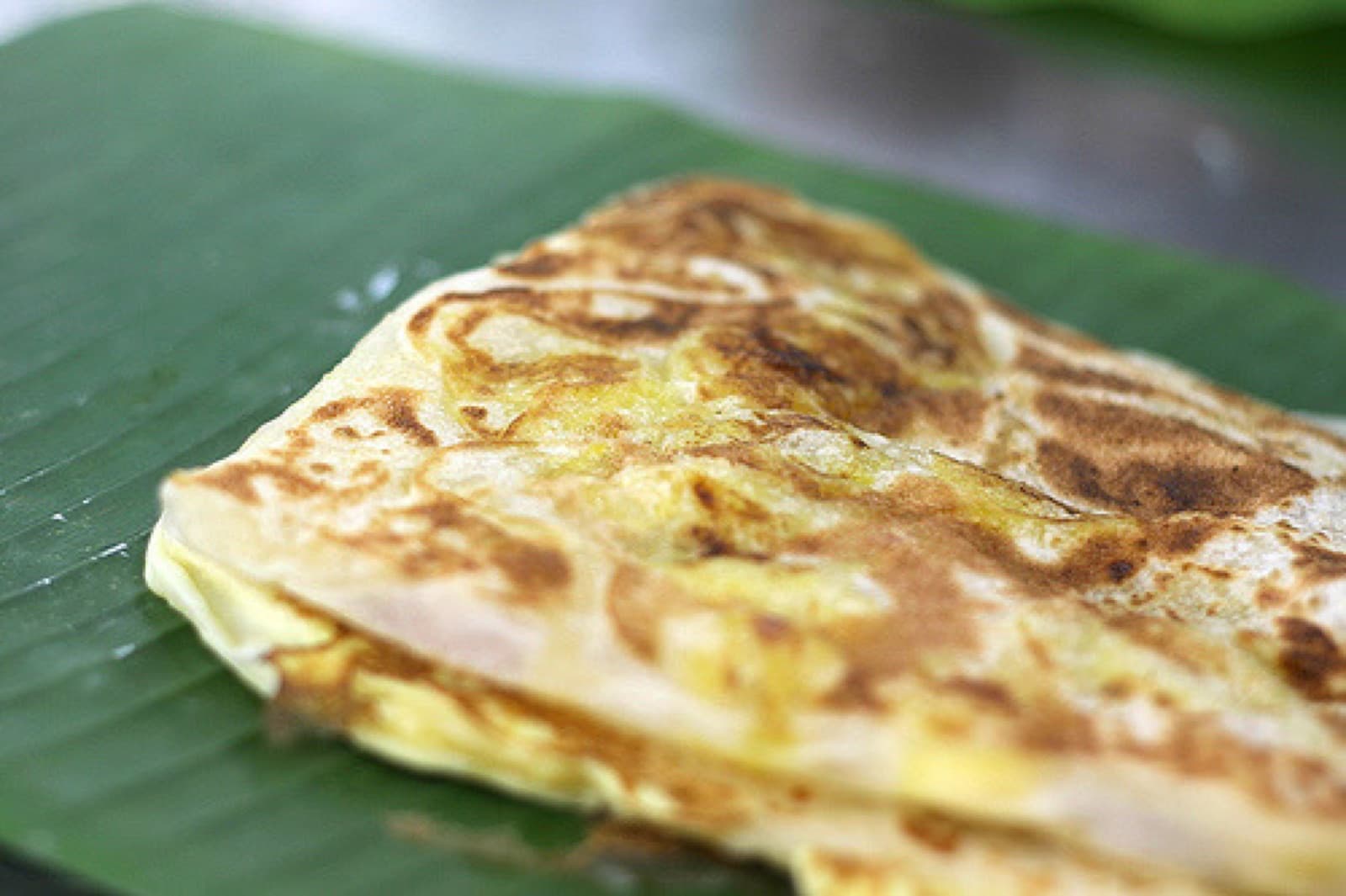
The dough is made of flour, water, salt and a special ingredient called ghee - clarified butter. It is mixed and then rested for hours, so it becomes silky and stretchy. When the roti man takes a ball of it, he can throw it into the air and stretch it out wider than a dinner plate, until you can almost see through it.
Then comes the clever bit. The roti man folds the giant thin sheet over and over, like folding a paper fan, trapping pockets of butter between every layer. The folded dough is squished into a small square and dropped onto a hot griddle, where the butter melts inside and turns each fold into a crispy layer. The finished roti is golden brown, crunchy outside, soft and stretchy inside.
Roti canai is most often eaten for breakfast or supper. It is served with little bowls of curry sauce - usually a thin yellow dhal (lentil curry) or a spicy red fish or chicken curry - and you tear off pieces of roti with your fingers and dip them. Some people sprinkle sugar on top for a sweet version.
There are funny variations. Roti telur has an egg cracked into the dough. Roti pisang has slices of banana inside. Roti tisu is stretched so thin and crisp it is shaped into a giant cone the size of a wizard's hat, taller than a small child. Restaurants compete to make the tallest roti tisu.