
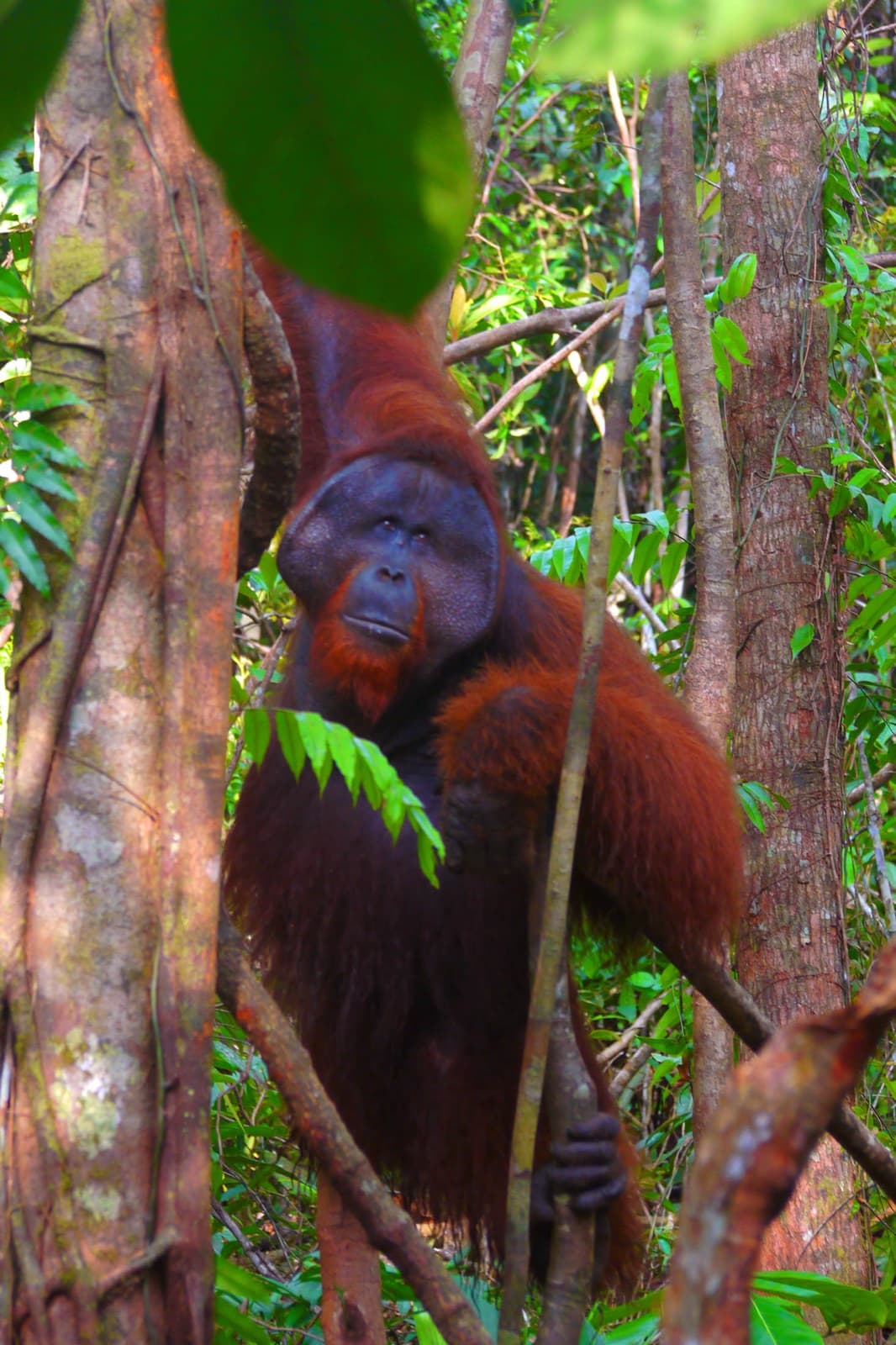
Orangutans share around 97% of their DNA with humans. That means if you compared the tiny instruction book inside an orangutan cell with the one inside yours, 97 out of every 100 pages would match. You can see it in their faces - their eyes, lips and worried-looking eyebrows feel surprisingly familiar.
Orangutans spend almost their whole lives in the treetops. Their arms are much longer than their legs - a male's arms stretched out can measure over 2 metres, longer than he is tall. They use those long arms to swing from branch to branch, and every night they build a fresh nest of leaves high up in a tree to sleep in.
Baby orangutans stay with their mum for around seven years - longer than almost any other animal except humans. In that time, mum teaches her baby which fruits are safe, how to peel a tricky thorny one called the durian, how to use a stick to dig out tasty grubs, and even how to hold a big leaf over their head as an umbrella when it rains.
In Malaysian Borneo, special rainforest centres called Sepilok and Semenggoh look after baby orangutans who have got into trouble. The carers teach them how to climb, find food, and slowly become wild again. Schoolchildren from across Malaysia visit these centres to learn how to share the forest with their forest cousins.