
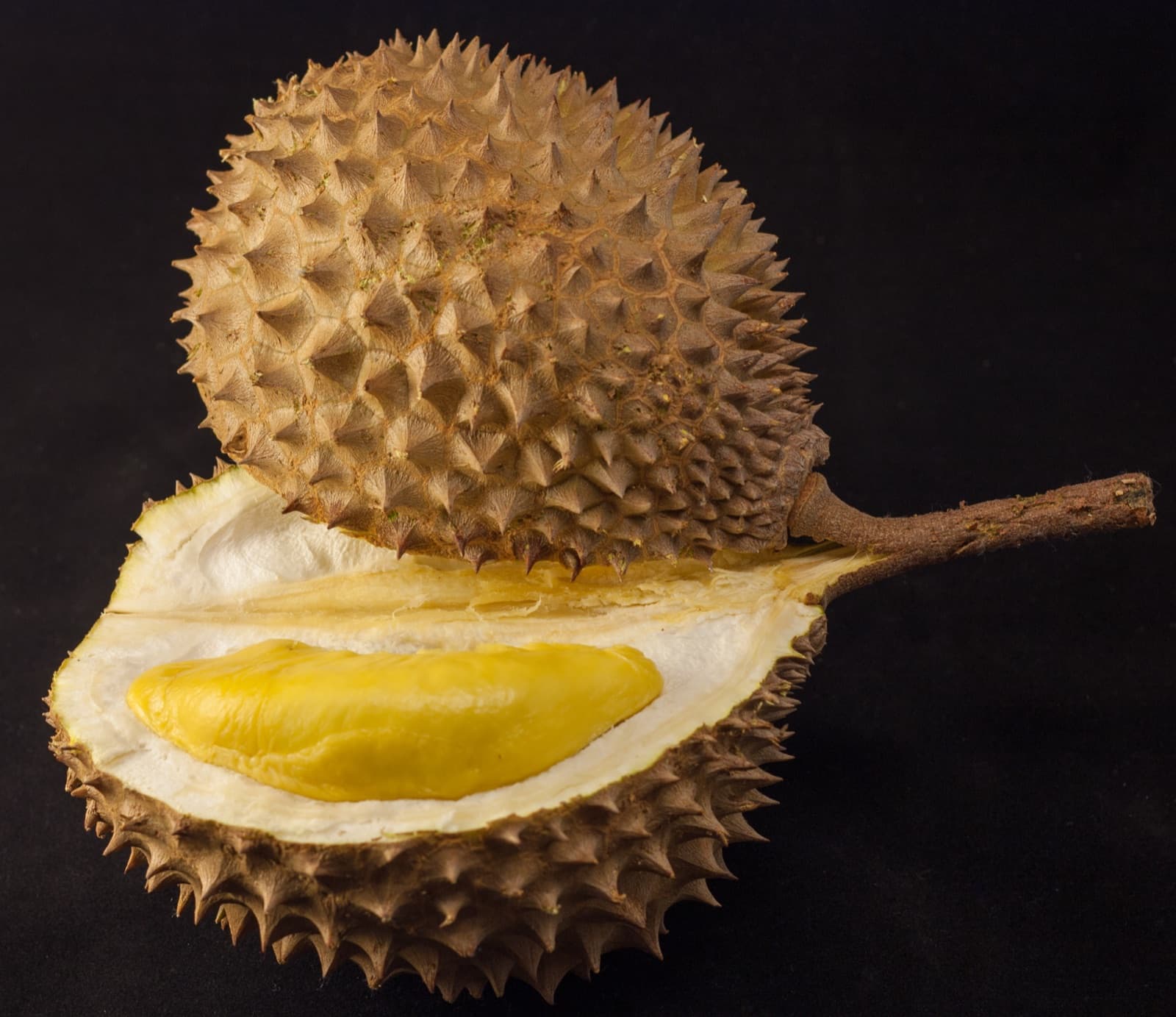
A durian is about the size of a rugby ball and covered in hard, sharp spikes. The skin is thick and tough. It grows up in the branches of a tall tree - and when it is ripe, it just falls. (Don't stand under a durian tree.) Farmers either catch them in nets or wait for them to land and pick them up afterwards.
When you crack one open, inside you find creamy yellow chunks of soft fruit, each one wrapped around a big shiny seed. The taste is sweet, custardy and rich - many Malaysians say it is like a mix of vanilla ice cream, garlic, almonds and honey, all at once. Children grow up loving it.
Now the smell. People describe it as old socks, blocked drains, an opened bin in summer, or rotten onions wrapped in a gym kit. The smell is so strong that durians are banned from most hotels, the metro in Singapore, and lots of airlines. There are special bright-pink 'no durian' signs taped to walls.
The funny thing is, the smell is part of the experience. Families gather round a table covered in newspaper, crack the durian open together with thick gloves, and laugh and complain about the smell as they eat. There is a Malay saying: 'If you really want to be welcomed in someone's home, accept the durian they offer you.'