
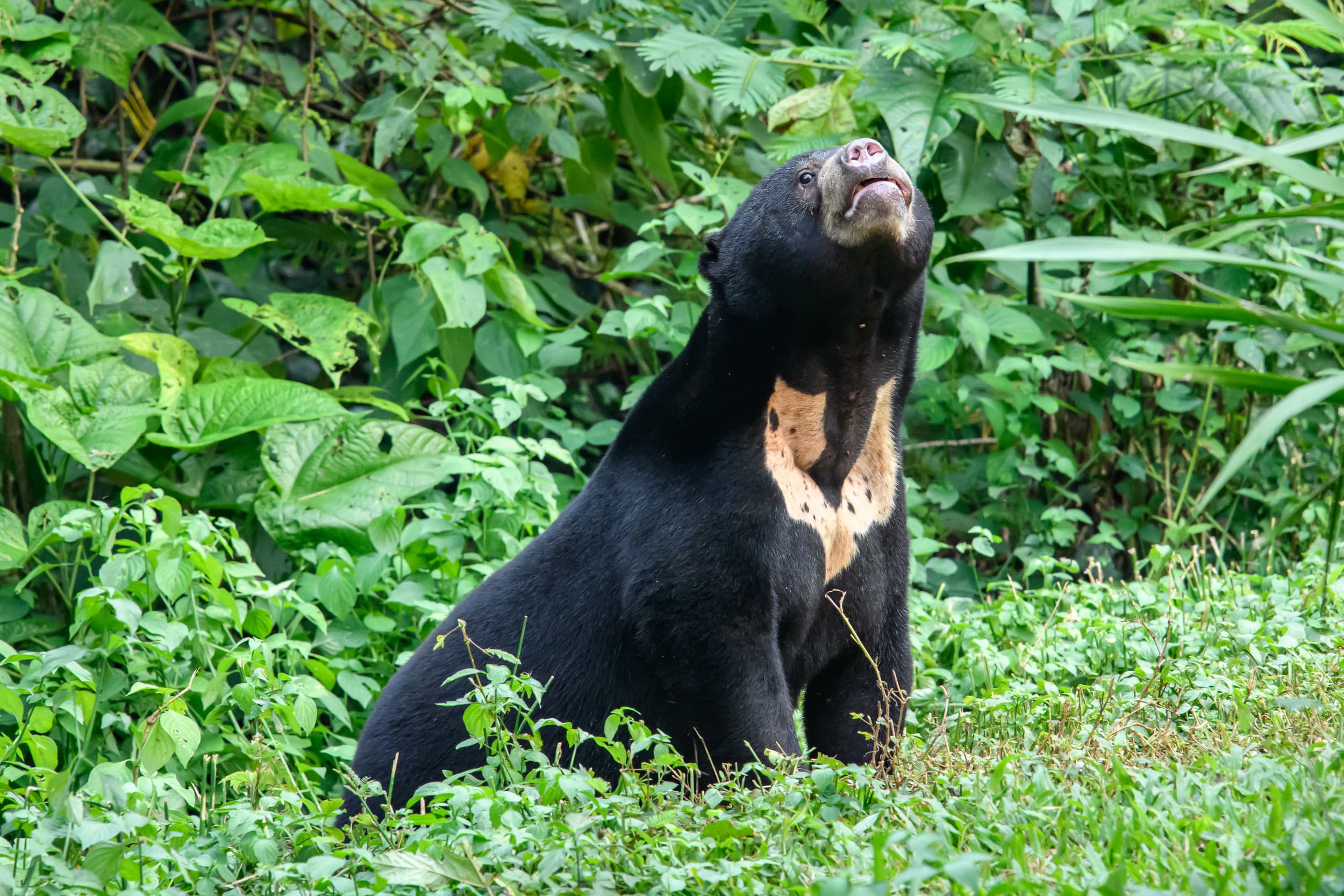
Sun bears have an extraordinarily long tongue - up to 25 centimetres, which is roughly the length of a ruler. They use it to reach deep into bee hives and termite mounds to lick out honey and insects. They also have very strong curved claws for ripping open rotting logs to find beetles and grubs.
They are mostly active at night and during the quiet hours around dawn and dusk. During the day they often build a rough nest in a tree - just some bent branches and leaves - for a nap. Sun bears are excellent climbers and feel as comfortable up in the trees as they do on the ground.
Sun bears play an important role in the forest. When they tear open logs looking for insects, they speed up the natural process of rotting, which releases nutrients back into the soil. When they eat fruit and move through the forest, they spread seeds. Scientists call them a 'keystone species' - one that the whole forest needs.
The rescue centre at Kuang Si Falls near Luang Prabang is home to sun bears that were found injured or living somewhere unsafe. Keepers there look after the bears and, when possible, help them live in a natural forest setting.