
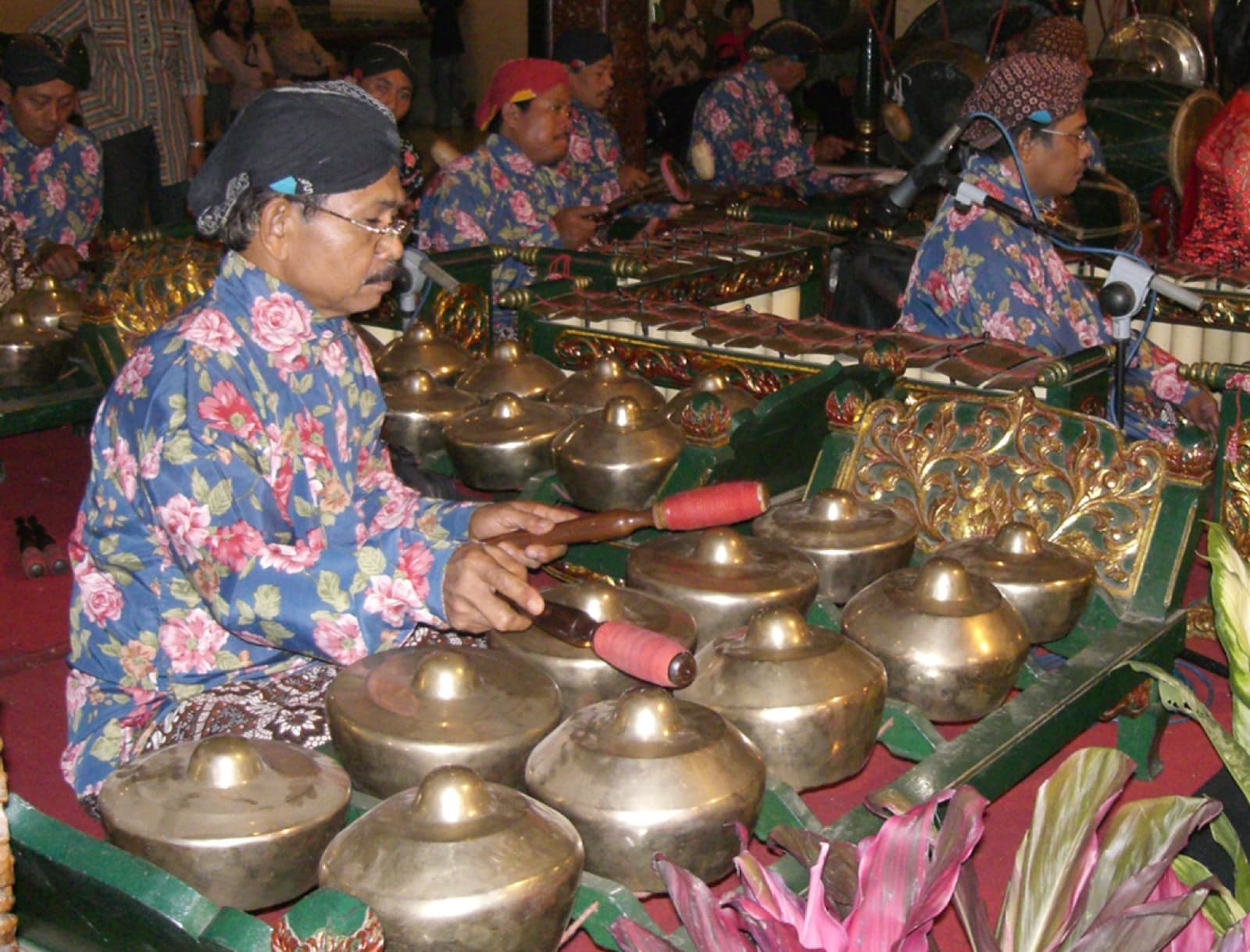
A gamelan orchestra can have 20 or more musicians, sitting on the floor in neat rows. The biggest gongs are huge - some are over a metre across and sound like a long, low boom. The smaller ones tinkle and ring high up. Together, they create music that sounds like it is gently swirling around you.
Gamelan music doesn't usually have a single conductor waving a stick at the front. Instead, the drummer leads the group, speeding up and slowing down. The other musicians listen carefully and follow. It is a great example of a team where everyone has to pay attention to each other.
Each gamelan set is special. It belongs to a village, a school or a palace, and the instruments are usually tuned to each other and only to each other - so you can't borrow a gong from another set and expect it to fit. Some sets even have their own name, like family pets.
Gamelan music has travelled around the world. Over 100 years ago, a French composer called Claude Debussy heard a gamelan band play at a fair in Paris. He loved it so much that he started writing music that copied the shimmering sound. Many film and video-game soundtracks today still borrow the bell-like feeling of gamelan.