
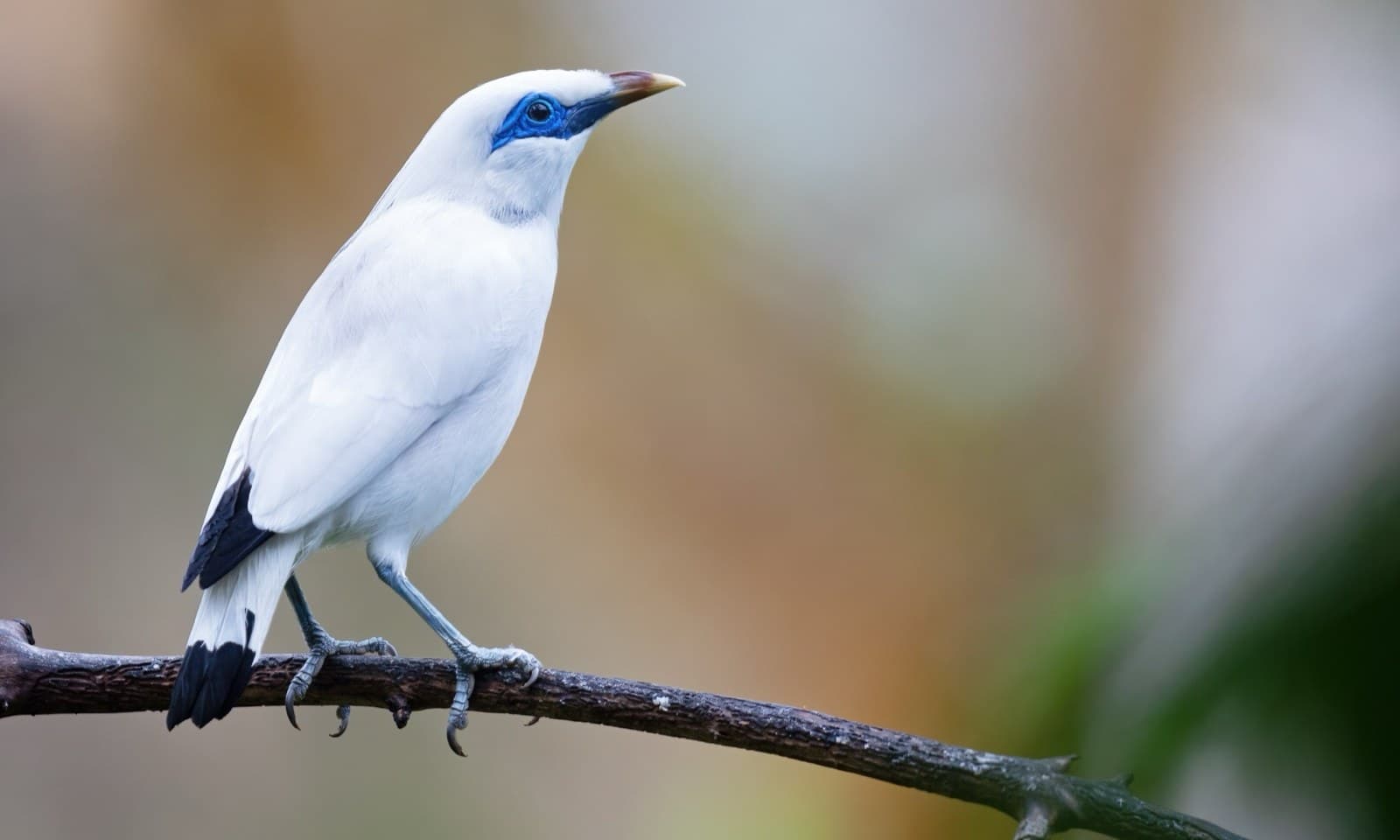
Bali starlings are about the size of a blackbird. Their feathers are so white that in the bright tropical sunshine they almost glow. Around their eyes is a patch of skin (not feathers) which is a brilliant sky blue. The tip of their tail and wings are black, like they have dipped them in ink.
Bali starlings live in pairs or small groups. They eat fruit, seeds and insects. They like the dry forests of north-west Bali, where they hop along branches and call to each other in soft chattering notes. They are good copycats too - in cages, they have been known to whistle tunes back to people who whistle to them.
Their stunning looks made them so popular as cage pets that, in the year 2000, there were fewer than 10 Bali starlings left in the wild. People had taken too many home. Bali Barat National Park began a special programme: scientists raised baby birds and released them into the safest parts of the forest.
Today, thanks to the park, around 100 to 200 Bali starlings live in the wild again. Schools in Bali run 'bird days' where children learn to spot them and protect them. Local people who used to catch them now help look after them - some farmers proudly put up nest boxes on their land.