
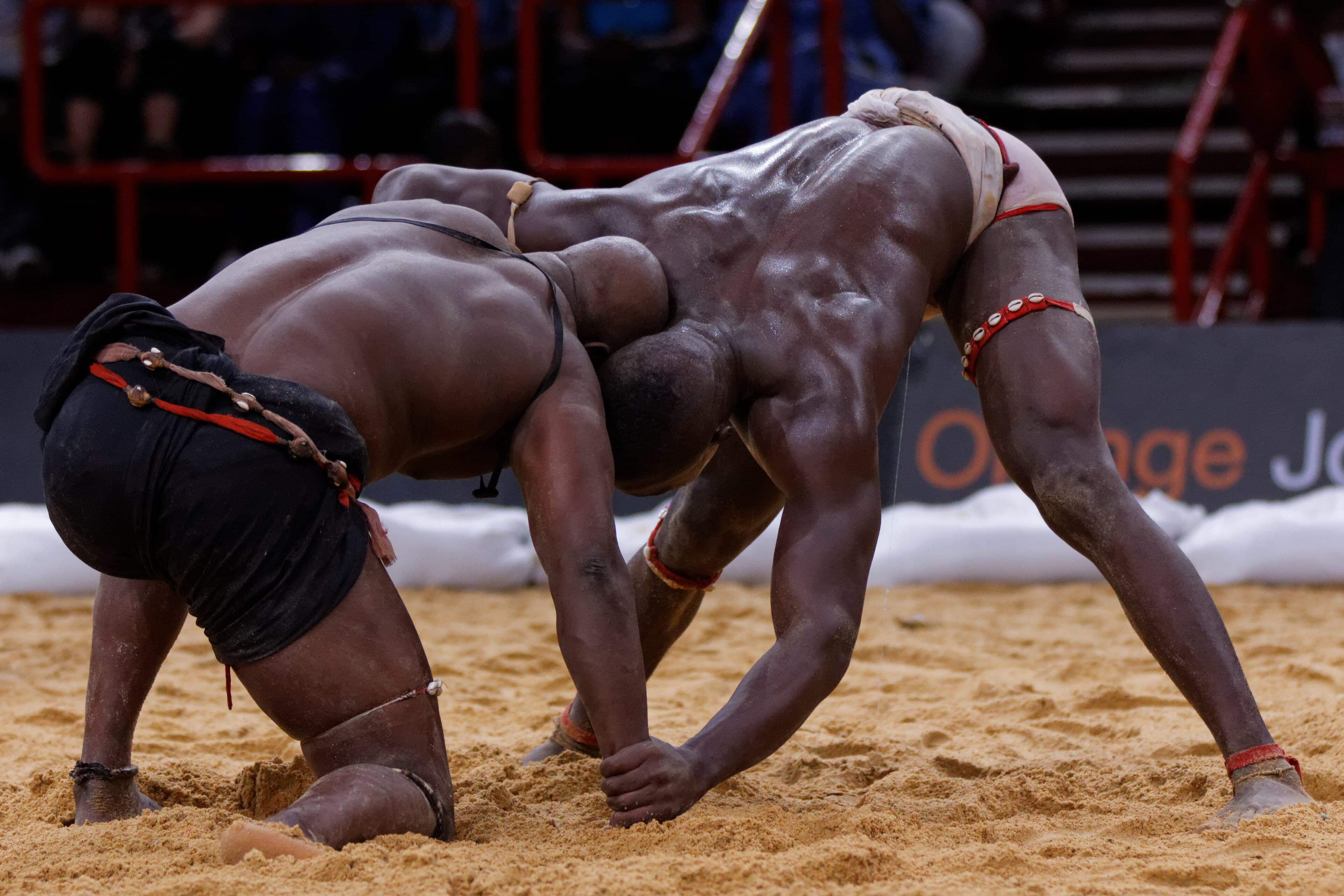
Before a laamb match even starts, there is a whole ceremony. Wrestlers enter the arena wearing amulets - small pouches of protective charms given to them by their families and spiritual advisers. They circle the arena, performing moves and dances to show their strength and to warm up their spirits as well as their muscles. The crowd cheers and drummers play faster and faster.
The aim in laamb is to make your opponent touch the ground with any part of the body other than the feet. A match can be very fast - over in seconds - or a long, wrestling struggle where neither competitor can gain the upper hand. Wrestlers use grips, throws, sweeps and clever footwork. Balance is just as important as strength.
In Senegal and Gambia, the best wrestlers are celebrities. They have fan clubs, their matches fill stadiums, and winning a big title brings enormous honour to their family and village. Young boys train from childhood, often learning from older wrestlers in their community. It is both a sport and a tradition that connects people to their ancestors.
Laamb has been played in village squares, on beaches and in cities. Today it sits alongside football as one of the most popular sports in the Senegambia region. Some wrestlers go on to compete internationally, bringing the sport to new audiences while staying rooted in its West African traditions.