
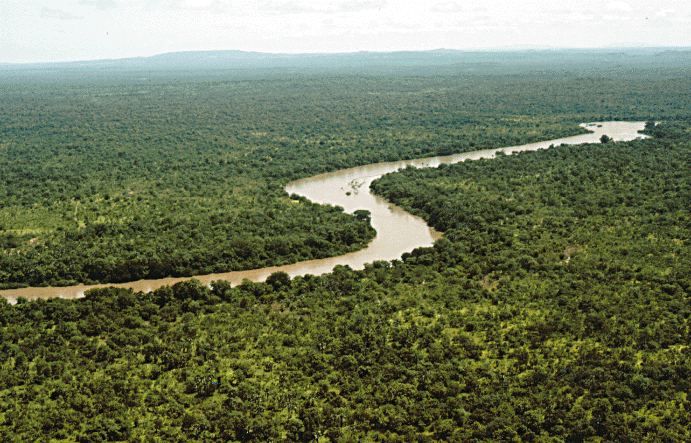
Gambia is the smallest country on mainland Africa, and it has an unusual shape - like a long, thin finger pointing eastward into the much larger country of Senegal. That finger follows the river. The river is about 1,130 kilometres long and starts in the highlands of Guinea before winding through Senegal and then Gambia to the sea.
Along the banks you will find mangrove forests where the roots tangle together in the water like a natural climbing frame. These roots are a nursery for fish and crabs, and the perfect hiding place for kingfishers and herons. Further upstream, the banks open out into lush riverside fields where farmers grow groundnuts, rice and millet.
People have lived along the Gambia River for thousands of years. Today, villagers still use pirogues - long wooden boats - to cross the river and carry goods to market. The ferry crossing at Banjul is one of the busiest spots in the whole country, with lorries, motorbikes and pedestrians all waiting for their turn.
The river changes character as you go upstream. Near the coast it is wide, tidal and salty. Further east it becomes narrow, freshwater and very quiet. Both ends of the river have different animals, plants and people, all connected by the same flowing water.