
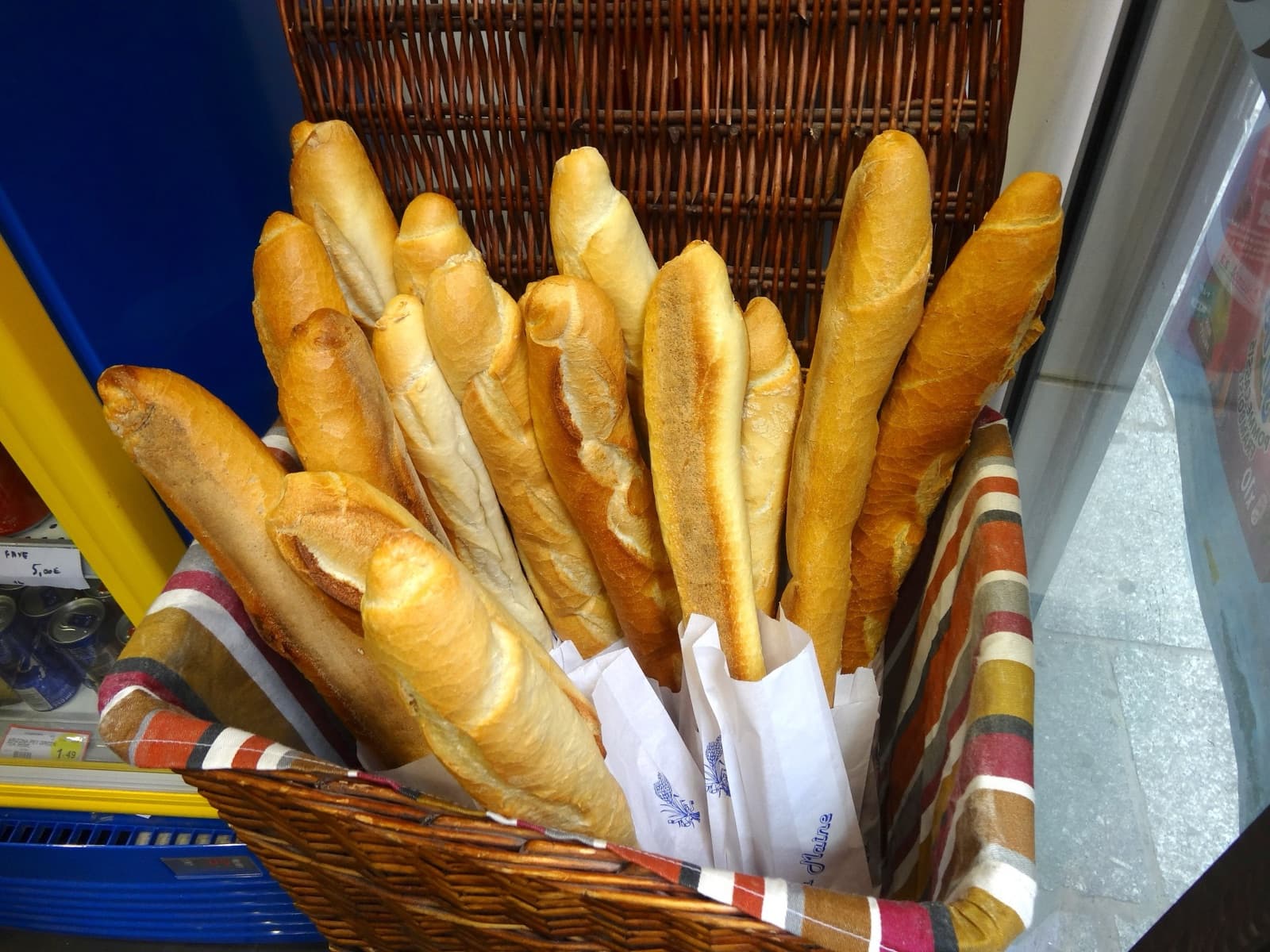
A real French baguette is made from only four things: flour, water, salt and yeast. That's it. In France, a law says that if a bakery wants to call its bread a 'traditional baguette' (baguette de tradition), it must use only these ingredients - no shortcuts, no extras.
A baguette is around 65 centimetres long - longer than your arm. It is sold the same day it is baked, because it goes hard quite fast. Many French people pop into a bakery on the way home to pick one up fresh, and it is normal to nibble the end of it on the walk home.
The shape took off in Paris in the 1920s, when a new law said bakers were not allowed to start work before 4 a.m. The long thin shape baked much faster than a round loaf, so they could still have bread ready for breakfast time. Necessity invented the baguette.
In 2022, the French baguette was added to a special UNESCO list of things that are part of the world's 'living culture' - things people still do, not just buildings or artefacts. The baguette joined the same list as Korean kimchi-making and Belgian beer culture.