
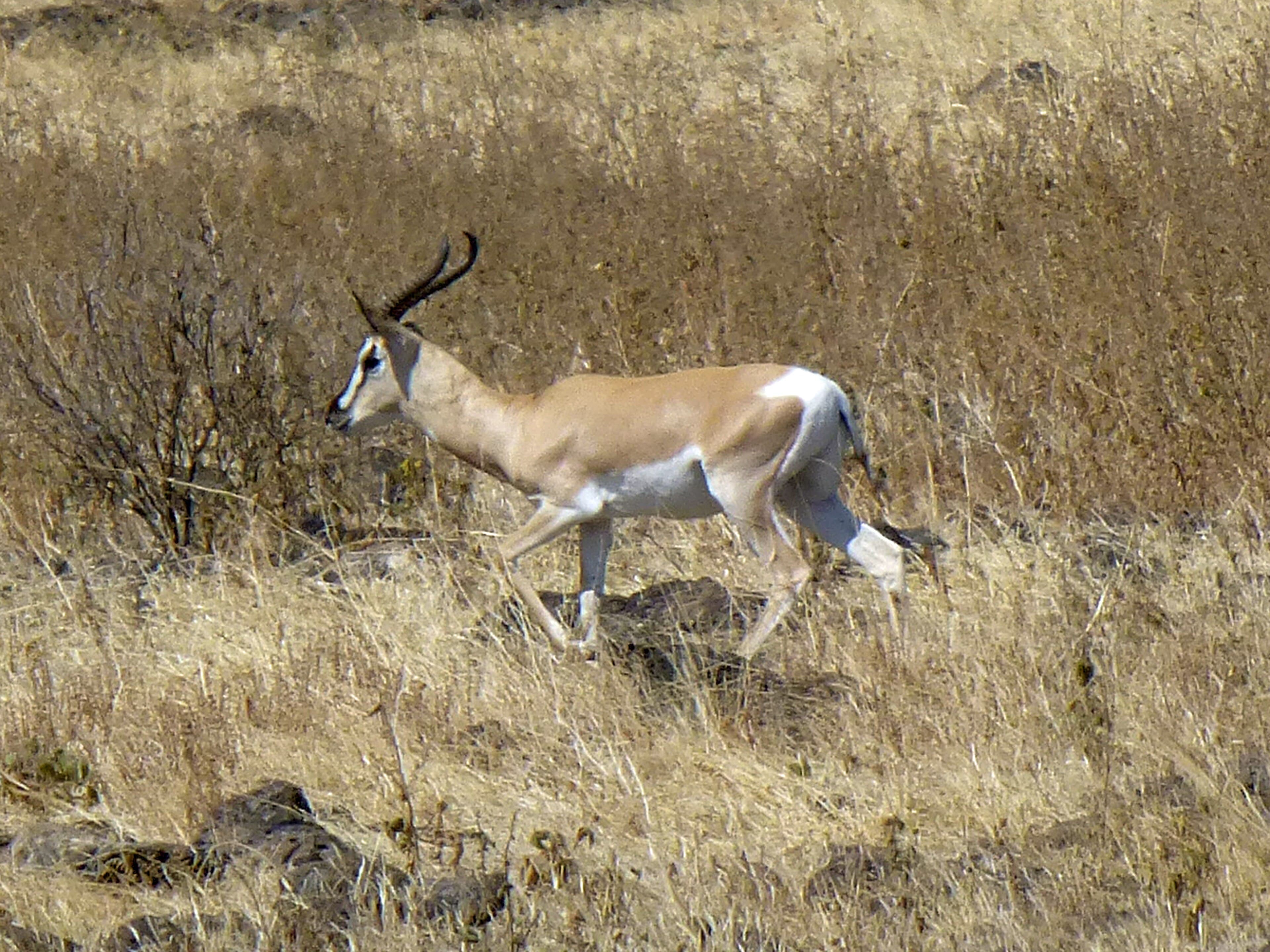
Gazelles are built to move fast and stay cool. Soemmerring's gazelle has long, slender legs and a lean body that lets it sprint away from predators like cheetahs and lions. Its pale coat reflects sunlight, helping keep its body temperature down. The white patch on its rump flashes as a warning signal when the animal runs - other gazelles in the group can see it from far away.
These gazelles live in herds that are usually small - between five and twenty animals. The herd moves around following the rains, going wherever fresh grass and shrubs are growing. They eat mainly leaves, shoots and grass, and like the African wild ass they can go without drinking water for long periods by getting moisture from the plants they eat.
The curved horns of Soemmerring's gazelle are remarkable. Both males and females have them, though the males' horns grow longer and thicker. The horns spiral gently outward and then curve back in - each pair is slightly different from every other, a bit like a fingerprint. Males use their horns in sparring matches to decide who leads the group.
Conservation groups are working with local communities in Eritrea to protect Soemmerring's gazelle by reducing poaching and preserving the dry grasslands it needs. Traditional knowledge from people who have lived alongside the gazelle for generations is an important part of this work.