
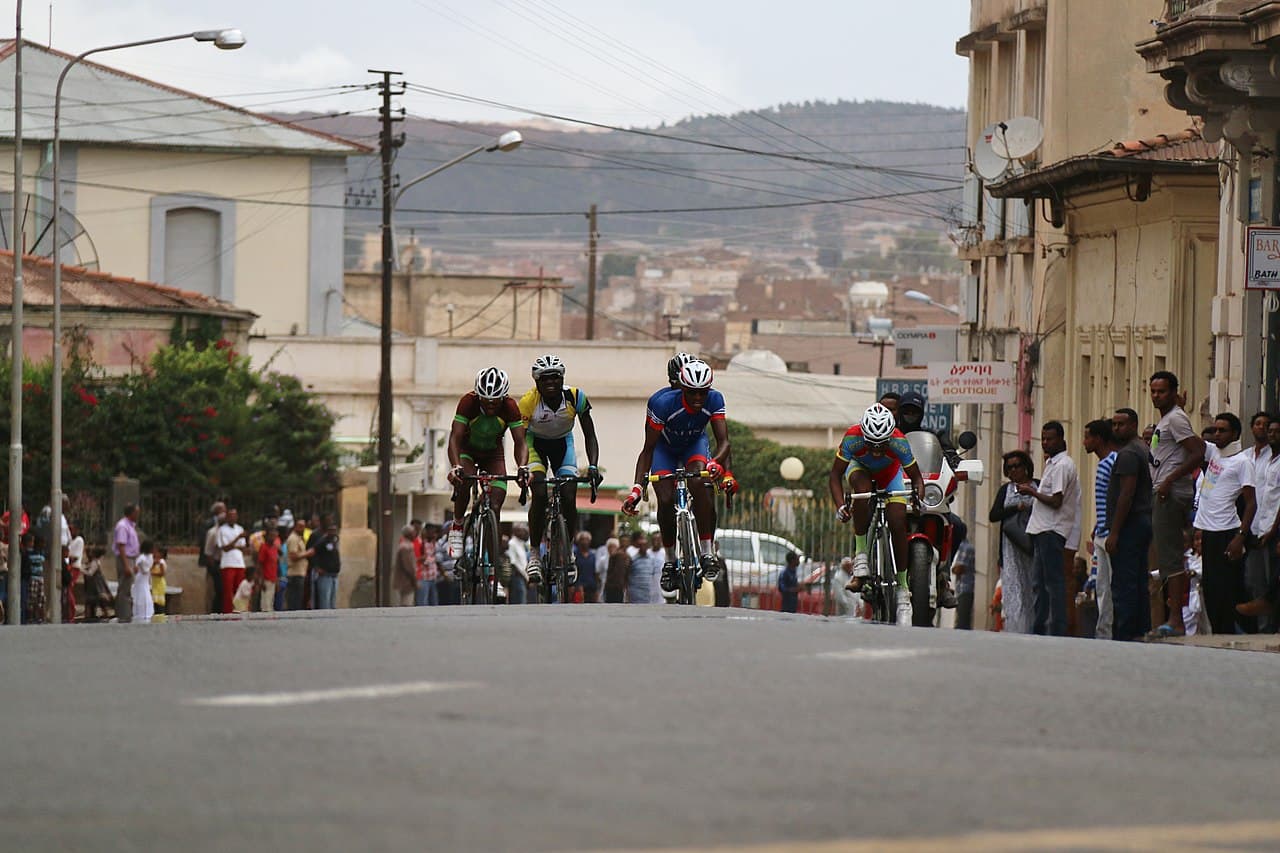
Cycling arrived in Eritrea during the Italian period in the early 20th century, and Eritreans took to it immediately. The hilly terrain of the highlands - with steep climbs and sweeping descents on narrow roads - turned out to be perfect natural training ground. Young riders who grow up cycling at altitude, where the air contains less oxygen, develop stronger hearts and lungs than riders from flat, lowland countries.
The Tour of Eritrea is a famous multi-day stage race that winds through the mountain roads of the highlands. It attracts professional and amateur riders from across Africa, and it has been running since the 1940s - making it one of the oldest cycling races on the continent. Crowds line the mountain roads waving flags and shouting encouragement.
The most celebrated Eritrean cyclist is Daniel Teklehaimanot, who in 2015 became the first African rider to wear the polka-dot jersey at the Tour de France - the jersey awarded to the best climber in the race. His achievement inspired a generation of young Eritrean riders. Others followed - Merhawi Kudus and Natnael Berhane raced in the biggest European pelotons.
In Eritrea, watching cycling on television is a national event. When Eritrean riders compete in major European races, entire neighbourhoods gather around screens. The sport represents something important to people: the idea that skill, hard work and the mountain roads of home can take you anywhere in the world.