
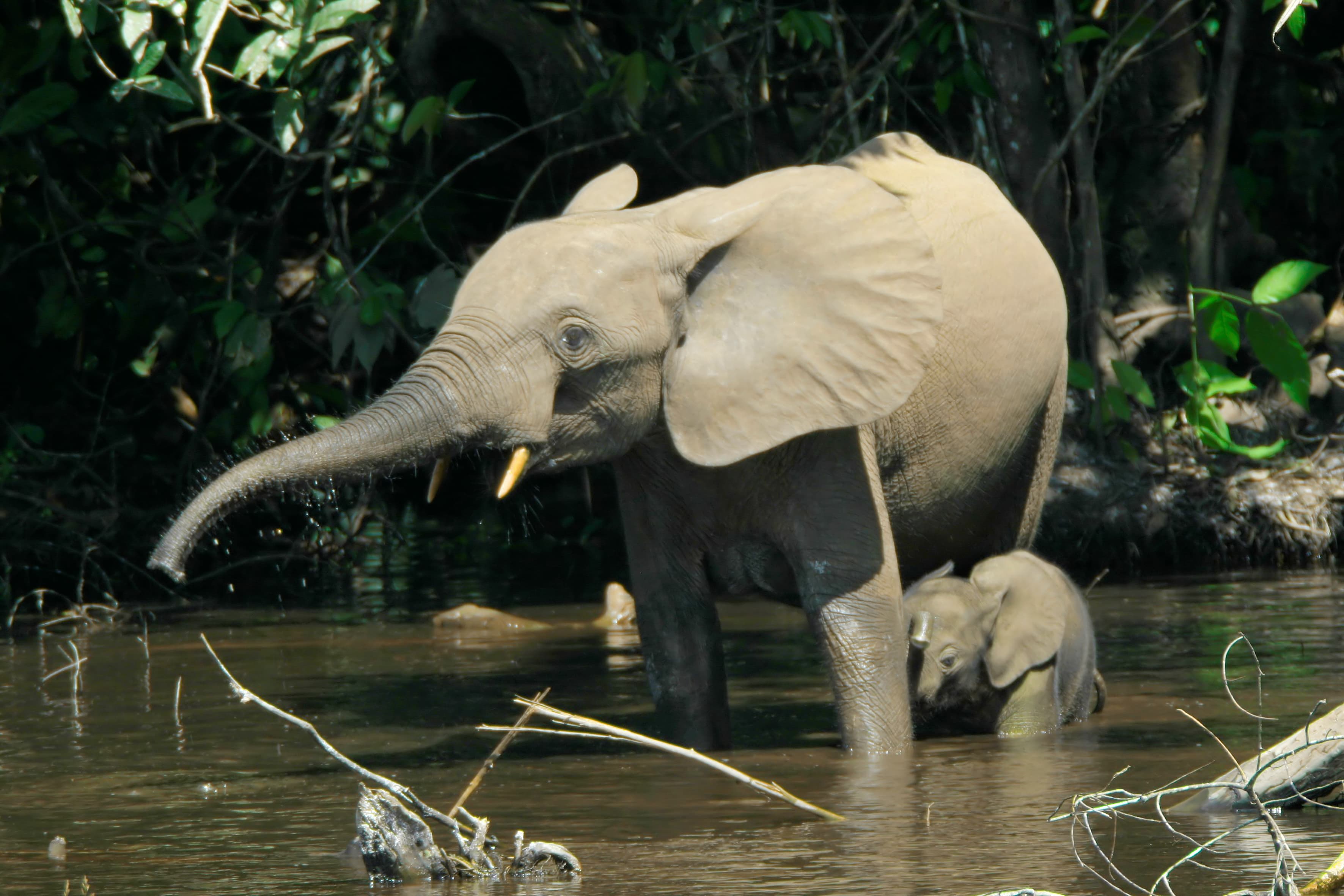
Forest elephants are smaller than their savannah cousins but are still enormous animals, standing up to 2.5 metres tall at the shoulder. Their ears are more rounded and their tusks point downward rather than curving upward - both features that help them move through dense undergrowth without getting caught. They are also much quieter and harder to spot in the forest than savannah elephants.
Scientists call the forest elephant the 'mega-gardener' of the African rainforest. As elephants move through the forest, they knock down small trees, which lets sunlight reach the forest floor and helps new plants grow. They eat hundreds of types of fruit and spread the seeds far and wide through their droppings. Without elephants, the mix of trees in the forest would change dramatically over time.
Forest elephants are also remarkable communicators. They produce very low rumbling sounds - lower than humans can hear - called infrasound. These rumbles can travel several kilometres through the forest floor, letting elephants talk to each other over long distances. Scientists discovered this only in the 1980s using special microphones that can detect sounds too low for human ears.
Finding a forest elephant in Monte Alén National Park is a special experience because they move so quietly. Trackers look for signs: large round footprints in muddy ground, broken branches at shoulder height, and dung that still contains fruit seeds. Following these signs through the forest is like reading a story the elephant left behind.