
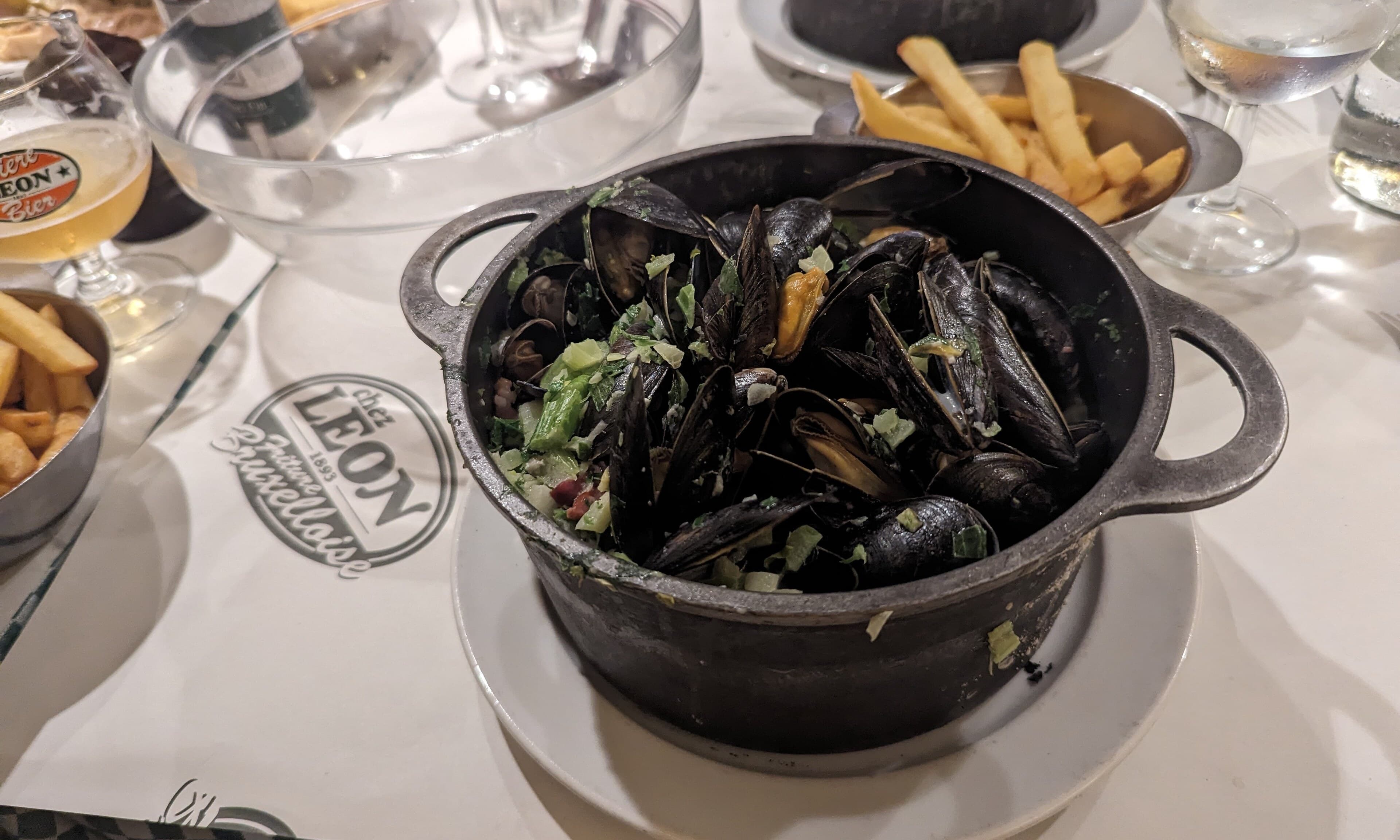
Belgium and France both sometimes claim to have invented fried potatoes, but many food historians side with Belgium. Belgians say that villagers along the River Meuse were frying strips of potato as far back as the late 1600s. The double-frying method - one dip in oil to cook through, a rest, then a second dip to crisp the outside - is the Belgian secret.
The fritkot (chip stall) is a Belgian institution. Found in almost every town and city, a fritkot is a small cabin or van where frites are made fresh all day. You order a paper cone of frites and choose your sauce from a long list - mayonnaise is the most popular by far, though ketchup, andalouse (a slightly spicy tomato sauce), and samurai sauce are also common.
In Belgium, frites are eaten as a meal in themselves, not just as a side dish. A large cone of frites with a sauce is a perfectly respectable lunch. Some fritkots also offer a dish called 'mitraillette' - a baguette split open and filled with frites and a choice of meat - though frites alone are enough for most people.
Belgium is so serious about its frites culture that the fritkot has been recognised as part of Belgium's intangible cultural heritage. That is an official recognition that the tradition of the chip stall is an important part of Belgian identity and should be protected and celebrated.