
Classroom lesson · Wildlife · 🇧🇧 Barbados

Leatherback Sea Turtle

The world's largest turtle nests on Barbados's beaches

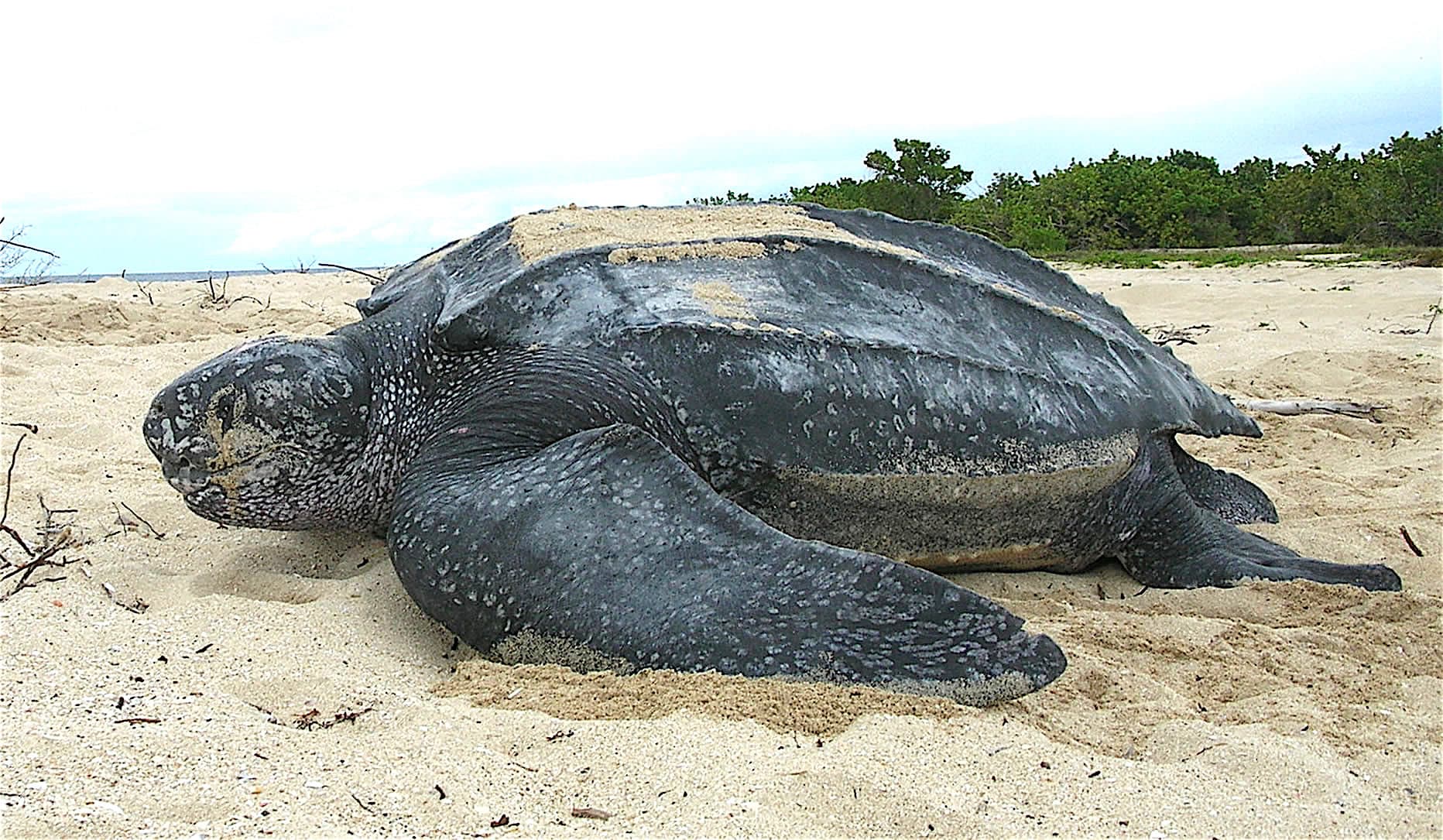
A large leatherback sea turtle making its way across a dark Barbados beach toward the water

Photo · Barbados Sea Turtle Project

What is it?

The leatherback sea turtle is the largest turtle in the world, and Barbados is one of the most important places in the Caribbean for leatherbacks to lay their eggs. Instead of a hard shell, they have a flexible, rubbery back covered in small bony plates - which is how they got their name. These ancient reptiles have been swimming the world's oceans for millions of years.

Tell me more

Female leatherback turtles return to the same beach where they were born to lay their own eggs - a remarkable navigation feat. They can travel thousands of kilometres across the ocean and still find their way back to the exact stretch of sand. Scientists think they use the Earth's magnetic field like a built-in compass.

A leatherback can weigh up to 900 kilograms - about the same as a small car - and can grow up to 2 metres long. Despite their huge size, they feed almost entirely on jellyfish. They dive very deep in pursuit of jellyfish, sometimes reaching depths of over 1,000 metres.

The Barbados Sea Turtle Project monitors and protects nesting turtles on the island's beaches. Volunteers count nests, tag turtles so their movements can be tracked, and help make sure hatchlings reach the sea safely. Local communities take great pride in being guardians of these magnificent animals.

In the classroom

Walk your class through this in 15 minutes.

Talk together

Discussion prompts

  1. 01How do you think a leatherback turtle finds the same beach it was born on after years at sea?
  2. 02Why might eating jellyfish be useful for keeping ocean ecosystems balanced?
  3. 03What can communities do to help protect turtles that nest on their beaches?
  4. 04If you were a volunteer turtle monitor, what would your most important job be on a nesting night?
Try this

Classroom activity

On a world map, draw the possible migration routes of a leatherback turtle that was born in Barbados. Research which oceans leatherbacks travel through and mark feeding areas with a fish symbol and nesting beaches with a turtle symbol. Add a compass rose to the map.