
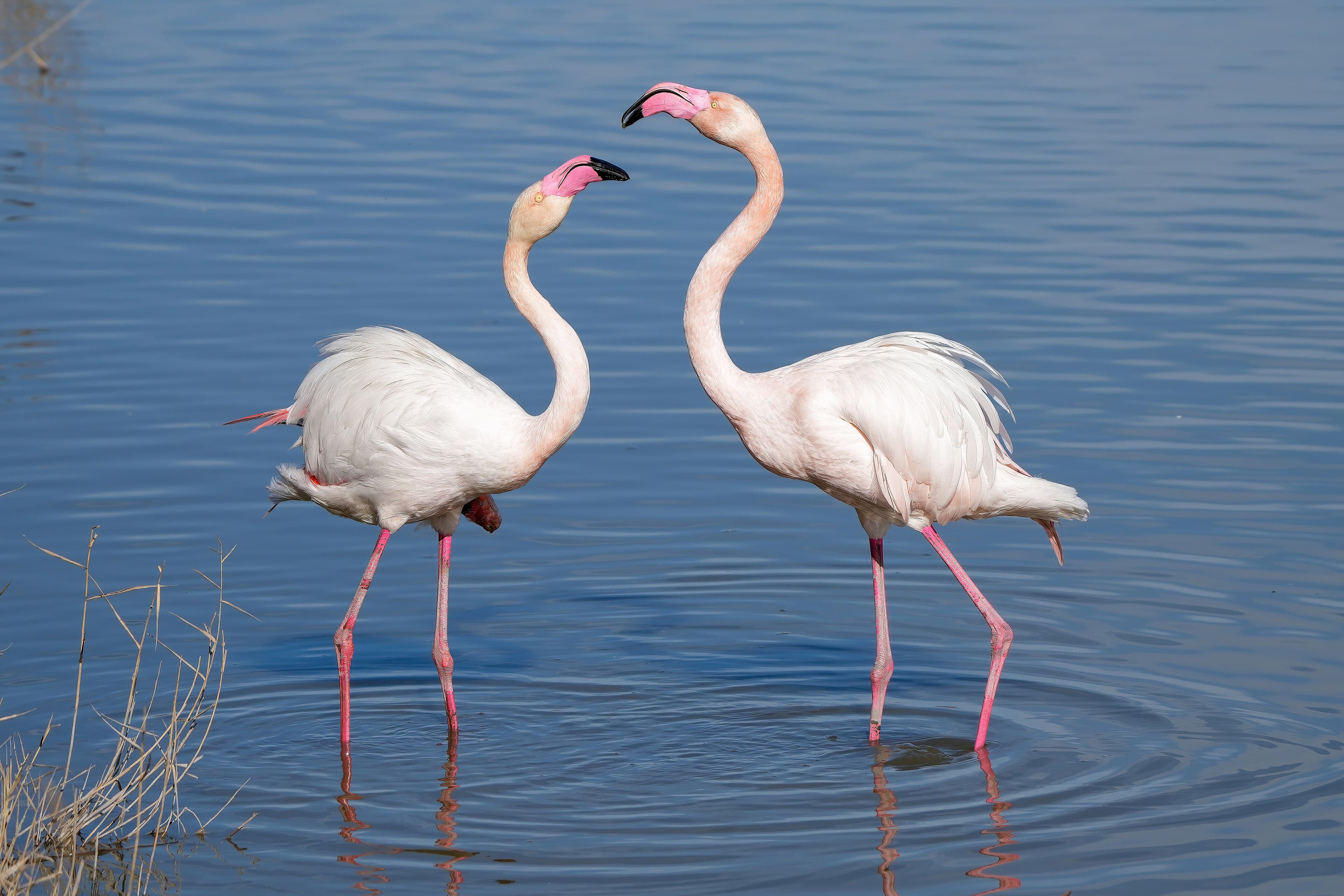
A grown-up greater flamingo is about 1.3 metres tall - taller than most 7-year-olds. They stand on long thin legs that look fragile but are actually very strong. They often balance on just one leg, with the other tucked up underneath them, even while they sleep.
Their famous pink colour comes from what they eat. Flamingos feed on tiny shrimp, water insects and special algae - and those foods contain natural pink pigments. The more pink food a flamingo eats, the pinker its feathers get. Baby flamingos are born grey, and slowly turn pink as they grow.
Flamingos eat upside down. They dip their heads into the water and use their beaks like a tea strainer. Water and mud go in, get sieved through tiny ridges inside the beak, and the food gets caught while the water flows back out. They might look glamorous, but their dinner involves a lot of mud.
Azerbaijan's wetlands - especially around Gizilagac National Park on the Caspian coast - are an important stopping point for birds flying south for winter. Hundreds of thousands of birds, including flamingos, pelicans, ducks and geese, rest and feed there before continuing their long journey. Children visiting the reserve can watch the pink flocks shimmer at the water's edge.