
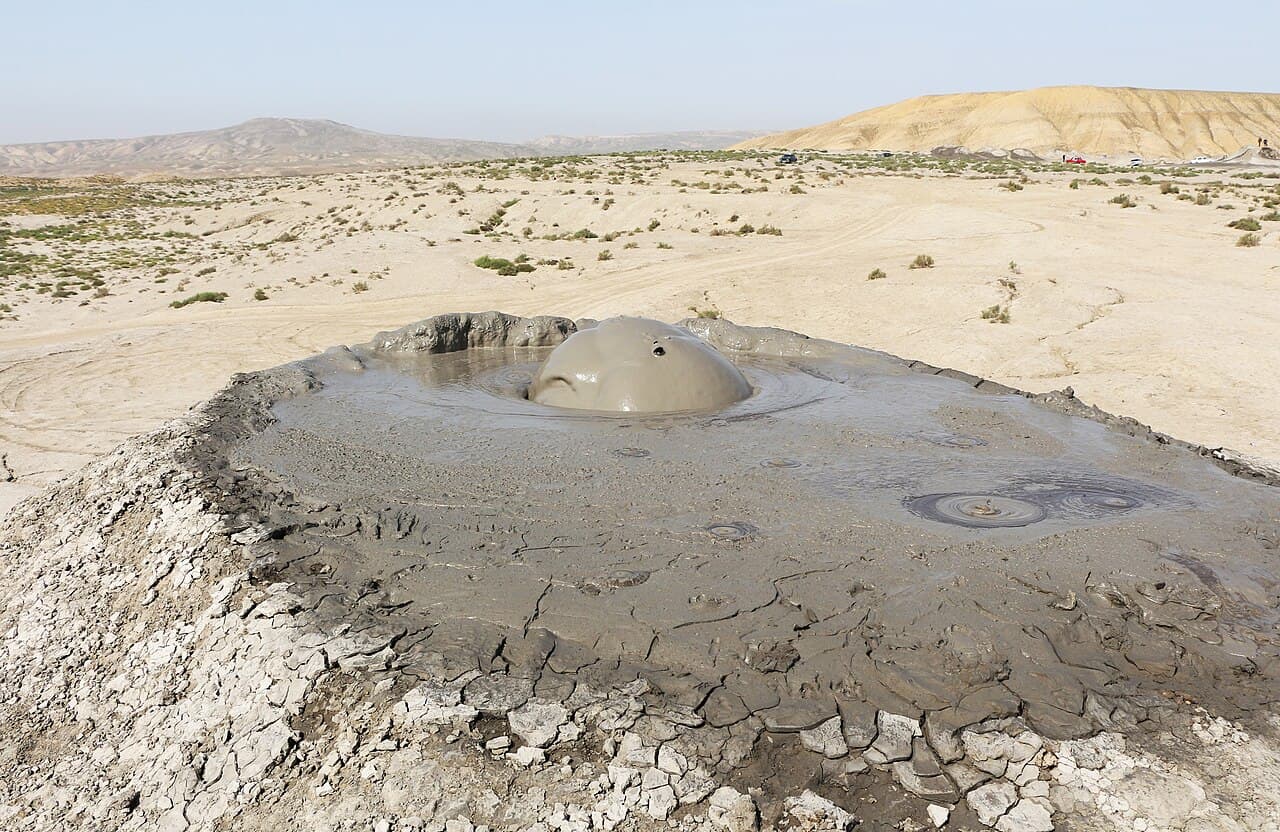
Mud volcanoes form when underground gas pushes water and clay up through cracks in the ground. The mixture comes out of the top of the cone as a slow, thick, bubbling porridge. Sometimes the bubbles are tiny pops. Sometimes a big one whomps up, sending a small splat of mud over the side.
Most of Azerbaijan's mud volcanoes are out in the dry plains near the Caspian Sea. From a distance they look like little hills. Up close, you can hear them: pop, glub, gurgle. The mud is grey or grey-brown, and the ground around them is cracked into tiles, like a giant chocolate biscuit.
Once in a long while, a mud volcano does a bigger eruption - a huge belch of gas catches fire, and a tall flame shoots up for a few hours before it stops. Scientists watch the volcanoes carefully so they know when this might happen. Most of the time, though, they are gentle, sleepy little things.
People sometimes bathe in the mud, because it is said to be good for the skin. Children visiting the volcanoes love them because you can squelch right up to the edge in your boots and watch the bubbles rise. It is a bit like nature has made its own science experiment for you to look at.