
Classroom lesson 路 Wildlife馃嚘馃嚳 Azerbaijan

The goitered gazelle

A graceful desert deer with big eyes and quick feet

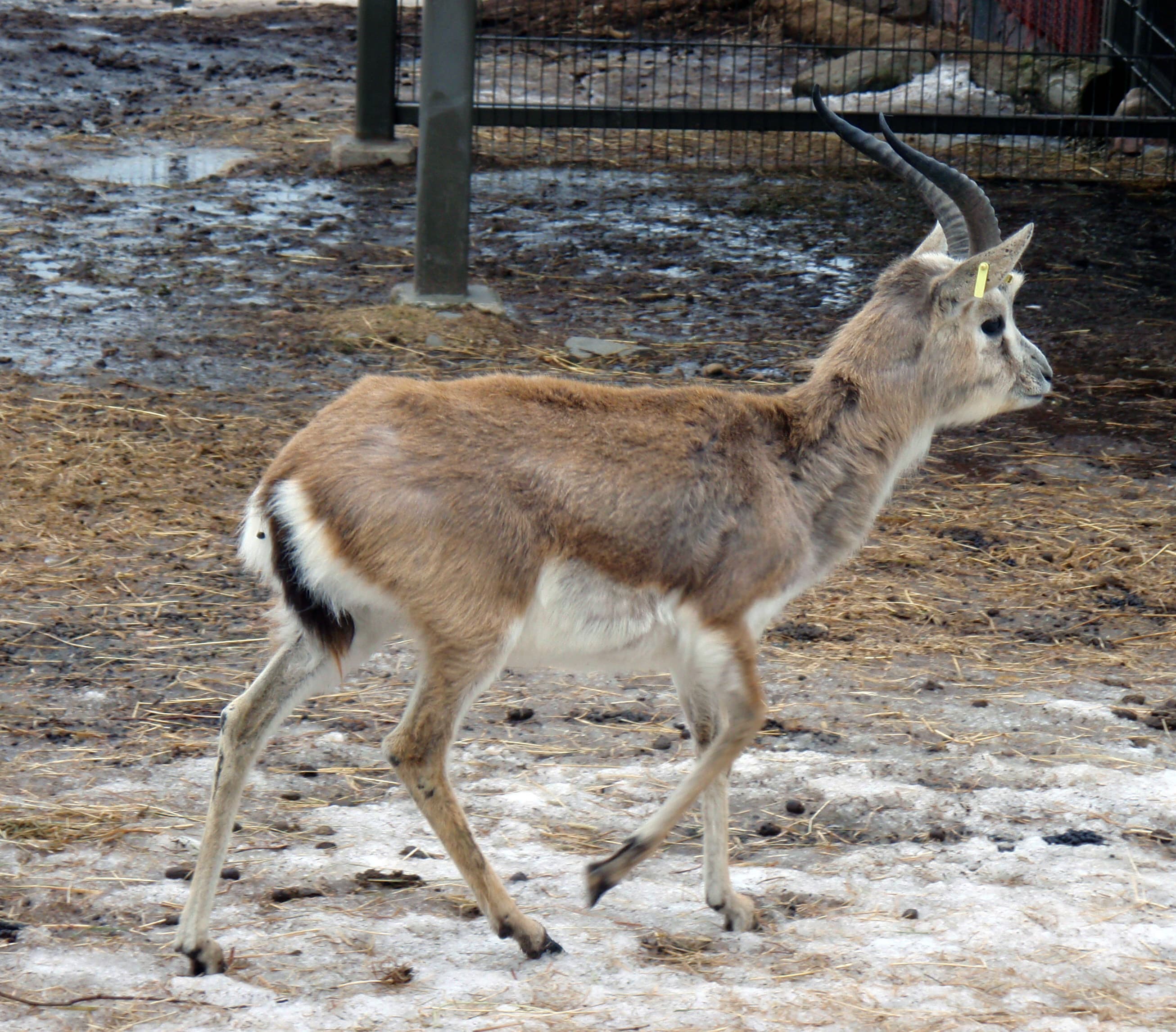
A goitered gazelle with sandy-coloured fur and curved horns standing on a dry steppe in Azerbaijan

Photo 路 Wikimedia Commons

What is it?

The goitered gazelle is a small, slender deer-like animal that lives on the dry plains of Azerbaijan. About as tall as a large dog, with long thin legs and big dark eyes, it can run incredibly fast across the flat grasslands. Its name comes from a little bump on the throat of grown-up males that swells up in winter - 'goitre' is just an old word for that bump.

Tell me more

Goitered gazelles are made for speed. They can run at 60 kilometres per hour for a long time, and even sprint at 80 km/h for a short burst - as fast as a car on a country road. Their bodies are slim, their legs are like springs, and they bounce as they run, leaping over bushes without breaking stride.

The plains they live on are dry and hot in summer, cold in winter, with very few trees. Gazelles eat grass, leaves and a little bit of water from any plants that hold moisture. They can go a long time without drinking from a stream, getting almost everything they need from their food.

They live in small family groups - usually a few mothers with their fawns. The fathers live mostly on their own, except when families gather in larger herds in winter. The fawns are tiny and shy at first; mothers hide them in long grass while they go off to feed, and the babies stay perfectly still until mum returns.

There used to be huge herds of goitered gazelles on the plains of Central Asia and the Middle East. Today their numbers are smaller, but in Azerbaijan they are protected in special reserves like Shirvan National Park. Children visiting the park can see them grazing in the distance, ears twitching, ready to run if anything startles them.

In the classroom

Walk your class through this in 15 minutes.

Talk together

Discussion prompts

  1. 01Why might it be useful for an animal living in a hot dry place to get its water from food?
  2. 02What is the fastest you've ever run? How might a gazelle's body be different to make it so much faster?
  3. 03Baby gazelles freeze in the grass when in danger. Other animals run, hide or fight. What does each one tell us?
Try this

Classroom activity

Mark out a 100-metre running track on the playground. As a class, time how fast you can run it. Then work out how long a gazelle running at 80 km/h would take to cover the same distance. (Spoiler: about 4.5 seconds.) Discuss what that says about its body.