
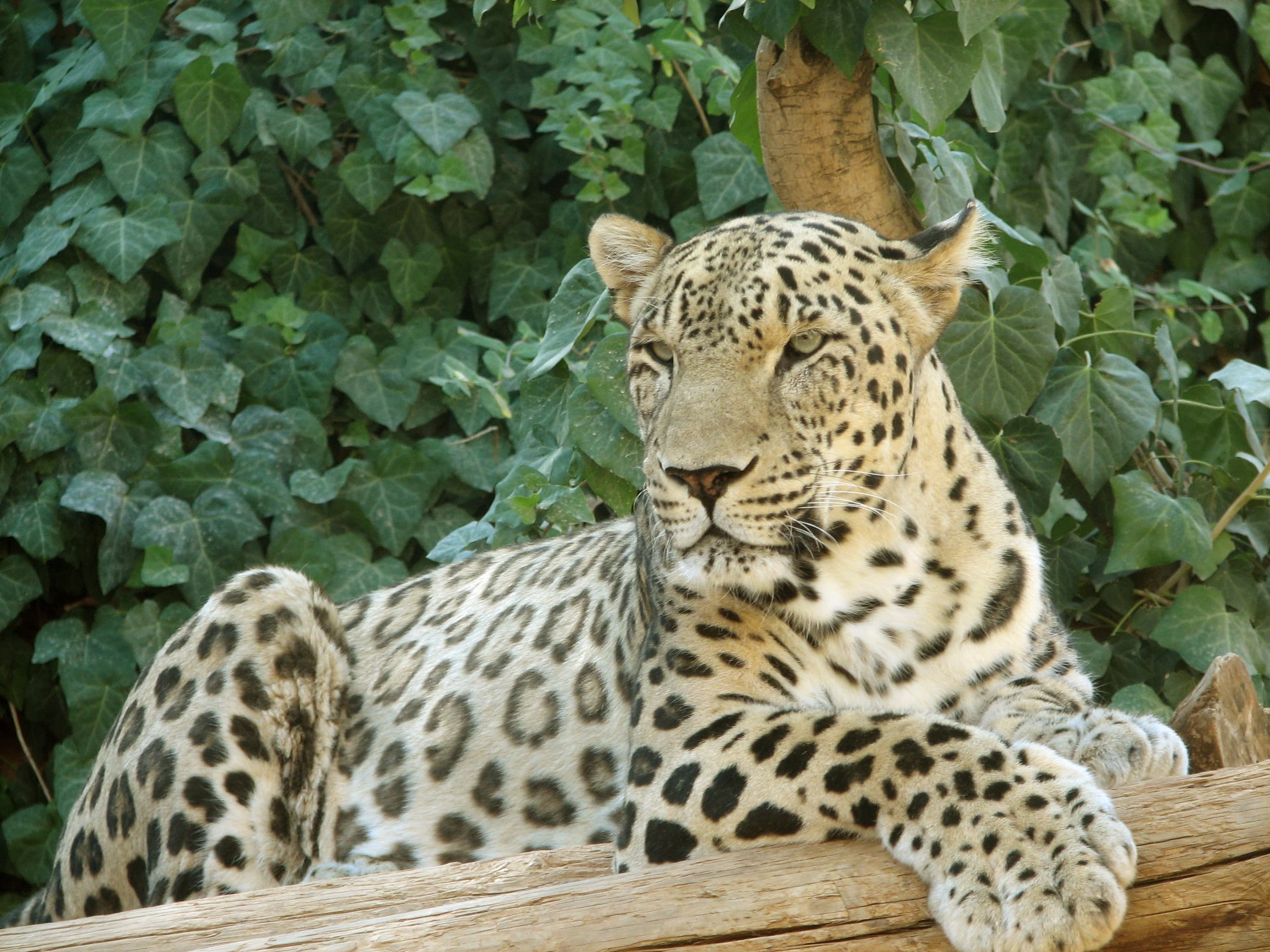
Caucasian leopards are mostly active at dusk and at night, when the air is cool and other animals don't notice them. They hunt wild goats, deer and wild boar in the rocky valleys. A grown leopard can climb a steep cliff almost as easily as you climb stairs, and it can leap right across a small ravine in one jump.
There are probably fewer than 1,200 Caucasian leopards left in the wild, across all of Azerbaijan, Iran, Russia, Georgia and Armenia. Scientists watch them with cameras hidden in trees. When a leopard walks past, the camera takes a photo. Like every leopard, each one has its very own pattern of spots, so the scientists can tell who is who.
Each leopard has a huge home territory - one cat might use an area the size of a small city. Within that territory, the leopard rests in caves, climbs trees, drinks from mountain streams and silently follows herds of mountain goats. The whole territory belongs to just one leopard, and other leopards keep clear.
Azerbaijan has set up special nature reserves - places where no one is allowed to build houses, drive cars, or hunt - so the leopards have a quiet, safe place to live. One of the best known is the Hirkan National Park in the south of the country. Slowly, very slowly, the leopards are coming back.