
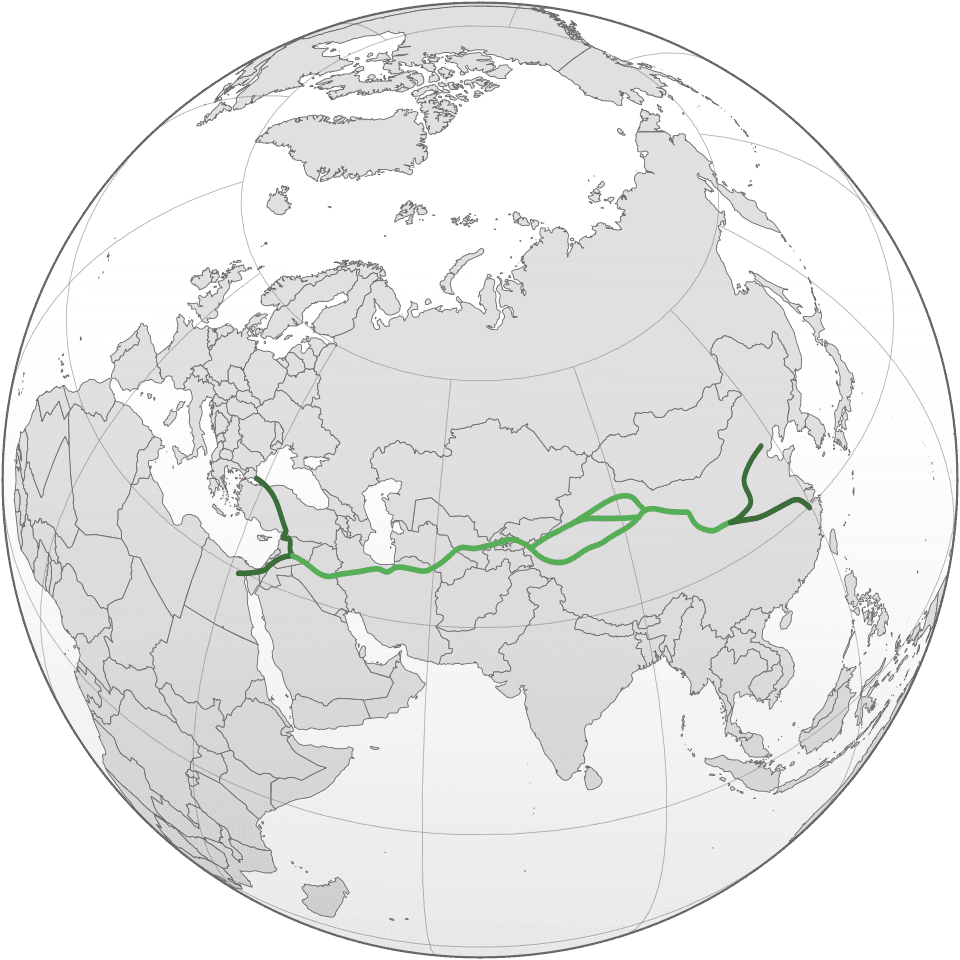
Traders travelled in big groups called 'caravans' - sometimes 100 camels at a time, walking in a long line across deserts, mountains and plains. The camels carried bundles of goods, and the traders carried bags of stories. By the time they reached the end of the road, they had picked up languages, recipes, songs and tales from every country they passed through.
Azerbaijan was a natural stop because it sits between Europe, the Middle East and Central Asia. Special stone buildings called 'caravanserais' were built along the routes - half hotel, half stable. Camels rested in a big inner courtyard while the traders ate, slept, swapped news and traded goods. Many caravanserais are still standing in Azerbaijan today.
One of the most famous Silk Road towns in Azerbaijan is called Sheki. It sits in the foothills of the Caucasus Mountains and is famous for its beautiful Palace of the Sheki Khans, with stained-glass windows made of thousands of little pieces of coloured glass. Traders also bought silk scarves in Sheki - the town's name became known for silk all over the world.
The Silk Road didn't just carry things. It carried ideas. The way to make paper, recipes for noodles, designs for tiles, even certain kinds of music - all travelled along it. Many of the foods and crafts of Azerbaijan today are a mix of east and west, because so many different cultures passed through.