
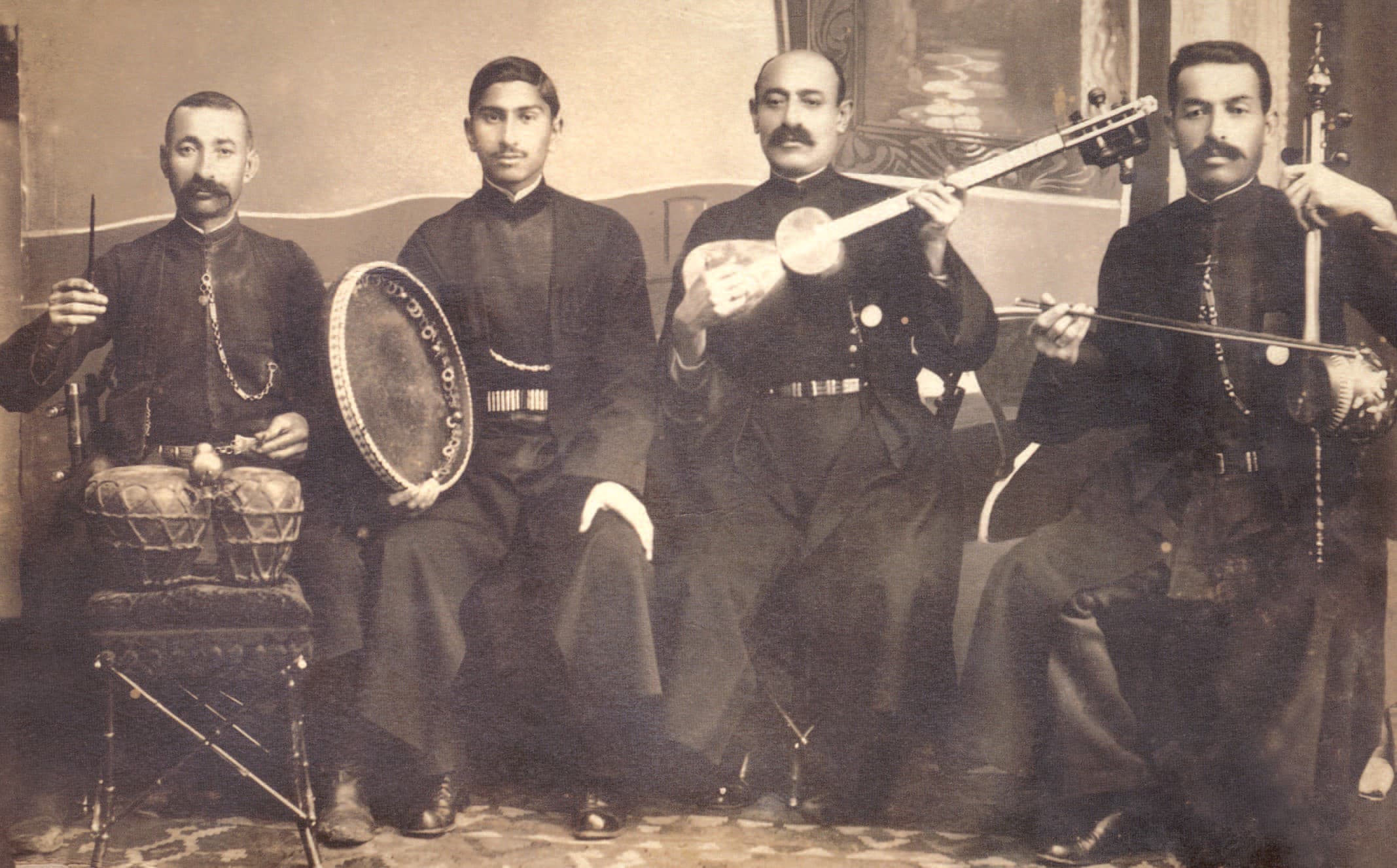
Mugham is not really a song with a fixed melody. It is more like a journey: the singer starts in one mood, climbs slowly higher, brings in a bit of joy, a bit of longing, then comes back down. Every performer takes the same poem on a slightly different journey, so no two mugham performances are exactly the same.
The tar is a beautiful instrument shaped a bit like a figure of eight, with a long neck and 11 strings. The kamancha looks like a small ball on a stick, with four strings, played upright on the player's knee with a bow. Together they make a sound that has been described as 'as if the music is breathing'.
Mugham used to be sung mostly in the courtyards of teahouses and the homes of music-lovers in old Baku. Today it is performed in big concert halls and at festivals. UNESCO listed Azerbaijani mugham in 2003 as a treasure of world cultural heritage, and there is a beautiful Mugham Centre in Baku where families go to hear it live.
Many of the poems used in mugham were written hundreds of years ago - by poets like Nizami and Fuzuli - and are still loved today. The language is poetic and a little old-fashioned, but the feelings are timeless: friendship, beauty, the changing seasons, the kindness of a teacher.