
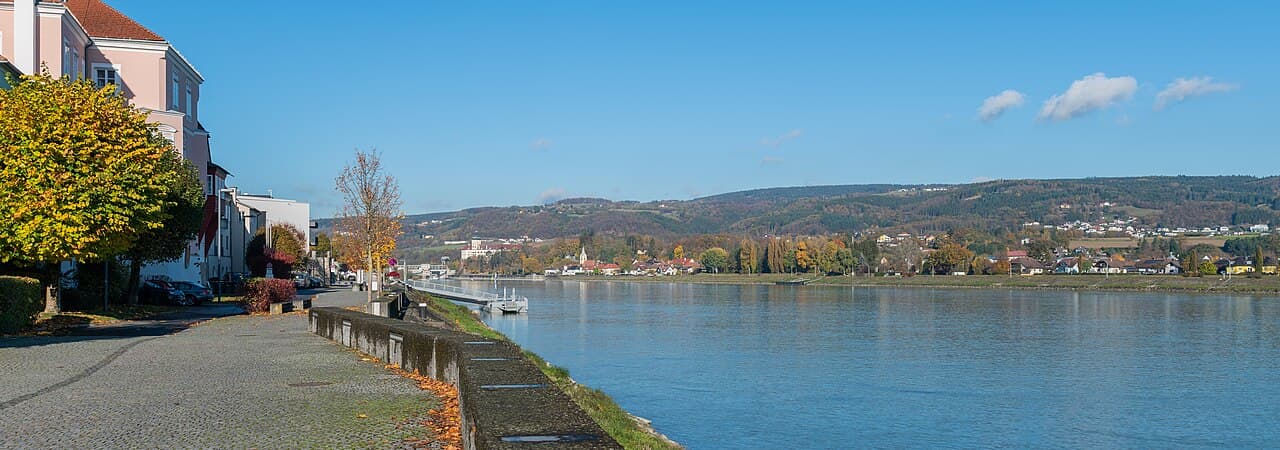
The Danube starts as a small stream in the mountains of Germany and grows wider and stronger as it collects water from hundreds of smaller rivers along the way. By the time it reaches Vienna, it is broad and powerful, with large boats and river cruise ships travelling up and down its surface.
Along the Danube in Austria is a beautiful valley called the Wachau, which is a UNESCO World Heritage Site. The river winds between steep vineyards, old hilltop castles and small villages with apricot orchards. Wachau apricots are so famous in Austria that people make jam, juice and dumplings from them.
The Danube passes through or borders ten countries: Germany, Austria, Slovakia, Hungary, Croatia, Serbia, Bulgaria, Romania, Moldova and Ukraine. This makes it one of the most international rivers on earth. If you floated from one end to the other, you would hear at least ten different languages on the riverbanks.
The river has an unusual fact attached to it - despite what a famous waltz suggests, the Danube is not blue. It is usually a greenish-grey or muddy brown colour, depending on the weather and the season. But the Viennese composer Johann Strauss II wrote a waltz called 'The Blue Danube' and the name has stuck for ever.