
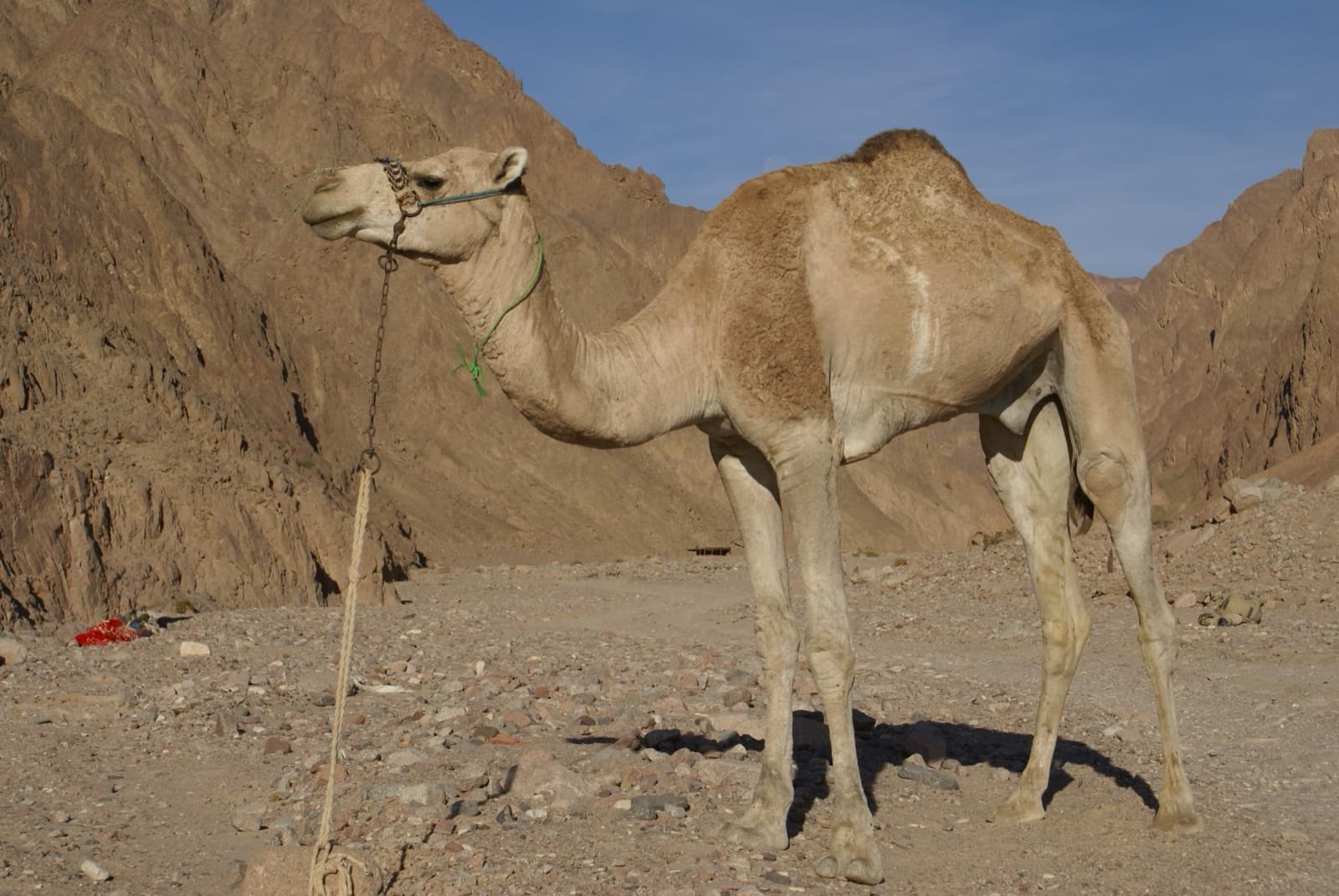
The hump is not full of water, as many people think. It is full of fat. When food gets scarce, the camel's body slowly uses up that fat, like a packed lunch saved for later. A well-fed camel has a tall, firm hump. A camel that has been working hard has a smaller, floppier one.
Camels are full of clever adaptations. Their long eyelashes keep sand out of their eyes. Their nostrils can close like little doors during sandstorms. Their feet are wide and soft, like padded slippers, so they spread their weight on top of the sand instead of sinking. And they can drink up to 100 litres of water in one go - about a whole bathtub.
Camel milk is creamy and slightly salty, and is a traditional food across the UAE. People drink it fresh, freeze it into ice cream, and even use it in chocolate. Some camels are kept for racing, some for milk, and some are part of family traditions stretching back many generations.
Camels are gentle most of the time, but they have a famous habit of spitting - really, throwing up a bit of their stomach contents - when they feel really annoyed. They can also hum, snort and make a deep rumbling noise from their throat that sounds a bit like a creaky door.