
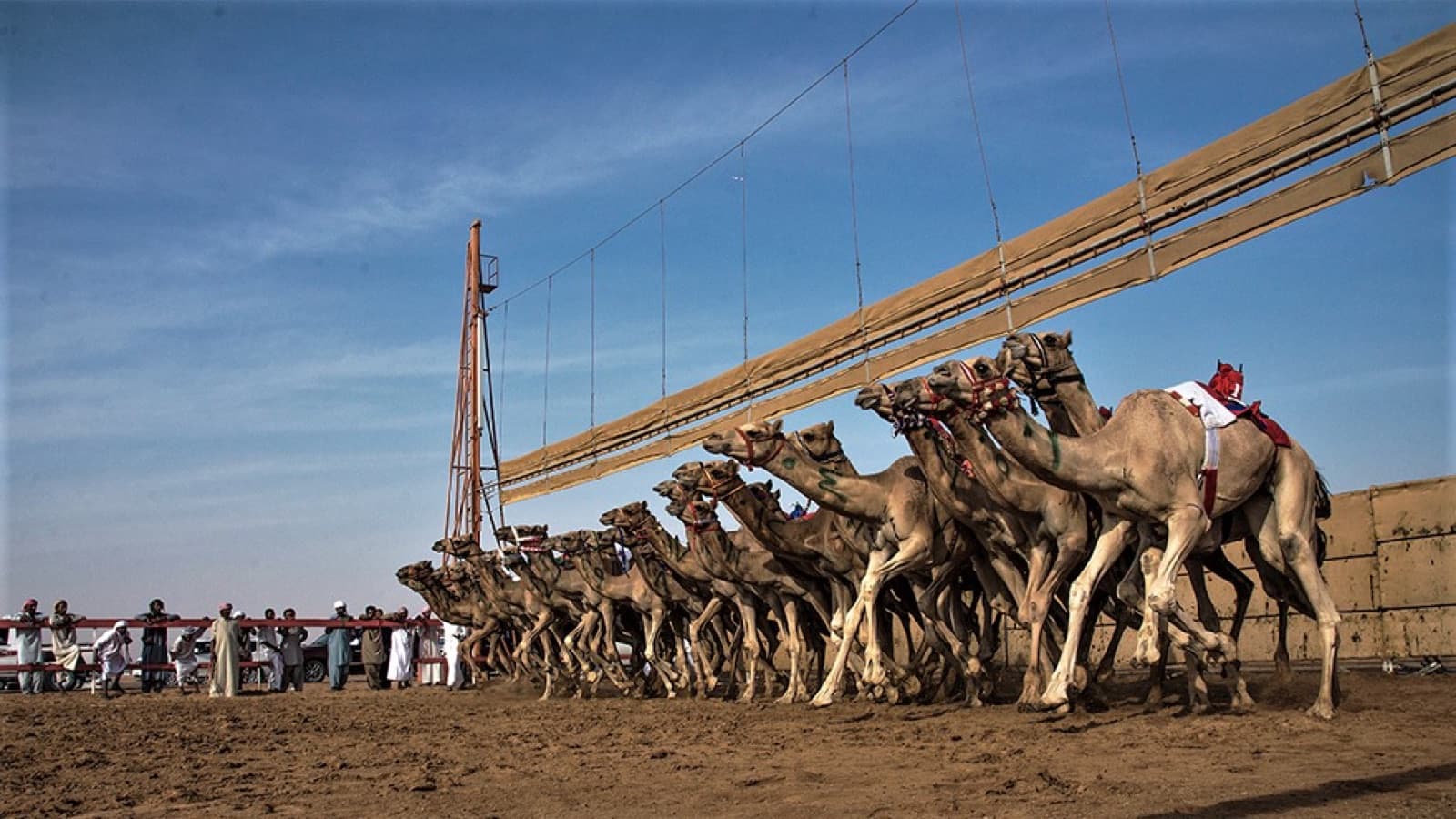
The race track is a long oval of soft sand in the desert. On race day, the camels line up at the start, each wearing colourful saddles and a small mechanical jockey strapped to its back. The robot weighs only a few kilograms - much lighter than a person - and that helps the camel run faster.
Each robot has a small radio. The camel's trainer drives a 4x4 along a road next to the track, calling encouragement through the robot's speaker so the camel can hear a familiar voice. The robot can also gently flick a soft whip if the camel needs a tap to keep going. The cars and the camels race side by side - it is one of the most unusual sights in sport.
Racing camels can reach 65 km/h in a sprint and keep up around 40 km/h for several kilometres. They are bred and trained from a young age, like racehorses. A camel's career can last for years if it is well looked after.
Big race days are family events. There are stalls selling camel-milk ice cream, displays of traditional dancing, and rows of trainers cheering their camels on. The robot jockey is now such a famous part of UAE culture that toy versions are sold as souvenirs.