
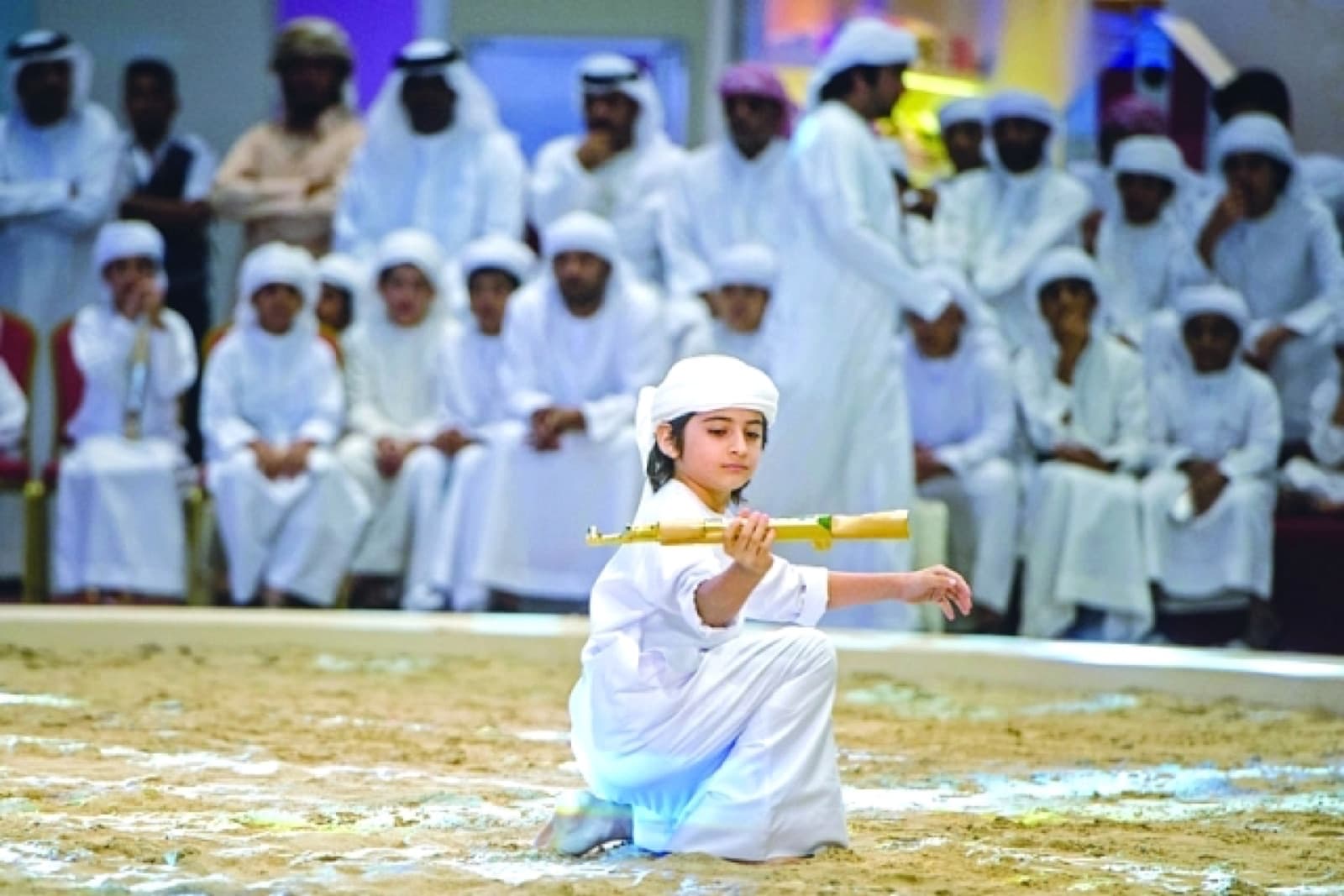
The performance can have up to 200 people at once. Everyone wears the traditional white robe of the Arabian Peninsula, called a kandura. Some performers carry curved swords as well as bamboo sticks. The whole thing looks a bit like a tidal wave moving forwards and back, in perfect time with the drums.
The two rows sing call-and-response poems to each other. One row sings a verse, then the other answers. The poems are often about pride in family, the beauty of the desert, kindness to strangers, and the joy of celebration. There is no one fixed song - performers know dozens by heart and pick the right one for the occasion.
The drums are different sizes. The biggest, called al-ras, set the slow heartbeat of the dance. Smaller drums add quicker patterns over the top. The drummers also play a small brass instrument called a tasa, which makes a high ringing sound.
Al-Ayyala is performed at weddings, national holidays and big celebrations. UNESCO - a part of the United Nations that protects important culture - has named Al-Ayyala one of the world's intangible cultural treasures, which means it is something humanity has agreed to look after, like a building or a painting.