
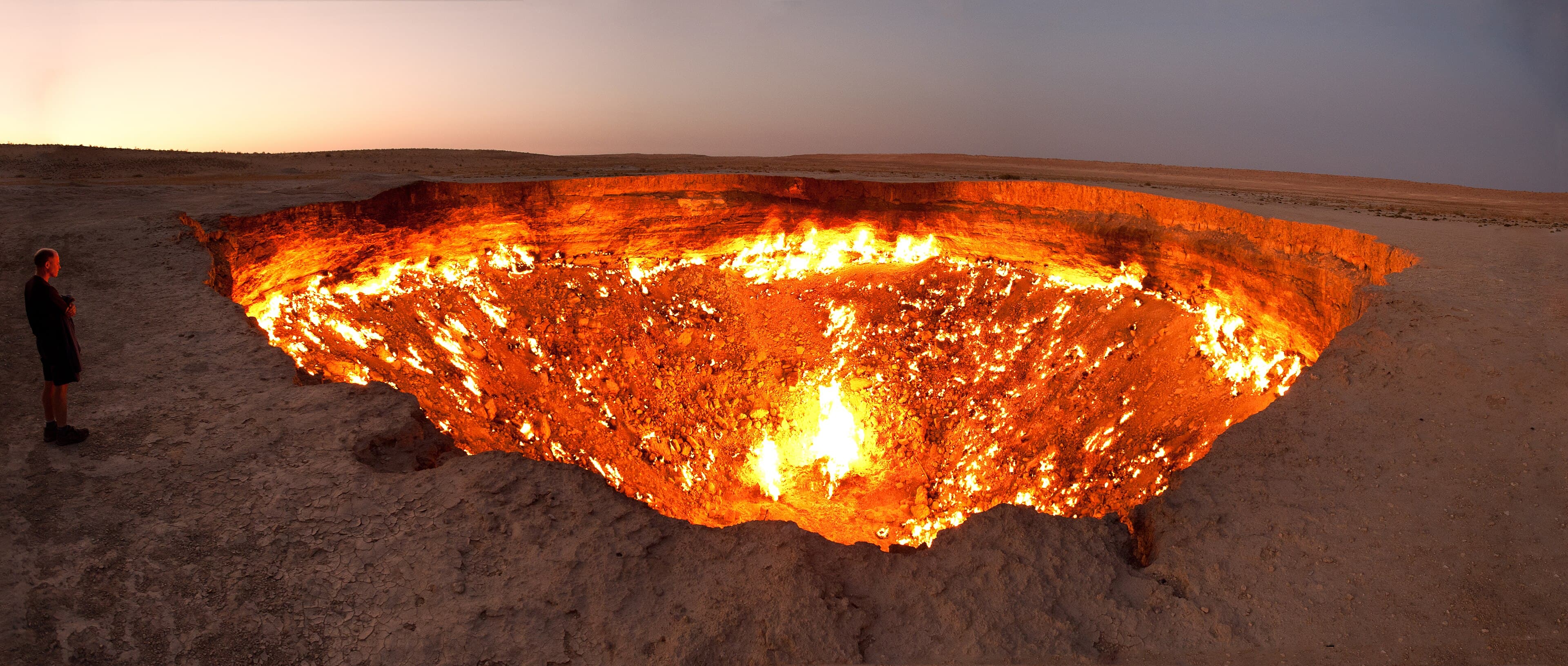
The crater was created when the ground beneath a drilling site collapsed long ago, opening up an underground pocket of natural gas. To stop the gas spreading, workers lit it on fire, expecting it to burn out in a few weeks. Instead, the gas has kept burning ever since, turning the crater into one of the most unusual sights in the world.
The crater is about 70 metres across and 30 metres deep - that is wider than an Olympic swimming pool and deep enough to swallow a ten-storey building. Hundreds of small blue and orange flames dance across the floor, walls and edges, fed by gas seeping through cracks in the rock below.
At night the glow can be seen from several kilometres away across the flat desert. Visitors who camp nearby say the warmth is comforting, like sitting beside a giant bonfire. Some travellers make the journey specially to watch the sunrise light up the desert around it.
Scientists study the crater to learn how gas pockets form underground. They have even found tiny microbes - living things too small to see - surviving right inside the crater, which helps researchers think about how life might exist in extreme places elsewhere in the universe.