
Classroom lesson · Music · 🇹🇬 Togo

Ewe Drumming & Akpessé Music

West Africa's most celebrated drumming tradition

Ewe drummers in traditional white cloth playing at an outdoor ceremony

Photo · Wikimedia Commons

What is it?

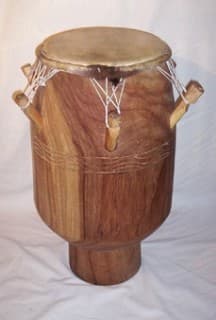
The Ewe people of southern Togo are world-famous for their extraordinary drumming. Ewe drumming is so intricate and powerful that musicians from all over the world travel to Togo just to study it. Akpessé is one of the most popular forms of Ewe music - an upbeat, soulful style that combines drums, bells, shakers, and singing voices into a sound full of energy and warmth.

Tell me more

What makes Ewe drumming special is the idea of 'polyrhythm' - playing several different rhythms at the same time so that they fit perfectly together, like gear wheels interlocking. Each drummer learns one part and plays it consistently, while the 'master drummer' can improvise freely on top. For a listener, the sound seems impossibly complex, yet each individual part is relatively simple. It is the combination that creates the magic.

Akpessé is a type of Ewe music often performed for community events and outdoor celebrations. It has a joyful, swinging quality - the kind of music that makes people want to clap along. The songs are accompanied by iron bells (gankogui) whose steady clang acts as a time-keeper that all the other musicians use as their guide, no matter how complex the other rhythms become.

Ewe drumming has had a huge influence on music around the world. When enslaved Africans were taken to the Caribbean and the Americas centuries ago, they brought their musical knowledge with them. Rhythms similar to Ewe patterns can be heard today in Cuban salsa, Brazilian samba, and even jazz drumming. Togo's musical heritage has shaped modern music in ways that many people do not realise.

In the classroom

Walk your class through this in 15 minutes.

Talk together

Discussion prompts

  1. 01Ewe rhythms influenced music as far away as Brazil and Cuba. How do you think musical ideas travel from one part of the world to another?
  2. 02The iron bell keeps the time while all the other rhythms change around it. Can you think of other examples where one steady thing holds everything else together?
  3. 03Ewe drumming is considered 'intangible cultural heritage'. What does 'intangible' mean, and why might music be just as important to protect as buildings or artworks?
Try this

Classroom activity

Listen to a short recording of Ewe drumming (search 'Ewe polyrhythm' on a class-safe audio resource). Draw what you hear: use a different coloured line for each instrument or rhythm layer. Does one colour stay steady while others change? Write three adjectives to describe how the music made you feel.