
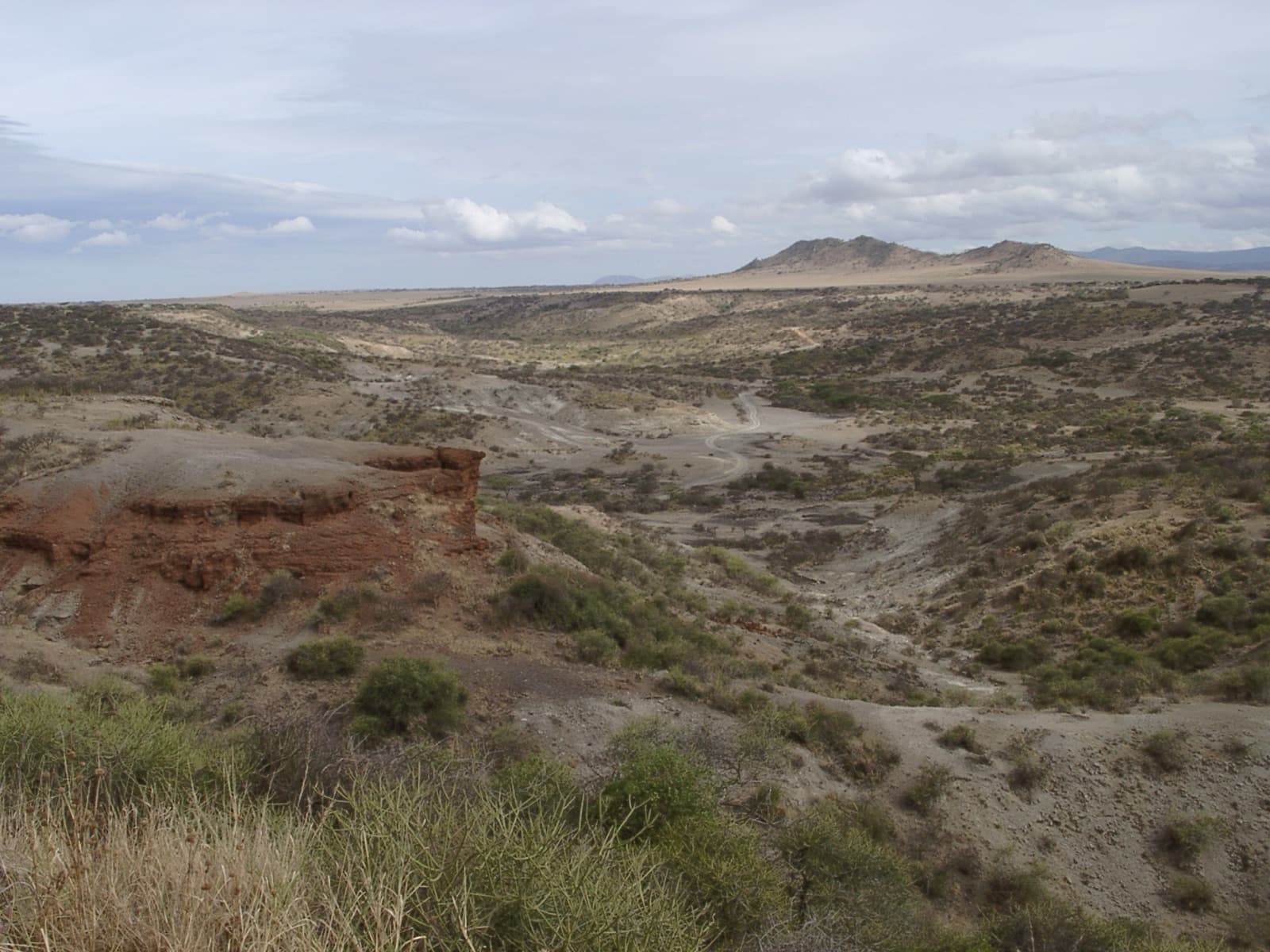
Olduvai Gorge is about 50 kilometres long and 90 metres deep. It was cut by a river slowly wearing down through layers of rock over millions of years. Each layer is like a page of a giant history book. Scientists can tell how old something is by which layer they find it in.
In 1959, a husband-and-wife team of scientists named Mary and Louis Leakey found a piece of skull at Olduvai that was about 1.75 million years old. It belonged to an early human ancestor. Since then, many more bones and tools have been found - some of them more than 2 million years old.
The earliest tools found at Olduvai are simple sharp stones. Our ancestors picked up a hard rock, hit it carefully against another rock, and broke off a sharp flake that they could use to cut, scrape and chop. It looks like a small thing, but it changed everything. Cutting tools meant our ancestors could prepare food, build shelters and slowly become the humans we are today.
Scientists from all over the world still travel to Olduvai today to dig carefully in the dust. Every time it rains, the gorge walls wash away a little more, and sometimes new fossils are exposed that nobody has ever seen before. There is a small museum near the gorge where children can see the discoveries on display.